 Power Wheels Magazine A Notch Above

Here at Power Wheels Magazine, we’re always on the lookout for the next project car. Even when fuel prices are astronomically high, the country is experiencing the onset of a possible recession, and the world is under the threat of a Super El Niño, we still take time to browse the Classified Ads or Facebook Marketplace to see if there are some nice, interesting, or unique vehicle that can be our next project car.
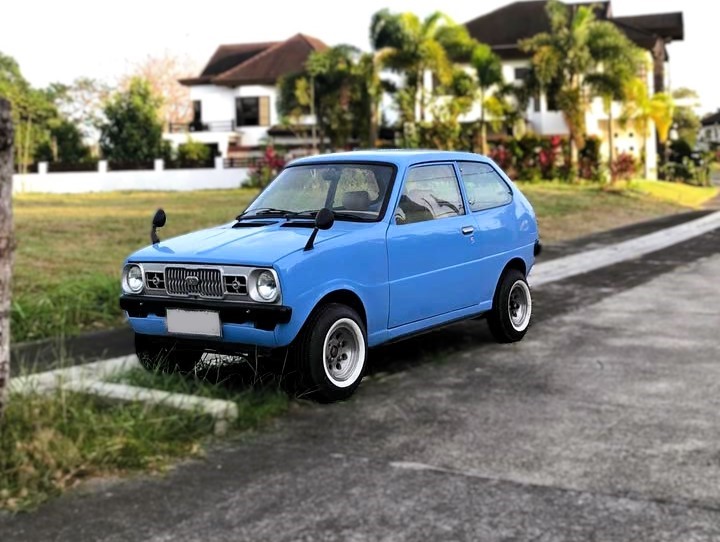
We recently spotted a blue 1976 Mitsubishi Minica F4 (A103A) at FB Marketplace that the owner listed for sale at P250,000. For those who don’t know what a Minica is, it is a long-running series of Japanese kei or ultra-compact city cars produced by Mitsubishi across eight generations from 1962 to 2011. Locally, Chrysler Philippines, which later became PAMCOR then Mitsubishi Motors Philippines Corporation, assembled the Minica A103A at their factory in Cainta, Rizal from 1974 to 1988.
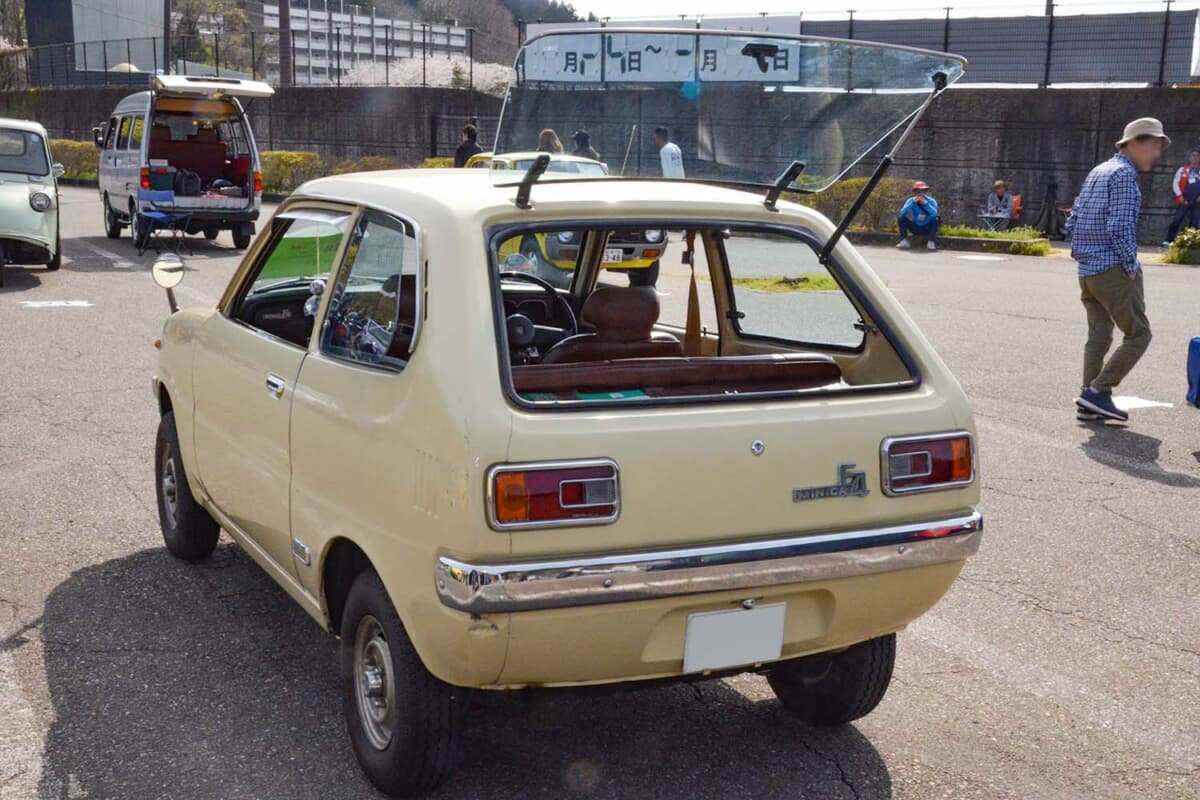
It’s commonly believed that the name “Minica” was short for “minimal car” but we have nothing to verify or refute that information. What we know is that the small car was indeed minimal: It had a short hatchback body with two doors and a clam-shell rear glass window that can be lifted like a hatch. The interior was minimal as well with front buckets seats, rear bench seat, and a dashboard that held a speedometer, a clock, fuel gauge, coolant temperature gauge, and some idiot lights. That’s all.
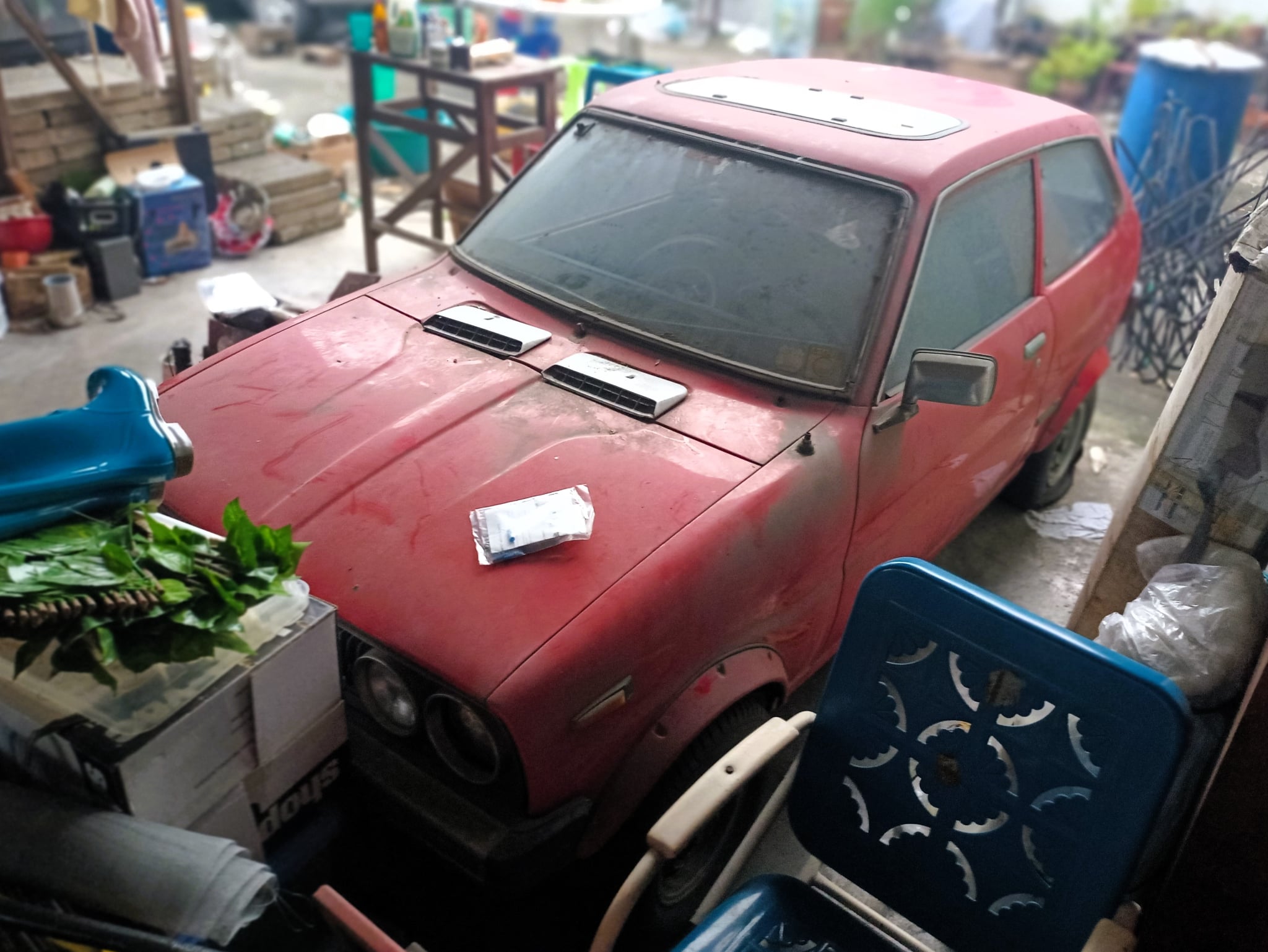
We dropped by the ancestral home of our colleague, Monch Henares, and saw his old Minica parked between a lot of their things.
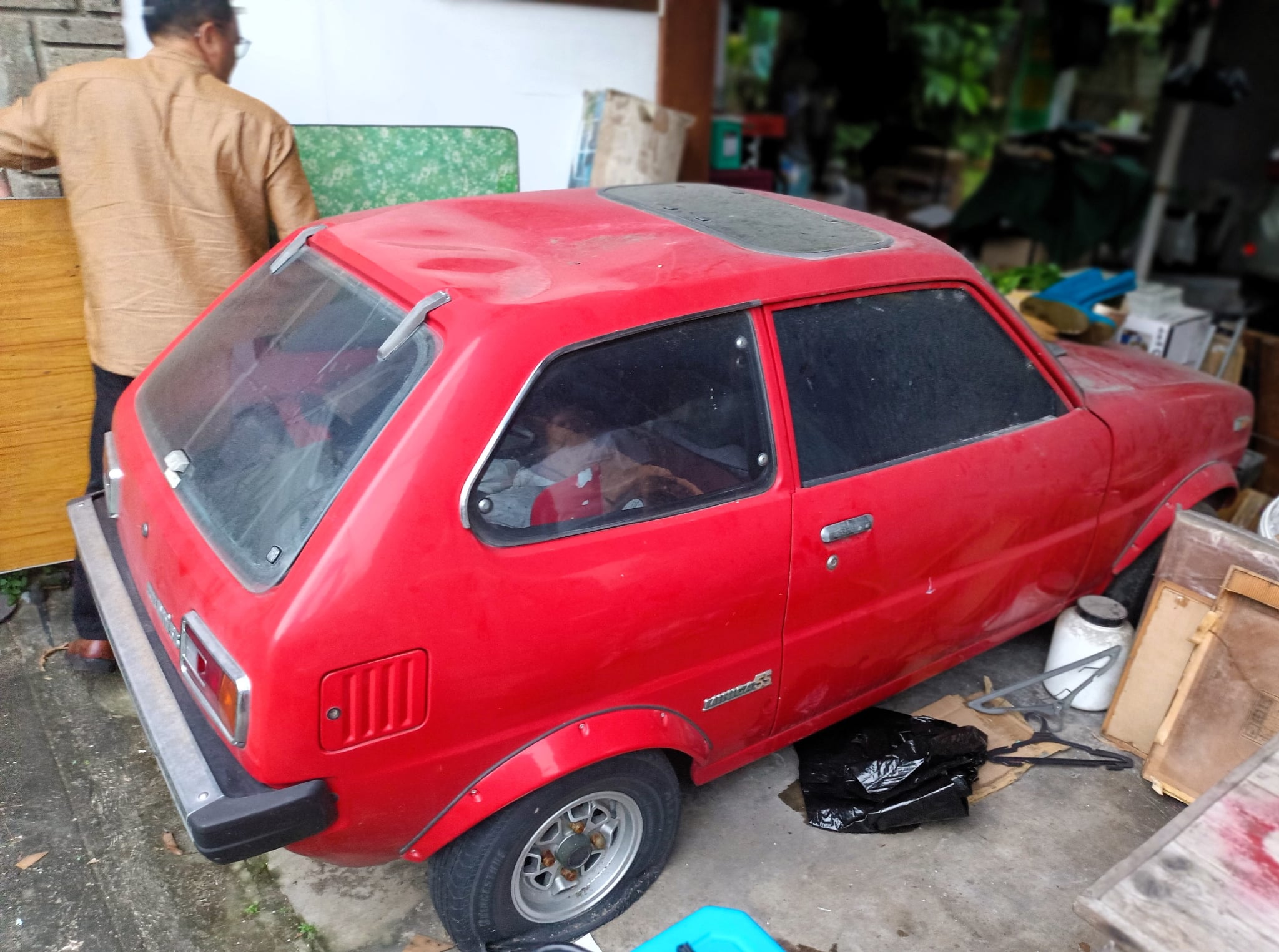
Monch’s Minica had bigger bumpers, aftermarket fender flares, fat wheels and tires, and an aftermarket sunroof. The roof needs to be beat back to shape. Monch makes the Minica look smaller than it really is.
The Minica F4 is actually the third generation of Mitsubishi’s kei car, yet it retained the traditional front engine, rear-wheel drive layout, with MacPherson struts up front, a five-link rigid axle at the back, and coil springs with shock absorbers all around. Power comes from a 359 cc overhead cam (OHC) 2-cylinder gasoline engine that made around 30 horsepower and was sent to the rear differential through a 4-speed manual transmission. Because the Minica was light, 30 hp was more than enough for it to easily keep up with traffic.
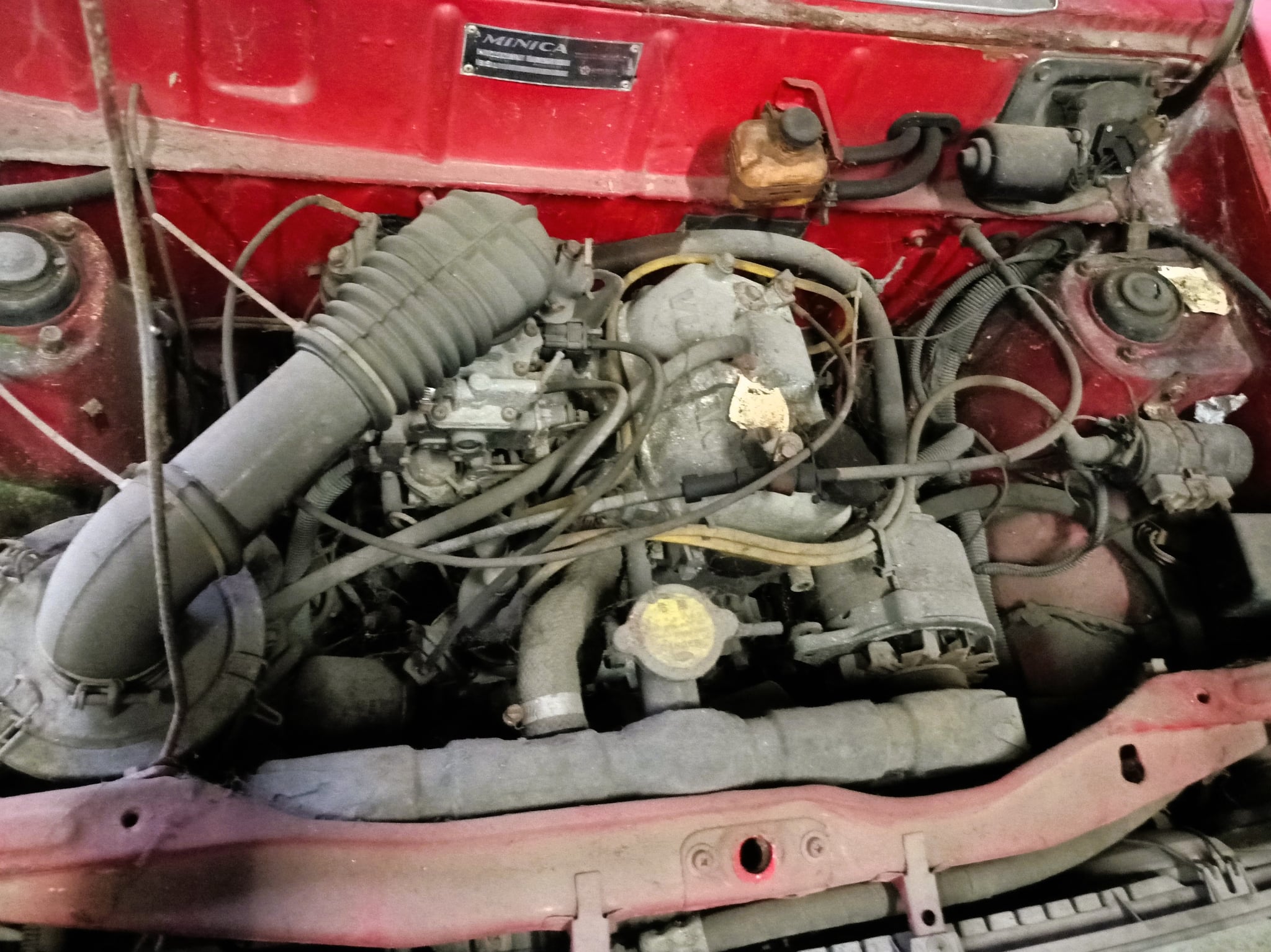
The engine bay of Monch’s Minica looked complete and easy to restore. Monch narrated that he installed a turbocharger in the 2-cylinder OHC engine to satisfy his “need for speed”.
A number of Filipinos got their first taste of an affordable brand-new car when they bought a Minica in the mid-Seventies to the early Eighties. It proved to be reliable enough to serve as taxis in some parts of the country. Some, like our media colleague Ramoncito “Monch” Henares of Monchter Chronicles and Motourismo, modified their Minica to look sleeker and run a lot faster. Monch still has his Minica F4, which we initially mistook as a later AMI55 model with its hefty bumpers and front grill with four headlamps. Monch plans to restore his Minica while retaining his modifications such as the sunroof, aftermarket wheels, A/C and turbocharger.
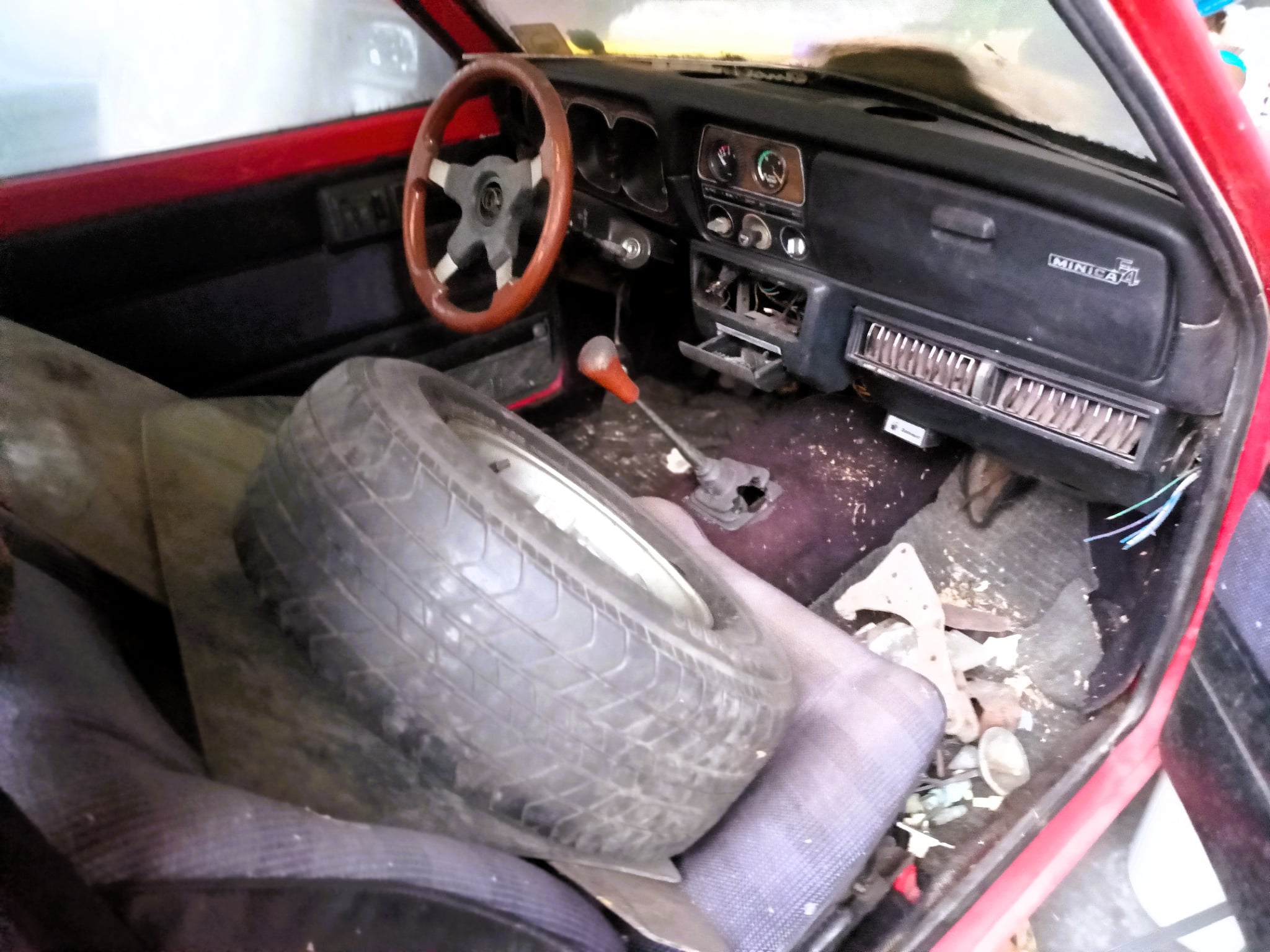
Standard ’80s modifications: Personal or Luisi wood-rimmed steering wheel, wood shift knob, hanging A/C, fat wheels, and killer Pioneer or Alpine sound system.
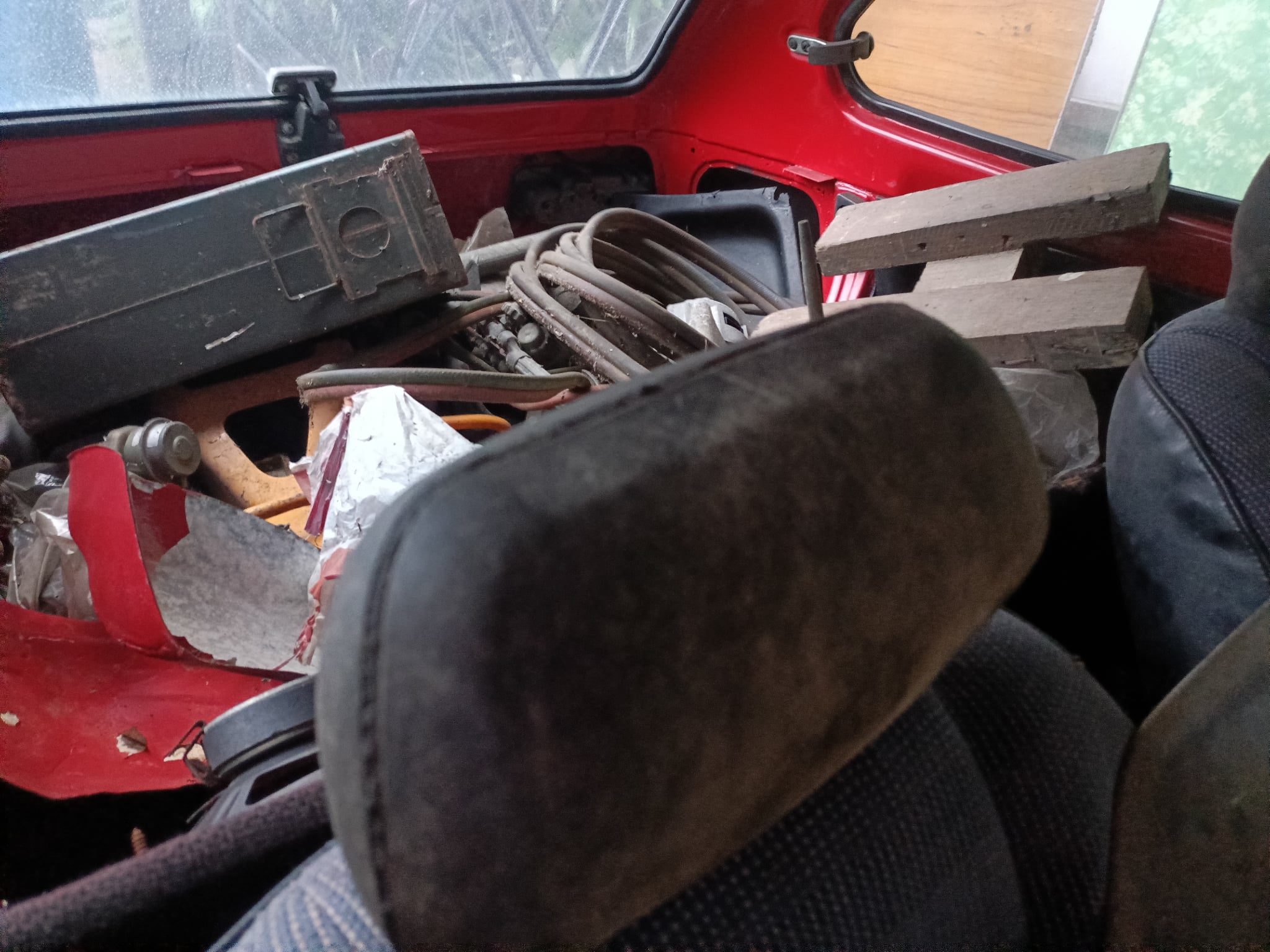
We hope Monch kept the backseat and all the other parts for the rear part of the interior so it’ll be a lot easier to restore when the time comes.
The Minica was discontinued locally in 1988 but it has gone deep into the local folklore. There’s even a Filipino tongue twister that goes “Minekaniko ng mekaniko ni Monico ang makina ng Minica ni Monica”, which translates to English as “Monico’s mechanic worked on the engine of Monica’s Minica”. In Japan, the Minica lasted up to its 8th generation, until it was replaced by the Mitsubishi eK in 2007, which was replaced by the Mitsubishi i in 2011, to compete in the kei car category.
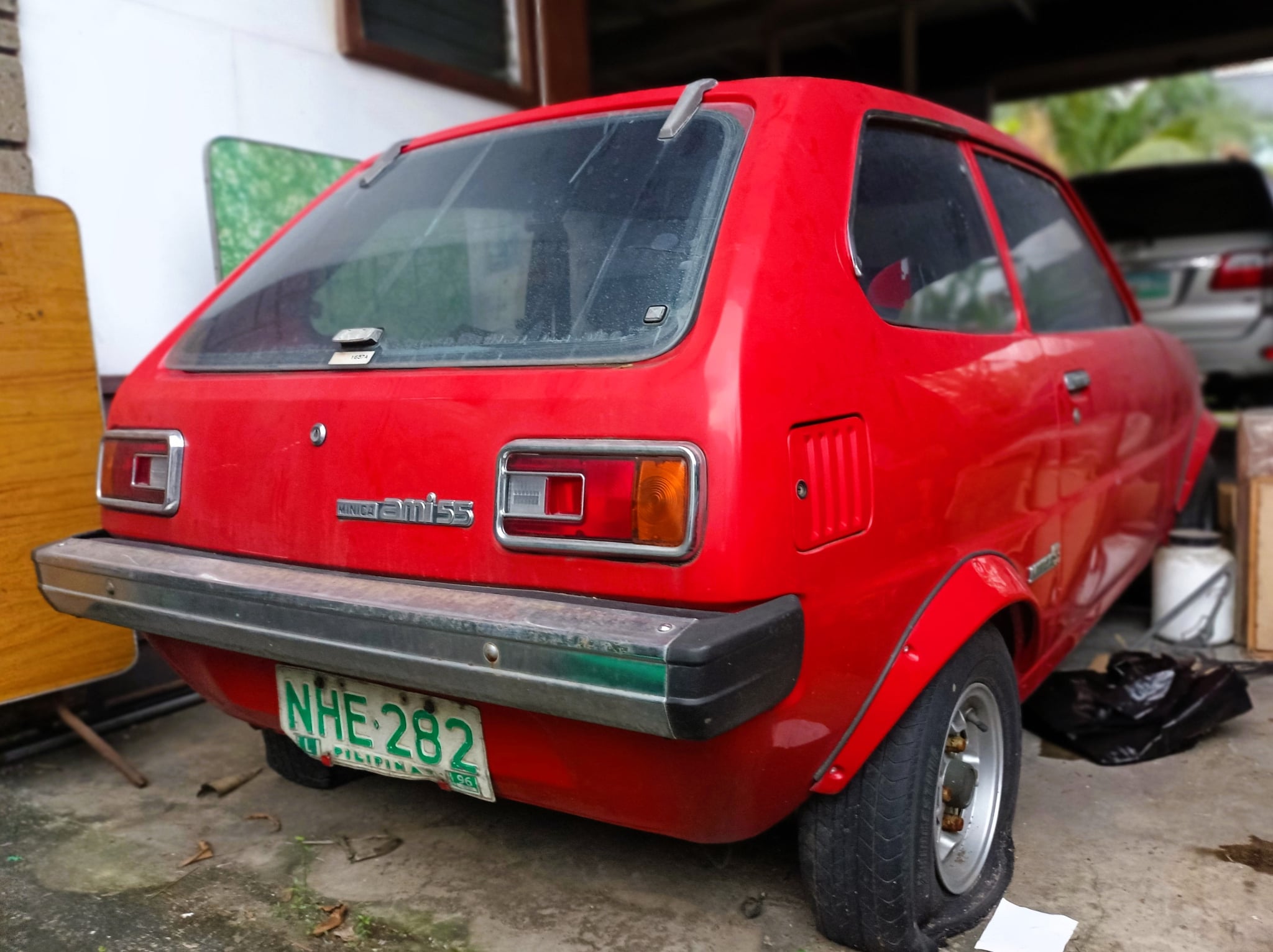
We initially thought that Monch’s Minica was an authentic upmarket “Ami55” variant because of that emblem at the back. We now think it’s Monch’s way of starting a conversation with young ladies in his day, “Ah, miss…”
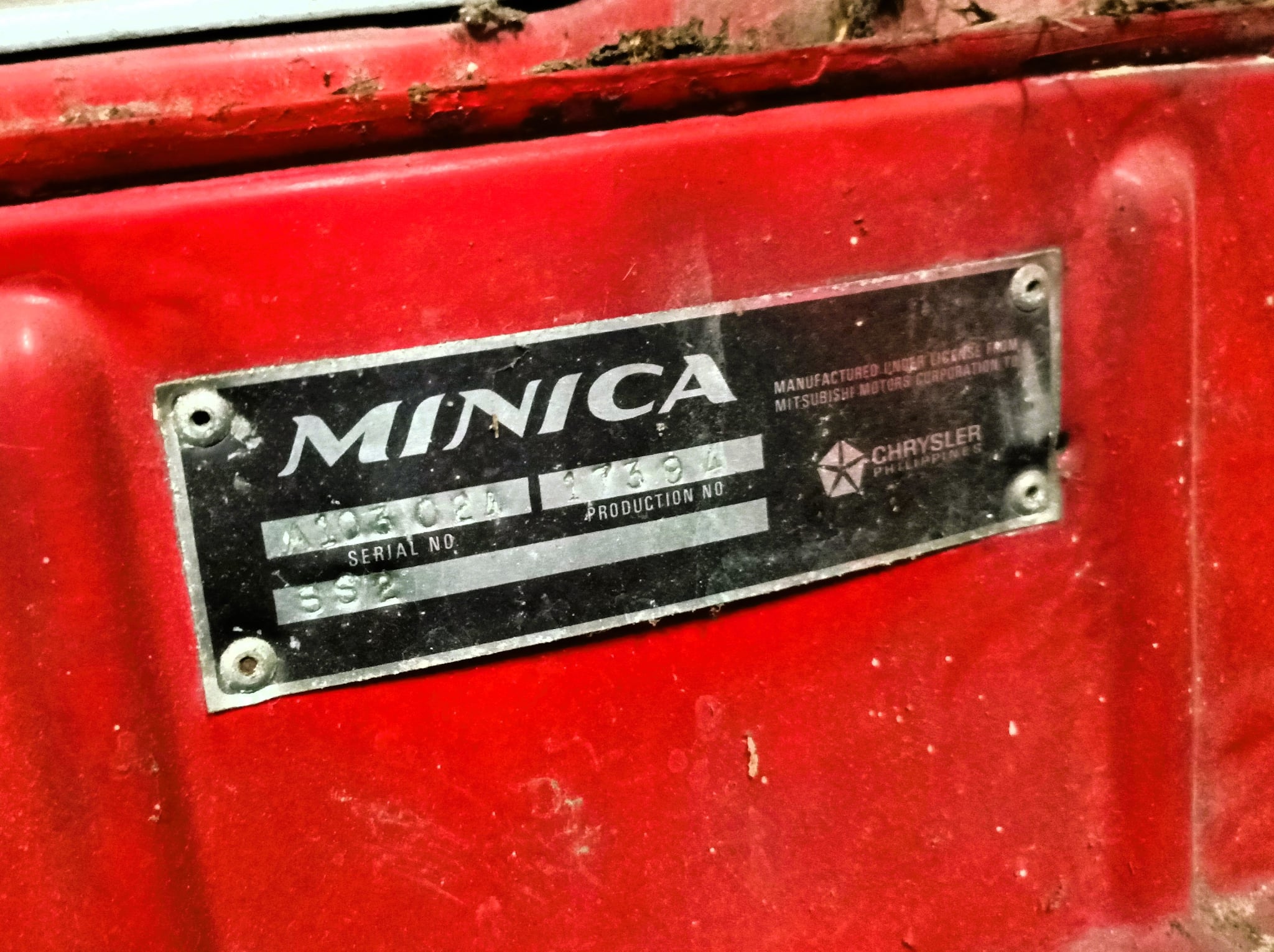
The “Minca F4” emblem on the glove compartment door and the “A103” punched into the Chrysler Philippines aluminum factory tag confirmed that Monch’s Minica is a locally-assembled F4. Sorry, Monica, err… Monico…
Should we start searching for a candidate Mitsubishi Minica for Monica so Monico’s mechanic can work on its mechanical restoration soon? Or should we help restore Monch’s Minica instead? Memekanikohin ba ng mekaniko ni Monico at Monica ang makina ng Minica ni Monch? (Will Monico’s and Monica’s mechanic work on the engine of Monch’s Minica?) Stay tuned…