 Power Wheels Magazine A Notch Above

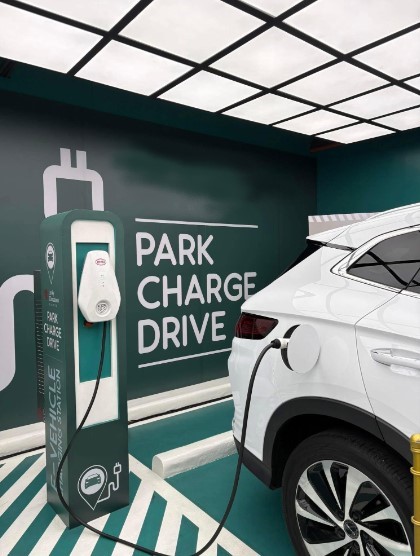
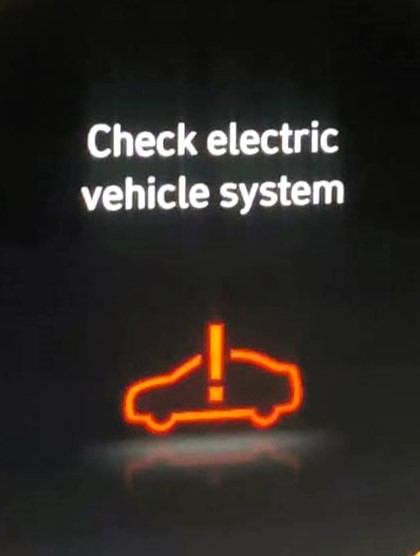
There was this recent incident where an owner parked his battery electric vehicle (BEV) at a charging station in a mall, plugged it in, and then walked into the mall. After a few hours, he returned to his BEV, found its battery pack fully charged, and unplugged it from the charging station. After paying, the owner went into his BEV and found that it won’t “start”, run, or even turn on. After exhausting all efforts to start his BEV, including asking help from the guards and other strangers, he started to conclude one of two things:
- The charging station at the mall must’ve damaged his BEV, which is the reason it won’t “start” or turn on; or
- The BEV and/or its battery pack must’ve been defective and, therefore, not reliable.
When an electric vehicle won’t start, won’t turn on, or run, it’s often easy to jump to the conclusion that its high-voltage battery pack caused the problem.
There’s a third conclusion that the BEV owner might have neglected to consider: His BEV won’t start because its 12-volt (12V) auxiliary battery might be “dead” or discharged. Not every BEV owner realizes that full-electric vehicles still use a standard 12V automotive battery other than the large high-voltage battery pack, which provides power for the electric motor that propels the BEV. The 12V battery of an BEV is often neglected especially when it hidden under plastic covers in the engine compartment or in the trunk, or when it is placed under the front trunk or “frunk”.
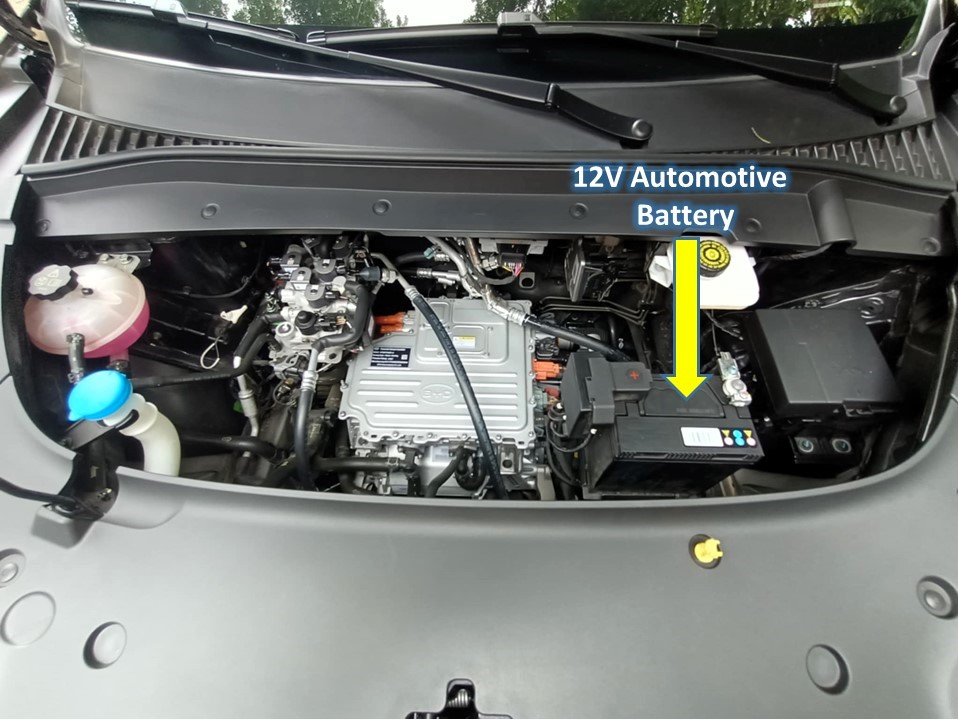
Like gas, diesel, hybrid and REEVs, full-electric vehicles (BEVs) need 12V automotive batteries.
High-Voltage EVs Need a 12V Battery
Like vehicles with gasoline- or diesel-powered internal combustion engines (ICE), hybrids (HEV, PHEV) and range-extender electric vehicles (REEV), BEVs still need traditional automotive batteries to supply 12 volts to a variety of its components. The 12V battery powers the BEV’s primary computers, electronic control units (ECUs), and the high-voltage contacts and switches that connect the large high-voltage battery pack to the electric motor. When the 12V battery is dead, the BEV’s 12-volt electrical and electronic components won’t work to connect the high-voltage circuit to “start” and run it.

A fully-electric or battery electric vehicle (BEV), such as the recently launched VinFast VF8, still needs a traditional 12V car battery to start.
More than powering the primary components that connect the high-voltage system and “starting” the BEV, the 12V battery also powers its automotive parts and accessories, such as headlights, taillights, turn signals, horns, wipers, airbags, door locks, windows, side mirrors, interior lights, and infotainment system, which are designed and made to run on 12 volts. Even when it is parked, the BEV’s keyless entry and alarm systems, 4G/5G telematics, mobile app communication, background software updates, and other constant parasitic draws suck power from its 12V battery.

Even when parked, constant parasitic loads consume the charge of a BEV’s 12V battery.
Parasitic Draws and 12V Battery Challenges
Electric vehicles, including HEVs, PHEVs, and BEVs demand a lot from their 12V batteries. There are more frequent wake-sleep cycles from remote monitoring, battery pack thermal management monitoring, keyless entry proximity sensing, security systems, and telematics. Premium EVs even have pre-conditioning systems that check the weather constantly. These high-tech components have a parasitic draw between 50 to 150 milliamperes, which is around two to three times higher than ICE vehicles.
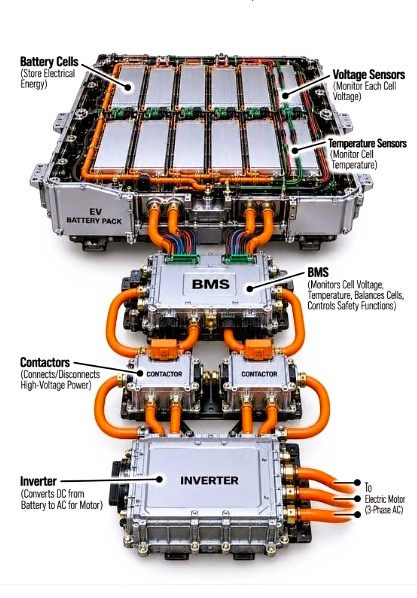
One of the important components that draw power from the 12V battery is the battery pack thermal management monitoring system.
While an ICE vehicle, HEV, PHEV or REEV uses a belt-driven alternator to charge its 12V battery when the engine is running, a BEV uses a DC-to-DC converter that steps down power from the main battery pack to trickle-charge the 12V battery automatically when the BEV is turned on, or during a drive. While plugged into a charger, BEVs trickle-charges their 12V battery but the charge is minimal to save the driving range. Like ICE vehicles, BEVs don’t trickle-charge while parked and turned off. The parasitic draws of infrequently driven BEVs often drain their 12V batteries.
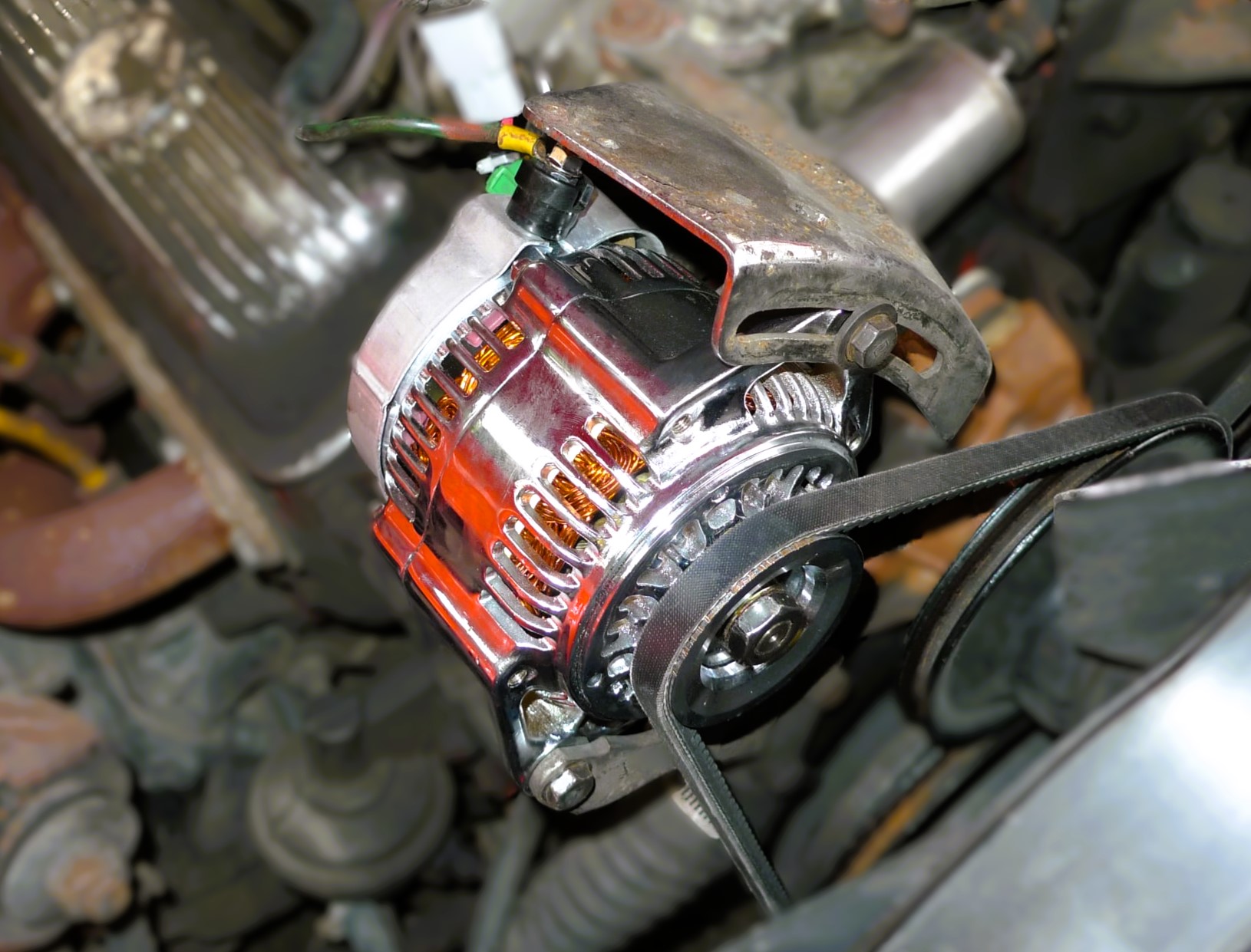
Traditional combustion engines are fitted with belt-driven generators or alternators to charge their 12V batteries.
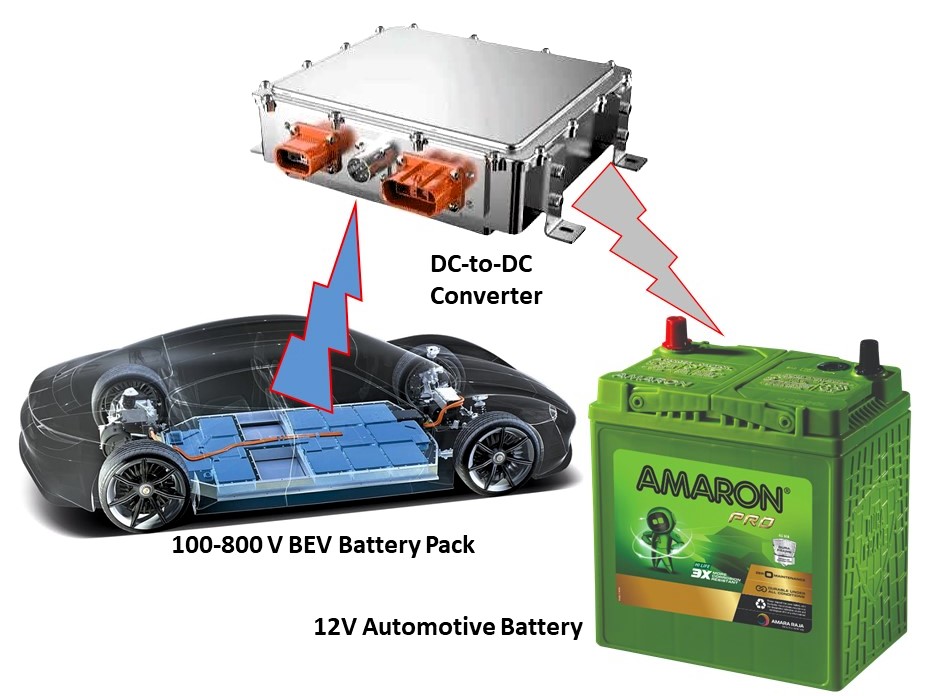
BEVs use DC-to-DC converters to trickle-charge their 12V batteries.
EV Battery Pack Versus 12V Battery
It has to be reiterated and emphasized that the high-voltage battery pack of an electric vehicle, whether it’s an HEV, PHEV or BEV, is distinct and different from its 12V battery. EV batteries are commonly rechargeable lithium-ion battery packs while some newer developments use LFP (lithium iron phosphate) or NMC (lithium nickel manganese cobalt oxide) for high energy density and light weight. Traditional 12V batteries, like Amaron automotive batteries, are the lead-acid (lead dioxide and sulfuric acid) or AGM (absorbed glass mat) type, while new brands, like Blue Lithium, have come up with 12V lithium-ion auxiliary batteries.
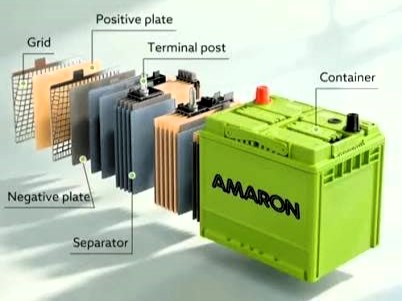
Traditional 12V automotive batteries generate electricity through the chemical reaction of lead dioxide plates and sulfuric acid.

BYD Blade Battery features an integrated, high-strength, and module-free structure for rigid thermal management. It uses long, flat, blade-shaped LFP cells that double as structural beam elements inside a honeycomb or ladder-shaped reinforcement frame.
An EV battery pack supply between 100 to 800 volts to the electric motor to drive the vehicle while traditional batteries supply 12 volts to the vehicle’s accessories and store enough power to run the starter motor to start the combustion engine. Because the EV battery pack stores and supplies the power to run the electric motor – much like a gas tank that stores and supplies fuel to run an engine – battery packs are designed to last 8–15 years to reduce the frequency of replacing batteries. Traditional 12V lead-acid automotive batteries last around 3–5 years and are quite easy to replace and inexpensive compared to battery packs.
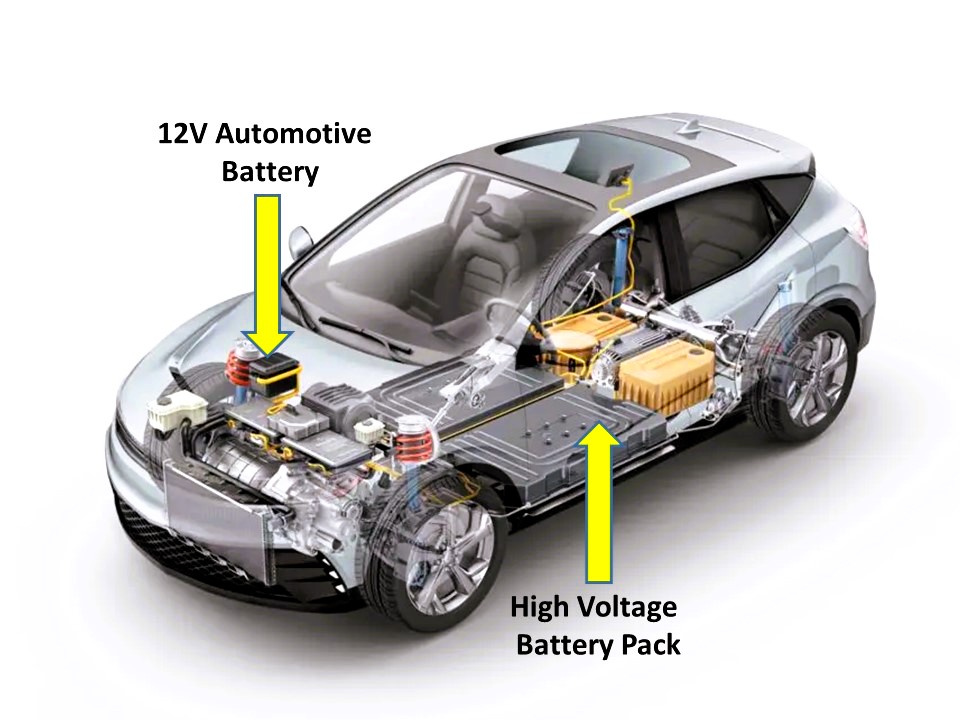
The high-voltage battery pack powers the electric motor/s that drive the vehicle. The 12V battery powers the components that connect the high-voltage system to the drivetrain as well as the vehicle’s lights, accessories and safety equipment.
Maintaining the EV 12V Battery
We spoke with Mac Brian Kaw of Amaron Philippines and he stated that, similar to gas and diesel vehicles, the 12V batteries of all electric vehicles (HEV, PHEV and BEV) must undergo regular tests and maintenance check-ups. “The battery voltage must be checked every 3 months and its should read between 12.6–12.8 volts when the EV is not running”, Brian explained. “It should read between 13.8–14.4 volts when the EV is running to indicate a healthy DC-to-DC charging operation”, he added.
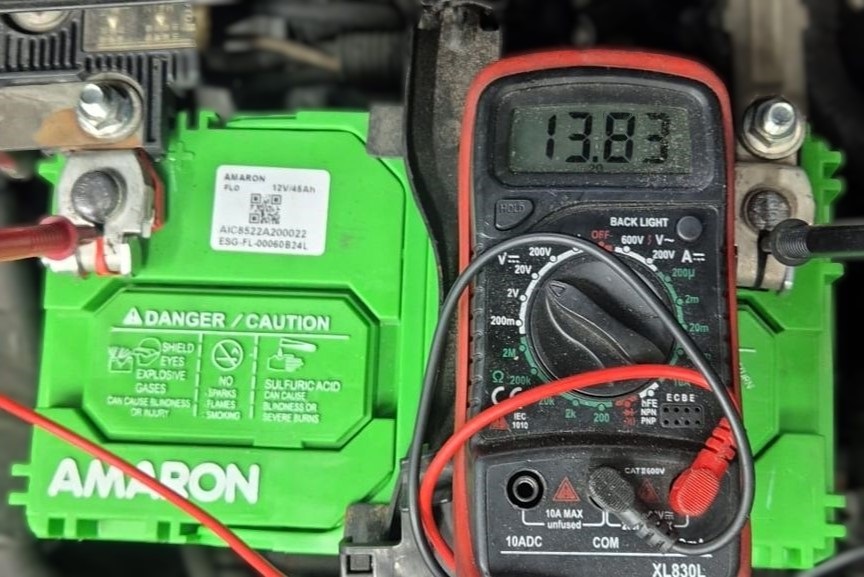
Test readings between 13.8–14.4 volts when the EV is running means the DC-to-DC converter is working properly to charge the 12V battery.
Brian advised that a load test should be conducted every 12 months, to coincide with the one-year PMS (preventive maintenance schedule) that are often recommended for most EVs. “Electric vehicles that are not driven often or infrequently used still drain the battery much faster than parked gas or diesel vehicles”, Brian continued. “It is recommended to keep the battery pack charged to at least 50%–80% SOC (state of charge) to allow the DC-to-DC converter to trickle charge the 12V battery. Also, the battery should be attached to a battery tender.” He further recommended that the 12V battery should be replaced every 3–5 years.
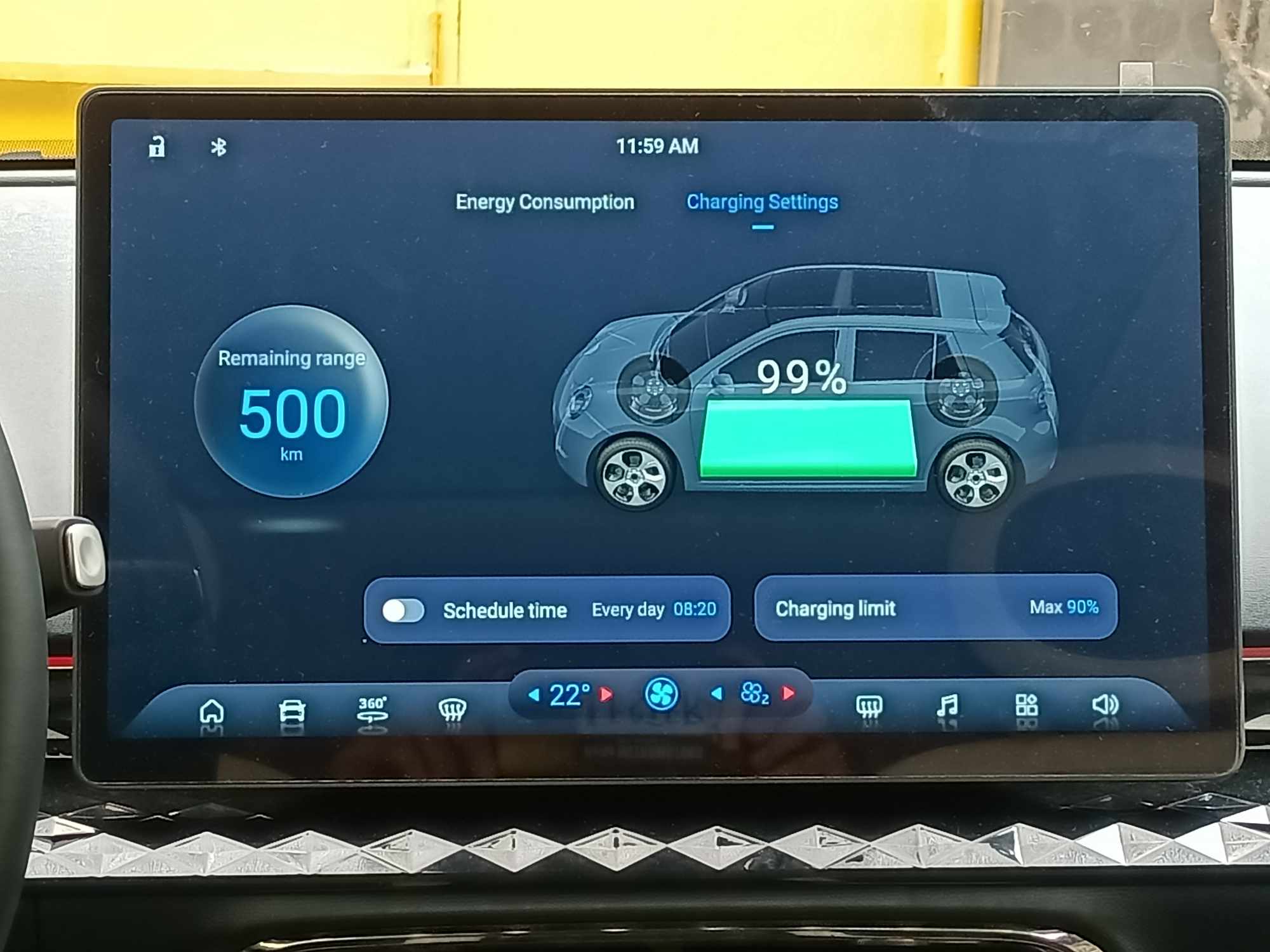
Charging the battery pack of daily-driven BEVs to 100% ensures the full use of the range. Keep the battery pack charged between 50%-80% to allow DC-to-DC trickle charging.
From the Factory to Your Garage
Brand-new electric vehicles undergo multi-step quality assurance inspections (QAI) before leaving the factory and pre-delivery inspections (PDI) before it is released by the dealer to the customer. However, it takes some time for the EVs to travel from the factory gates to the inventory warehouse, to the shipping yard, to the cargo ship (or carrier), to the Philippines, through the importation process and customs inspection, to the local stockyard, to the dealer warehouse, before it is finally bought, released and driven home by the new owner, and then parked at his or her garage.

Brand-new vehicles like the BYD travel over time and distance from their factory in China, to the distributor in the Philippines, to the local dealer, until ultimately, it is parked in your garage.
Factories and dealers maintain the SOC of most EVs in their inventory between 50%–80% to prevent the cell degradation of the battery packs while in storage. However, the 12V batteries are often taken for granted since they can be easily replaced when they are discharged or dead. “You also have to consider the time between the 12V battery’s activation at the EV factory or at the dealer until it finally gets to the new owner’s garage”, Brian expounded. “Remember that electric vehicles sitting in inventories have higher parasitic draws than gas and diesel vehicles parked in inventories for the same length of time.”

BEVs stored in inventories have higher parasitic draws than an inventory of ICE vehicles stored for the same length of time.
Common Problems with 12V Batteries in EVs
Dealers normally check the 12V batteries of the vehicles that are going to be delivered to their customers and replace ones that are found to be discharged beyond repair or dead. These dead batteries are returned to the factory or supplier as “warranty claims” and are promptly replaced. Still, there are cases when the 12V battery are healthy for a few months and then will discharge or become dead after a short period, especially those that were activated and then installed in an EV that stayed for some time in inventory.
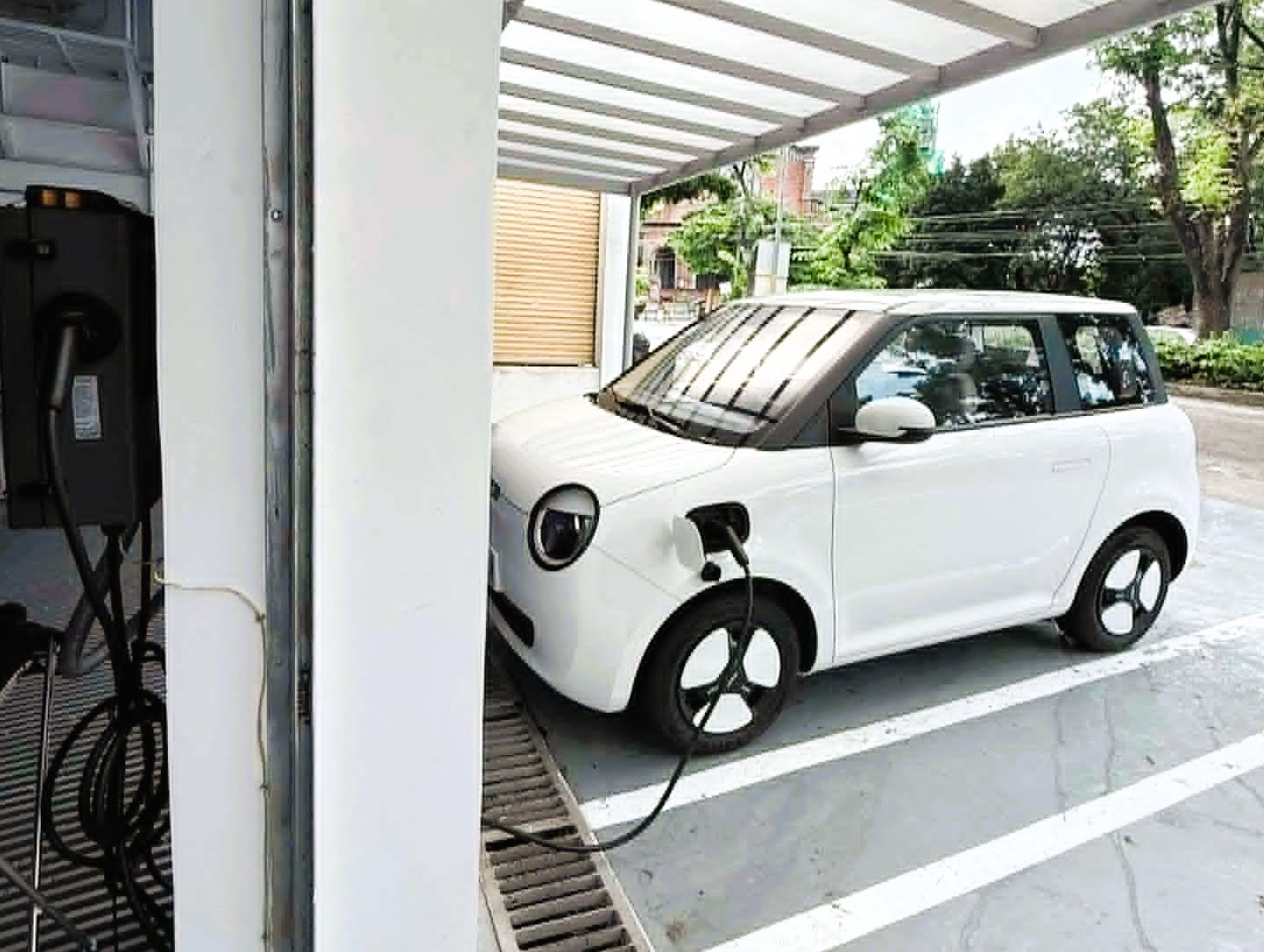
The LFP battery pack of the Changan Lumin BEV can be charged from 30% to 80% in 35 minutes using a DC fast charger.
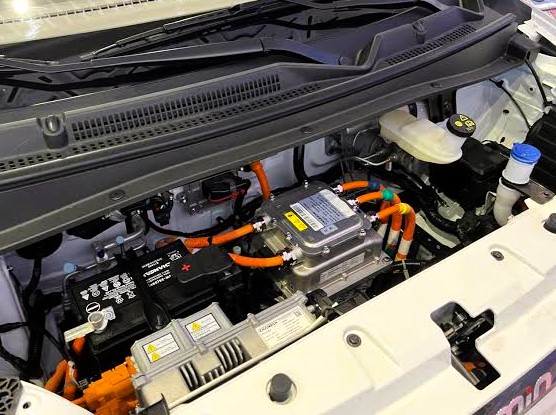
Thankfully, the 12V battery is easily accessible and therefore easy to test, check, and maintain.
When an EV won’t “start” or power on, even with its high-voltage battery pack fully charged, it’s almost always a dead 12V battery or a loose/improperly installed battery terminal. Other maladies may include the frunk/trunk cannot be opened electronically; the doors cannot be unlocked remotely; and random “Warning”, “Error”, “Unavailable”, or “Service Required” messages at the instrument panel or infotainment touchscreen display, where low voltage causes erratic computer behavior.
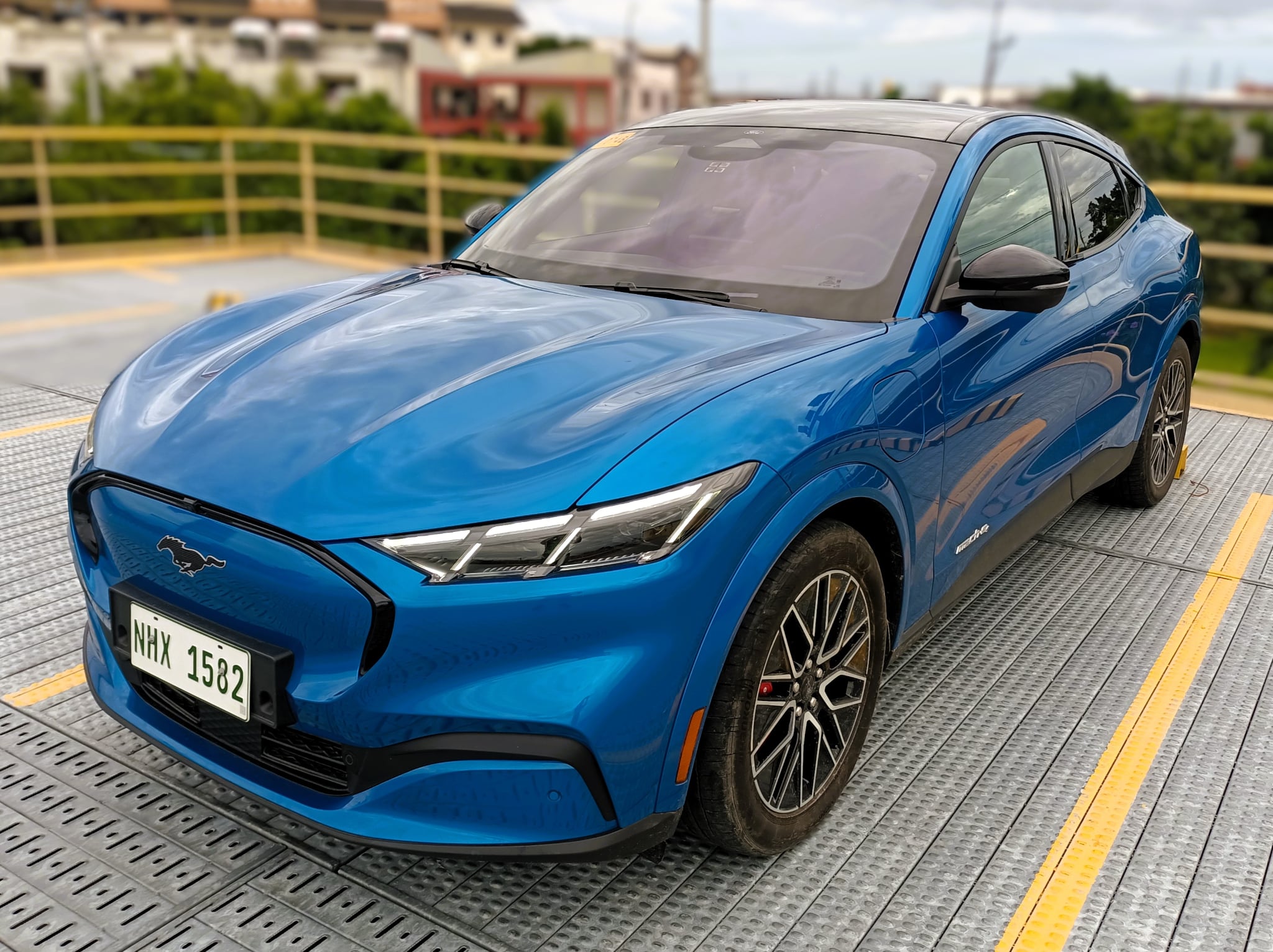
The Ford Mustang Mach-E BEV is brutally fast with a range of 440-490 kilometers from a full charge.
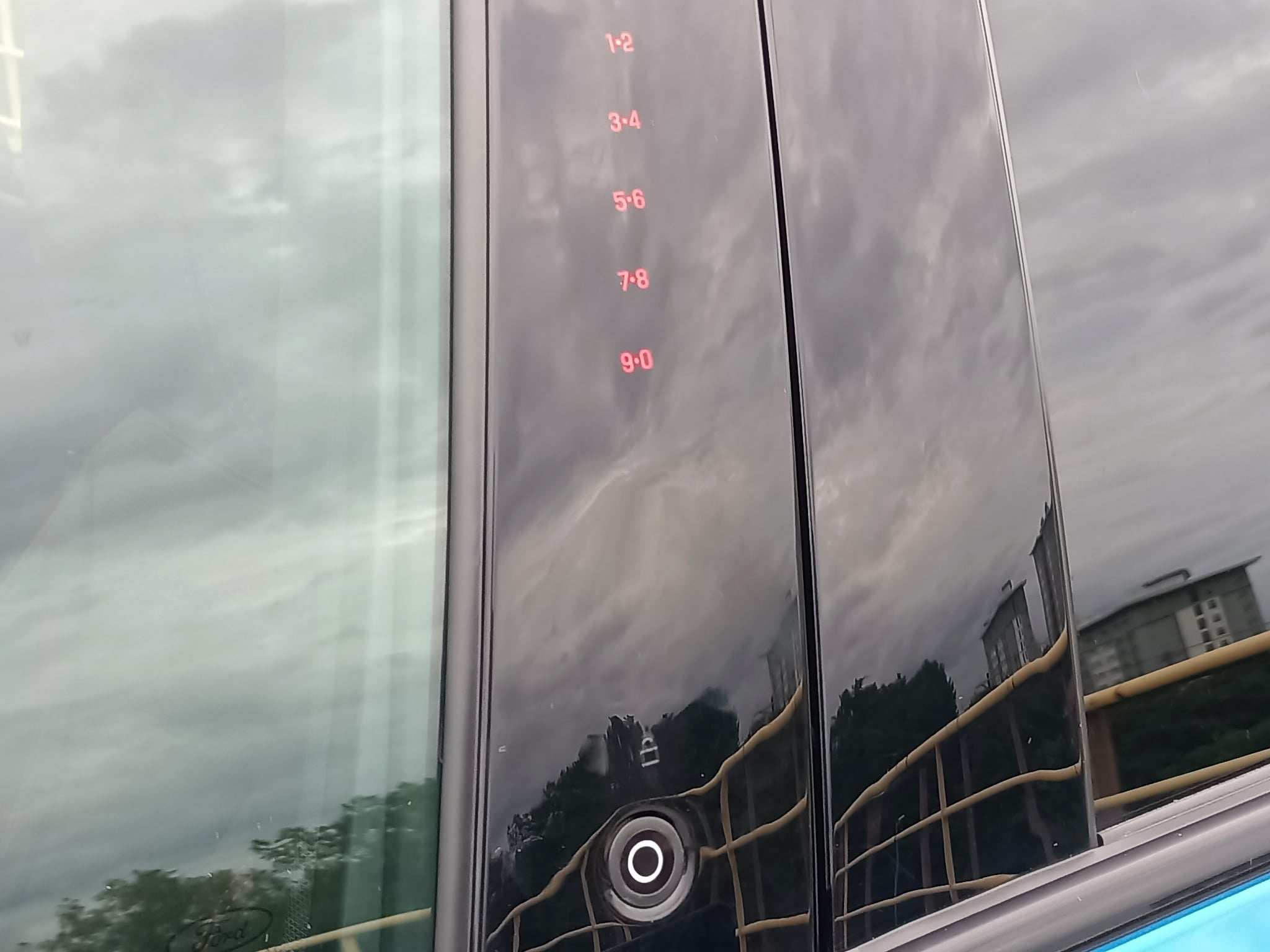
We’re just apprehensive about the push button doors without mechanical handles. If the 12V battery conks out, will the SecuriCode key pad still unlock the car and will the push buttons still open the doors?
When the EV’s charging port door won’t open, it creates a circular problem: The BEV needs to be plugged to a charger to charge its battery pack that will trickle-charge its 12V battery that will electronically open the charging port door to plug the BEV to a charger. Thus, like a dead battery in a vehicle with an internal combustion engine, a dead 12V battery is one of the most frequent reasons an electric vehicle fails to “start” or turn on, which strands its owner, who might end up thinking that his EV is “defective”. (No, Sir/Ma’am. It’s just the battery. No, Sir/Ma’am. It’s not the big one that you just unplugged from the EVCS that’s now fully charged. It’s the small 12-volt one, Sir/Ma’am. – Ed.)
It’s true what they say: Little things mean a lot.