 Power Wheels Magazine A Notch Above

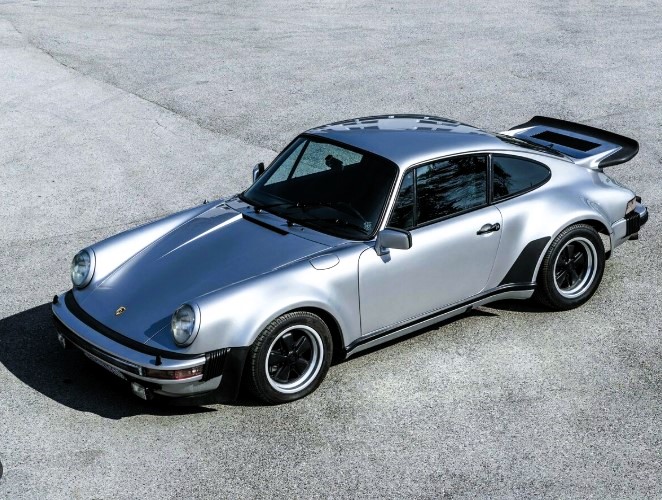
Porsche AG officially celebrated the 50th Anniversary of the Porsche 911 Turbo in 2024, counting from its unveiling at the Paris Auto Show in October 1974, where it was introduced simply as the Porsche Turbo as a 1975 model. European sales actually started in early 1975, thus 2025 marks five decades that the has been available to the motoring public. Known internally as the Type 930, Porsche’s first production turbocharged 911 featured wider fenders than the standard 911 due to its flared wheel arches, wider five-petal Fuchs forged alloy wheels with a black center and polished rim, and the distinctive “whale tail” rear spoiler.
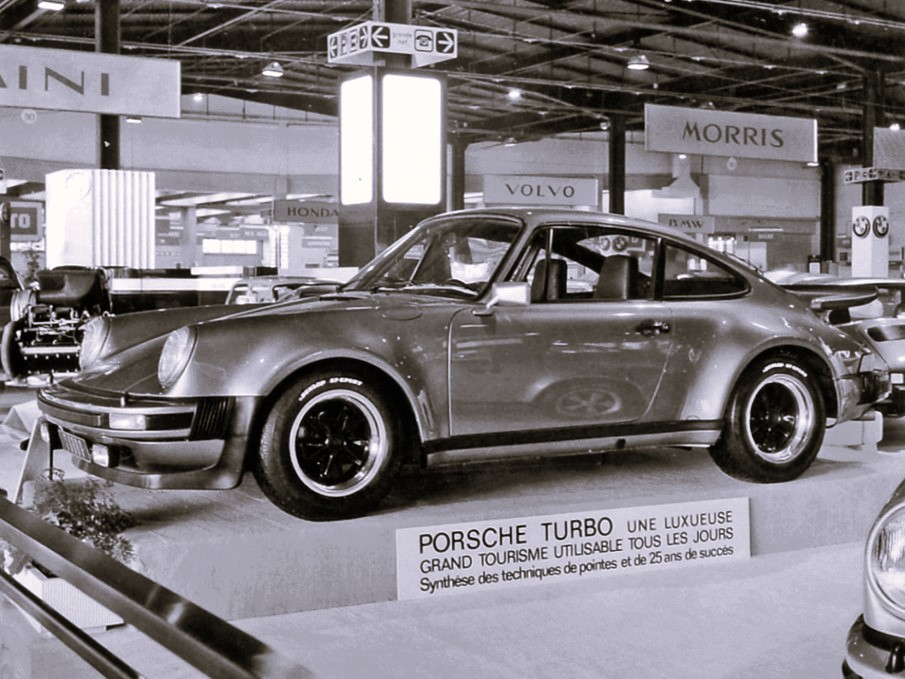
The Porsche Turbo debuted at the 1974 Paris Auto Show.
Mated to a 4-speed manual transmission, the turbocharged 3.0-liter flat-six engine produced 256 hp at 5,500 rpm and 329 Nm of torque that catapulted the 911 Turbo from zero to 100 km/h in just 5.5 seconds and a top speed of around 250 km/h. The raw power and exhilarating driving dynamics made it the fastest production car in Germany at the time while its potent on/off turbo surge would often overwhelm the rear 225/50VR16 Pirelli Cinturato P7 tires and catch drivers with moderate skills by surprise, earning it the nickname “Widow maker”.
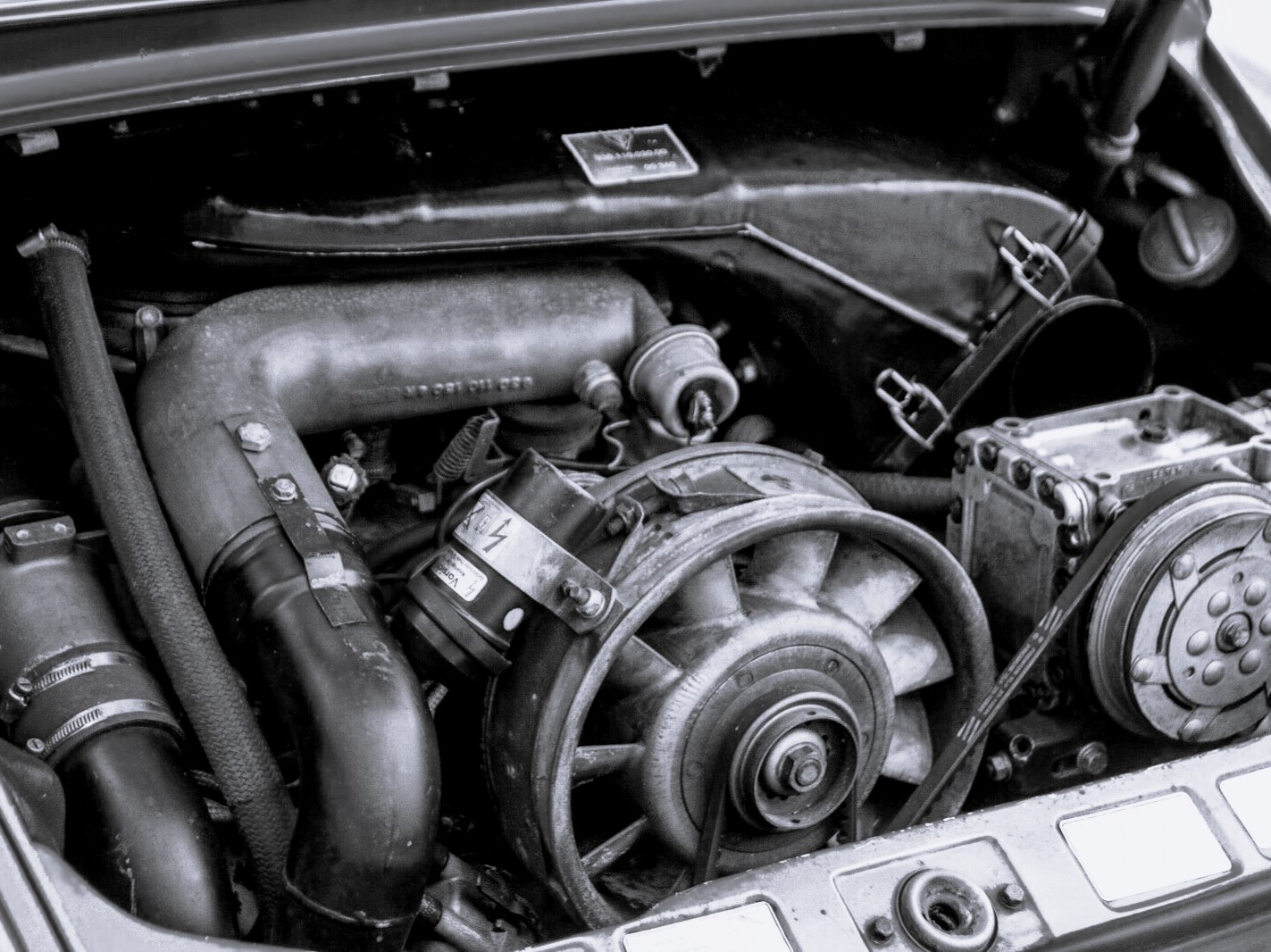
Early 911 Turbo 3.0-liter boxer engines produced 256 hp and 329 Nm of torque but were not fitted with intercoolers.
Initial Racing Applications
The 911 Turbo was initially intended for FIA Group 4 racing homologation, which led to the creation of the 934 and 935 race cars. In the late 1960s, Porsche fitted turbochargers on experimental race cars and, in 1972, began development on a turbocharged 911. The 911 Turbo Carrera RSR 2.1 race car entered competition in 1974 but FIA changed the rules in 1975 and 1976, requiring Group 4 and Group 5 race cars to be based on production cars that are available for sale to the general public. To comply, Porsche decided to put the 911 Turbo into production.

The 911 Turbo spawned from the FIA rule changes that affected the 1974 911 Turbo Carrera RSR 2.1 race car.
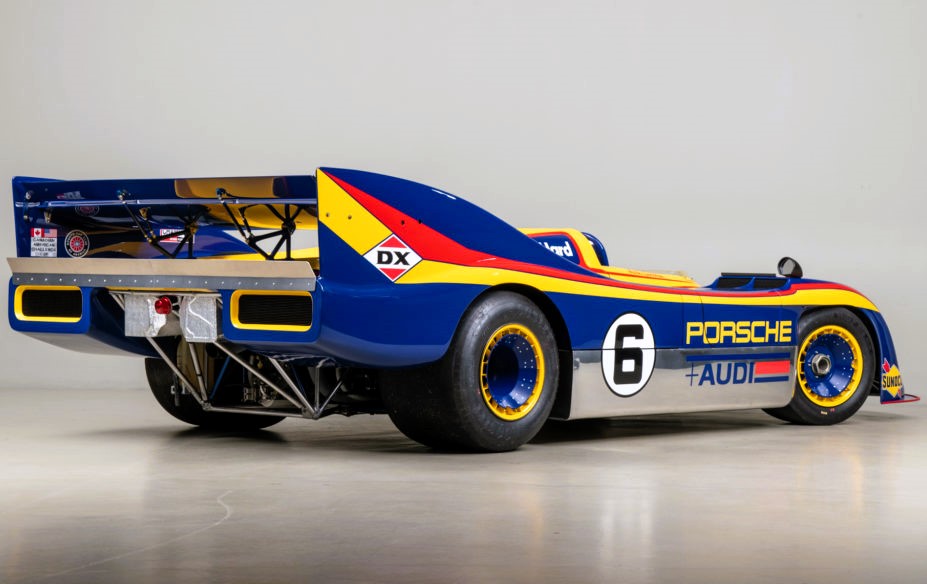
The turbocharging technology came from Porsche’s racing successes with the 917/30 CAN-AM race car…

… while the 3.0-liter boxer engine came from the 911 Carrera RS 3.0
For the production car, Ernst Fuhrmann adapted the turbocharging technology originally developed for the 917/30 CAN-AM race car and applied it to the 3.0-liter flat-six used in Carrera RS 3.0 using a single KK&K turbocharger. A turbocharged 2.7-liter flat-six, instead of the 3.0-liter boxer engine of later models, was installed in the very first 911 Turbo production model, dubbed as “Turbo No. 1”. It was fitted with the large rear spoiler but has the narrower bodywork of the 911 and retained the “Carrera” emblem at the back. Ferry Porsche gave Turbo No. 1 to his sister, Louise Piëch, and it is now on permanent display at the Porsche museum.
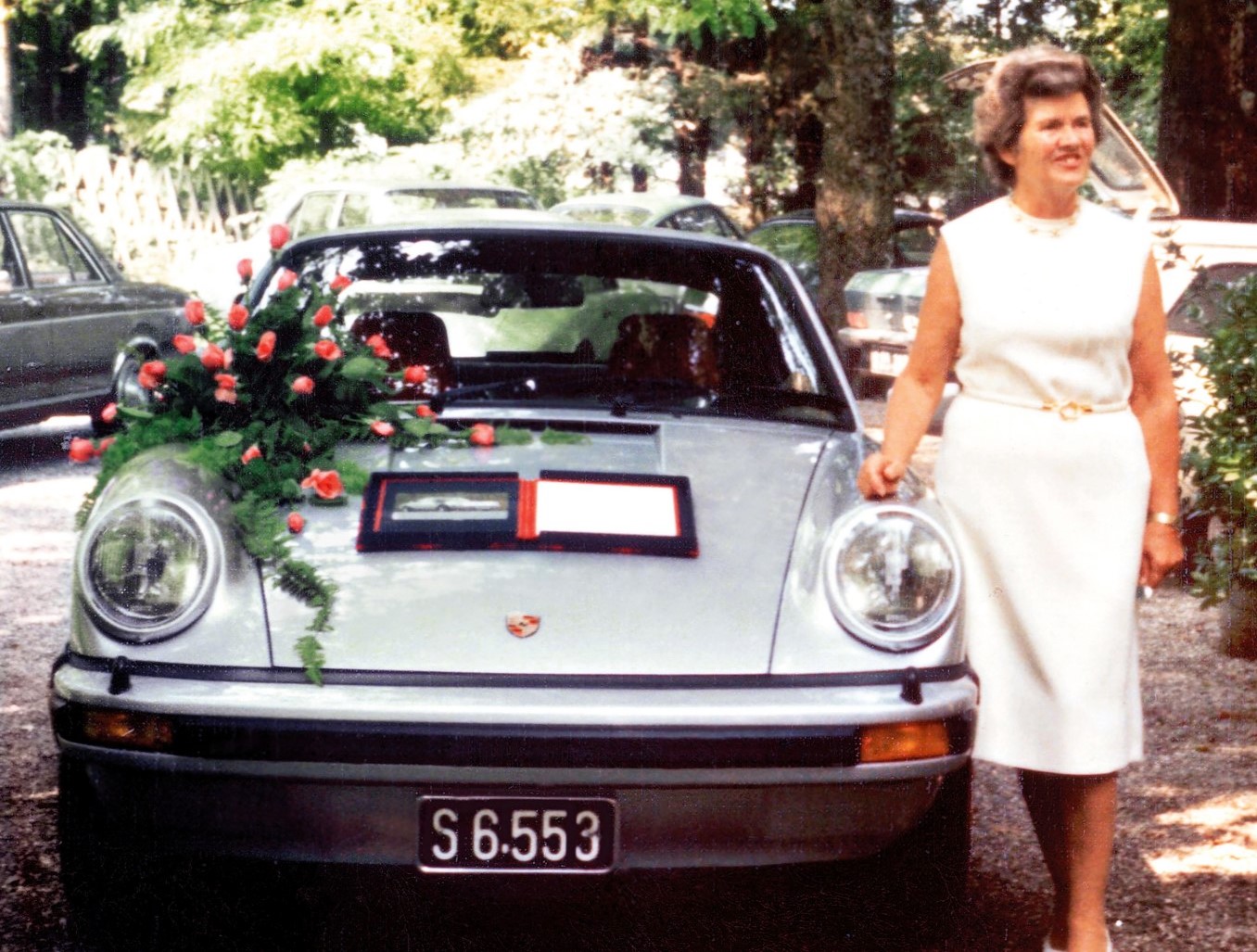
Ferry Porsche gifted his sister, Louise Piëch, with the very first production model and had a plate affixed to the glove compartment with her initials “LP” and the inscription “Turbo-Porsche No.1, Stuttgart-Zuffenhausen, 29. Aug.1974.”
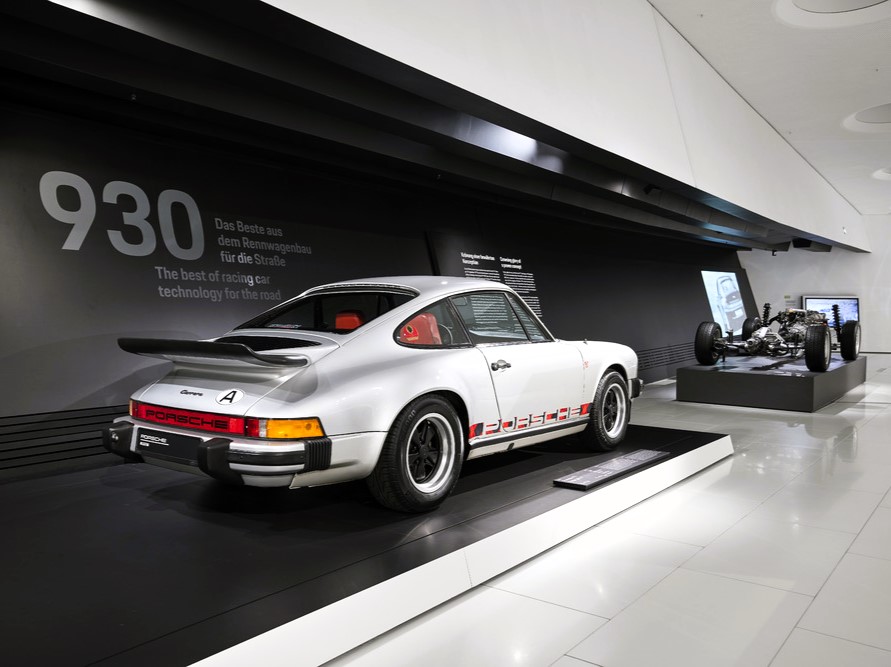
Turbo No. 1 is now on permanent display at the Porsche Museum in Stuttgart.
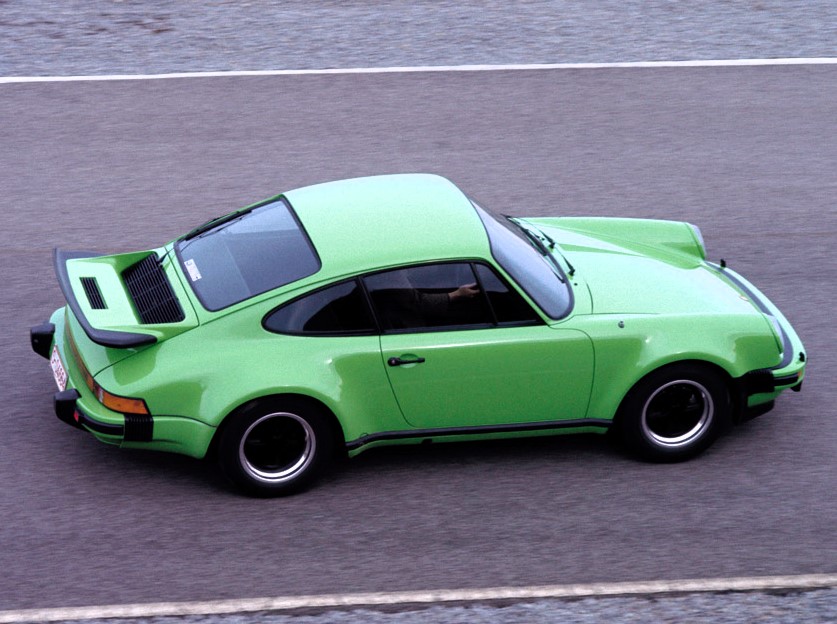
Buyers of the 1975 Porsche 911 Turbo 3.0 can choose from a wide range of colors, including this green hue.
Succeeding 911 Turbo Models
In 1978, Porsche increased the engine displacement 3,299cc (3.3 liters) and added an air-to-air intercooler that increased the output to 296 hp at 5,500 rpm and 412 Nm at 4,000 rpm. The “whale tail” rear spoiler was slightly raised to accommodate the intercooler while the suspension and brakes were upgraded. In 1986, Porsche added an emission control system to 911 Turbos bound for the US and Japanese markets that choked the power down to 282 hp at 5,500 rpm and 377 Nm at 4,000 rpm. The 1989 911 Turbo was the first and last 930 to have the Getrag G50 5-speed manual transmission until it was succeeded by the 964.
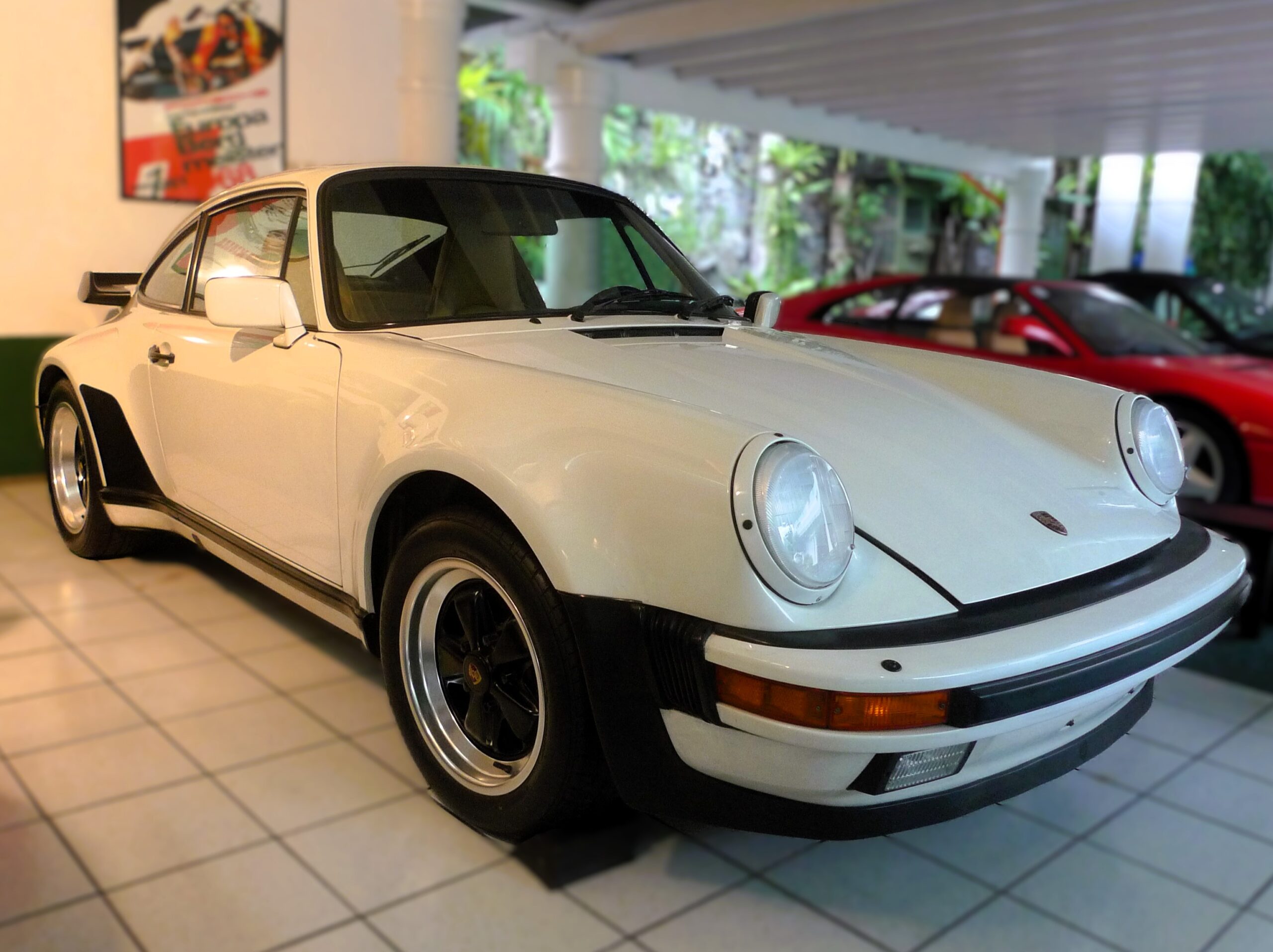
Porsche increased the 930’s engine displacement to 3.3 liters in 1978 and continuously introduced upgrades until it was superseded by the 964 Turbo in 1990.
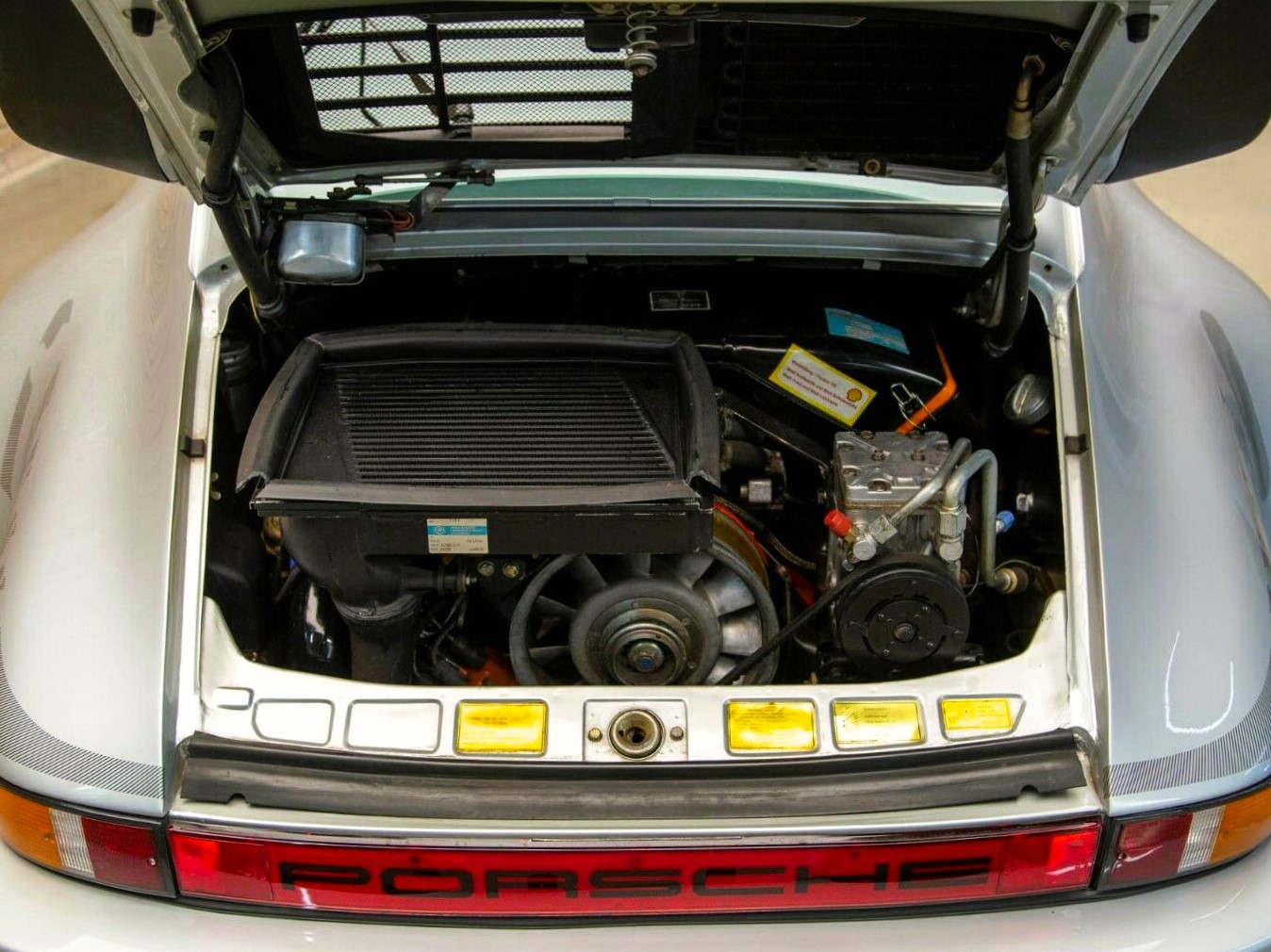
The “whale-tail” rear spoiler of the later 930 was raised a bit to make room for the intercooler of the 296 hp turbocharged 3.3-liter boxer engine.
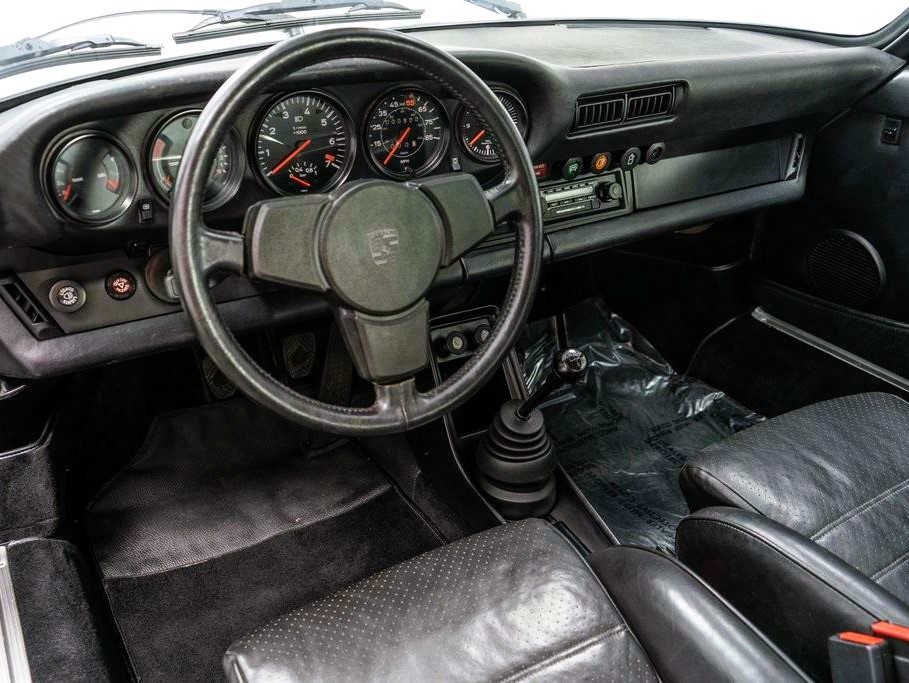
Despite being designed more than 50 years ago, the 930’s interior remains a model of Teutonic efficiency and ergonomics.
964 Turbo (1990-1994)
In March 1990, Porsche introduced the 964 Turbo with the same turbocharged 3.3-liter boxer engine with minor revisions to make it smoother, less prone to turbo lag, and produce more power with 316 hp at 5,750 rpm. In January 1993, the 3.6-liter M64 boxer engine with KK&K K27 turbocharger that developed 355 hp at 5,500 rpm and 520 Nm at 4,200 rpm replaced the 3.3-liter. The 964 Turbo 3.6 had a short 2-year run (1993–1994) making it one of the rarest and highly-desirable 911 Turbo model.
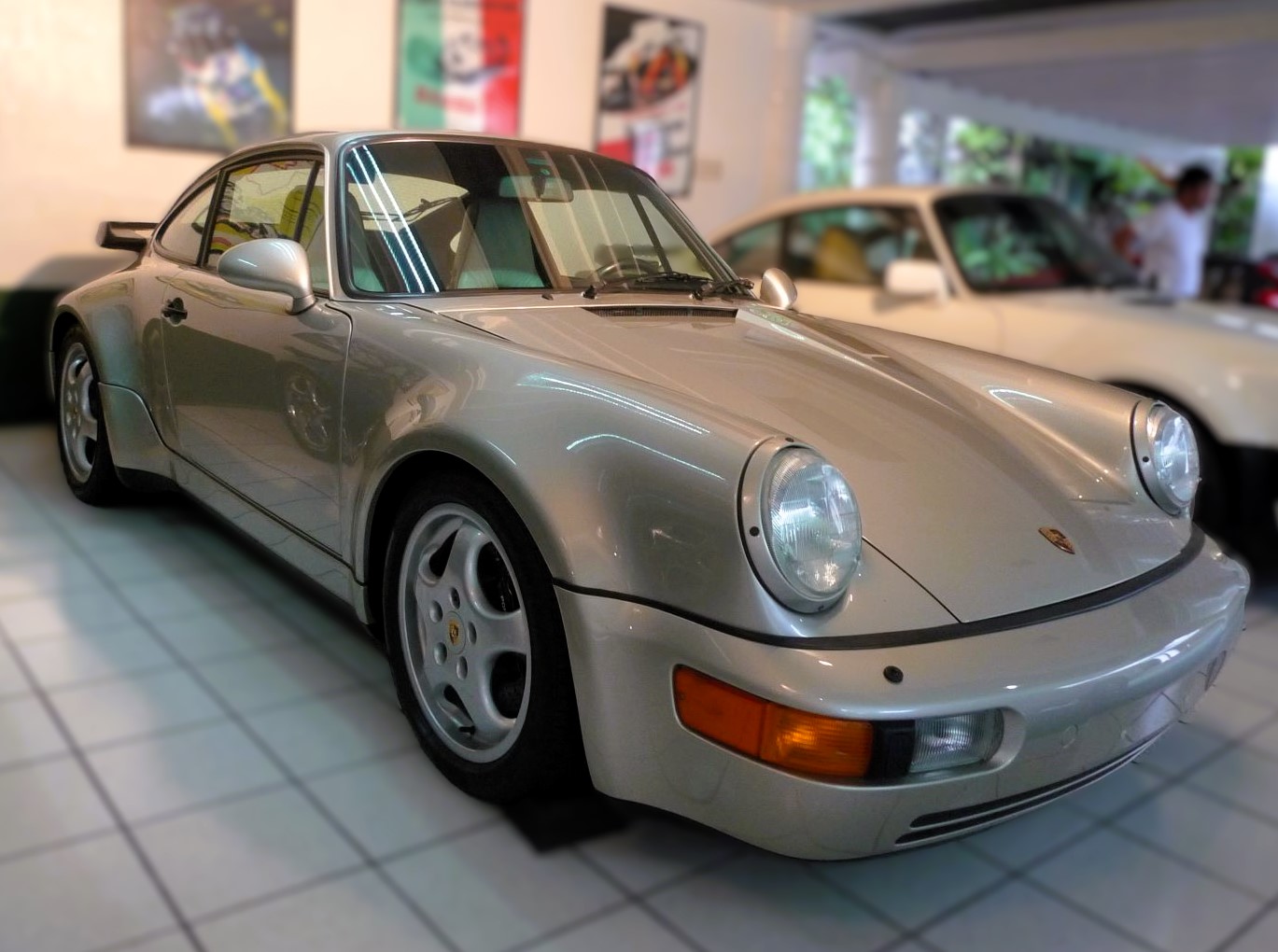
Early 964 Turbos carried over turbocharged 3.3-liter boxer engine but were smoother, less prone to turbo lag, and produced 316 hp.
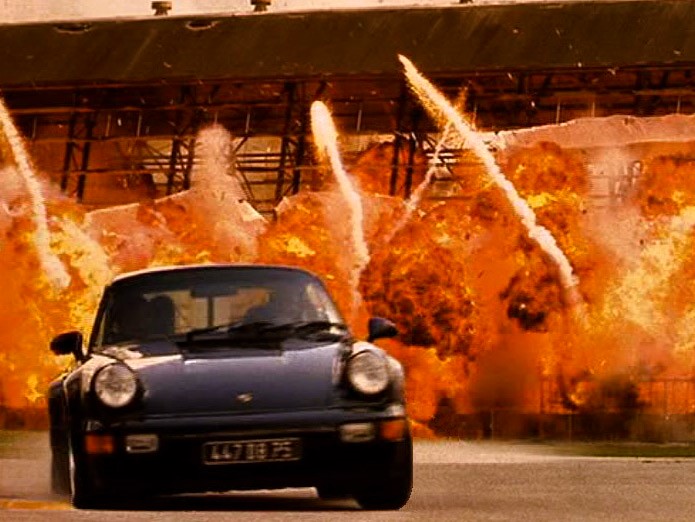
The 1993-1994 Porsche 964 Turbo 3.6 had a starring role in the movie “Bad Boys” using 335 hp to easily catch the villains.
993 Turbo (1995-1999)
In 1995, the 993 Turbo debuted with a new twin-turbo 3.6-liter boxer engine that featured air-to-air intercooler, electronic engine management, redesigned cylinder heads, and internal engine modifications that produced 402 hp. It was also the first 911 Turbo with all-wheel drive from the 959 and 2nd-generation onboard diagnostic system (OBDII). In 1997, Porsche’s Exclusiv Department offered the 993 Turbo S with 444 hp, yellow brake calipers, larger rear wing, quad-pipe exhaust, and air scoops behind the doors. The 993 was the last air-cooled 911 Turbo.
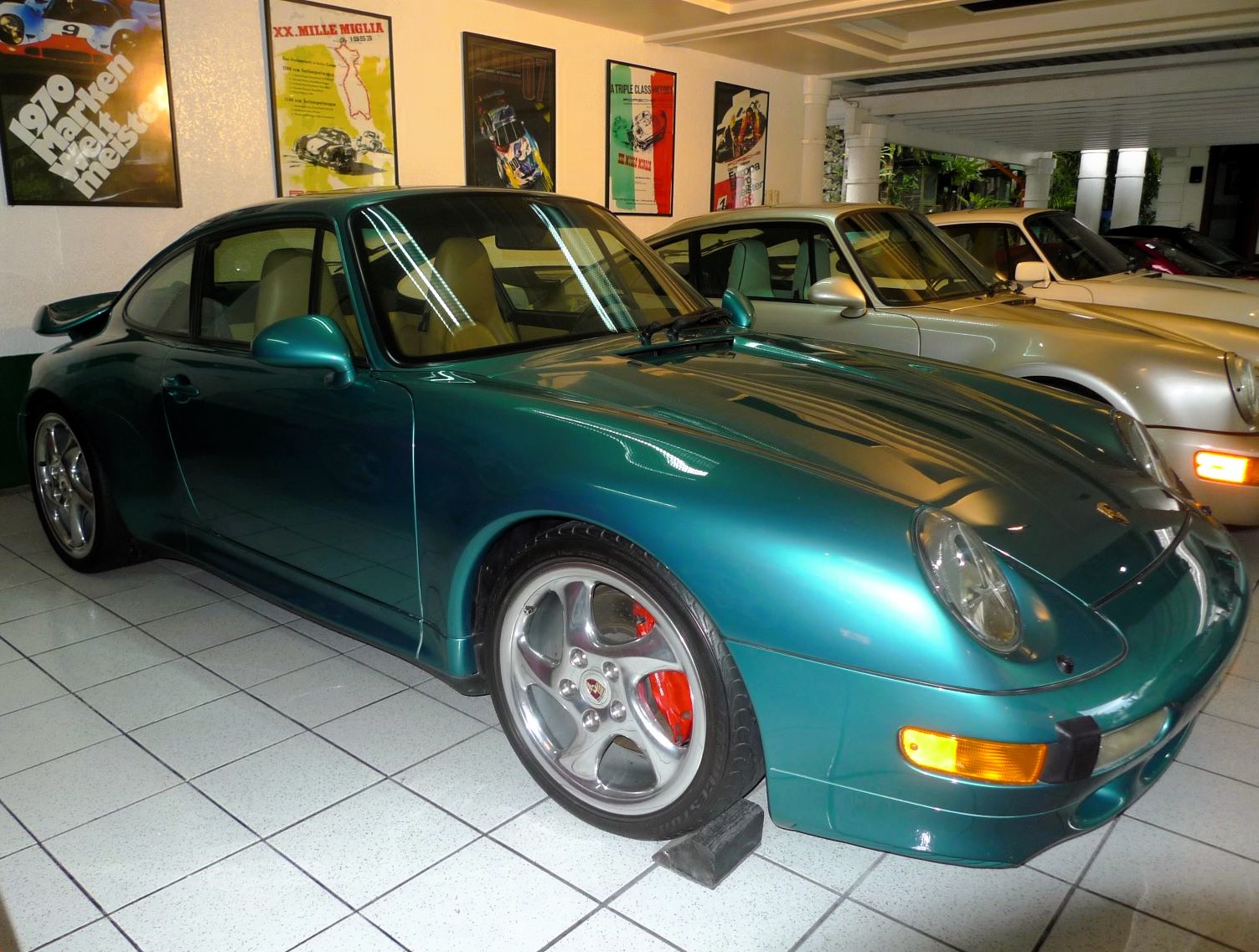
993 Turbo has AWD and was powered by the air-cooled 3.6-liter twin-turbo boxer that churned out 402 hp.
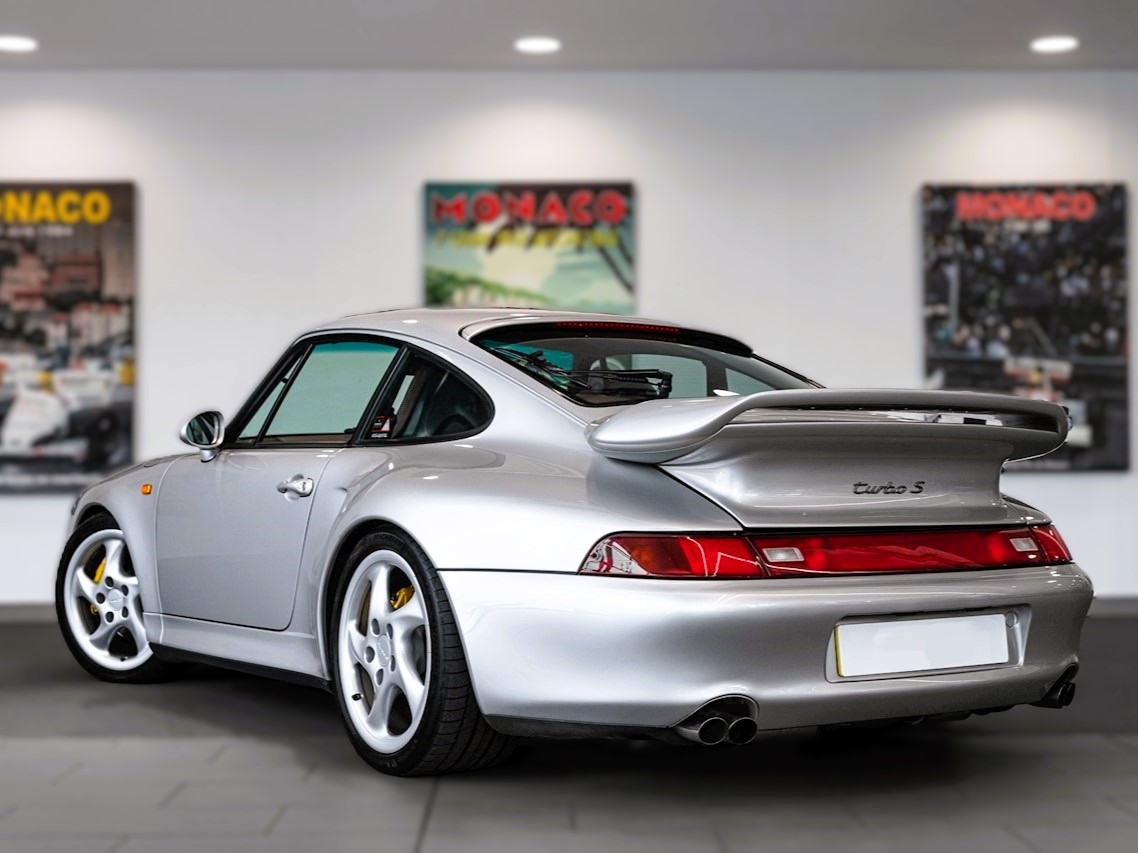
The 993 Turbo S was the final, most potent, limited-production air-cooled 911 Turbo with 424 hp.
996 Turbo (2000-2005)
At the Frankfurt Auto Show in September 1999, Porsche took a bold step and introduced the 996 Turbo with a liquid-cooled twin-turbocharged and intercooled 3.6-liter flat-6 engine, which was derived from the 1998 Le Mans-winning 911 GT1 race car. It produced 414 hp and 563 Nm of torque that was delivered through an all-wheel drive system with either a 6-speed manual or a 5-speed Tiptronic transmission. In 2005, Porsche offered the 996 Turbo S as a coupe or convertible with larger K24 turbochargers and intercoolers, a revised ECU, Porsche Ceramic Composite Brakes (PCCB) and quad-pipe exhaust that raised output to 444 hp.
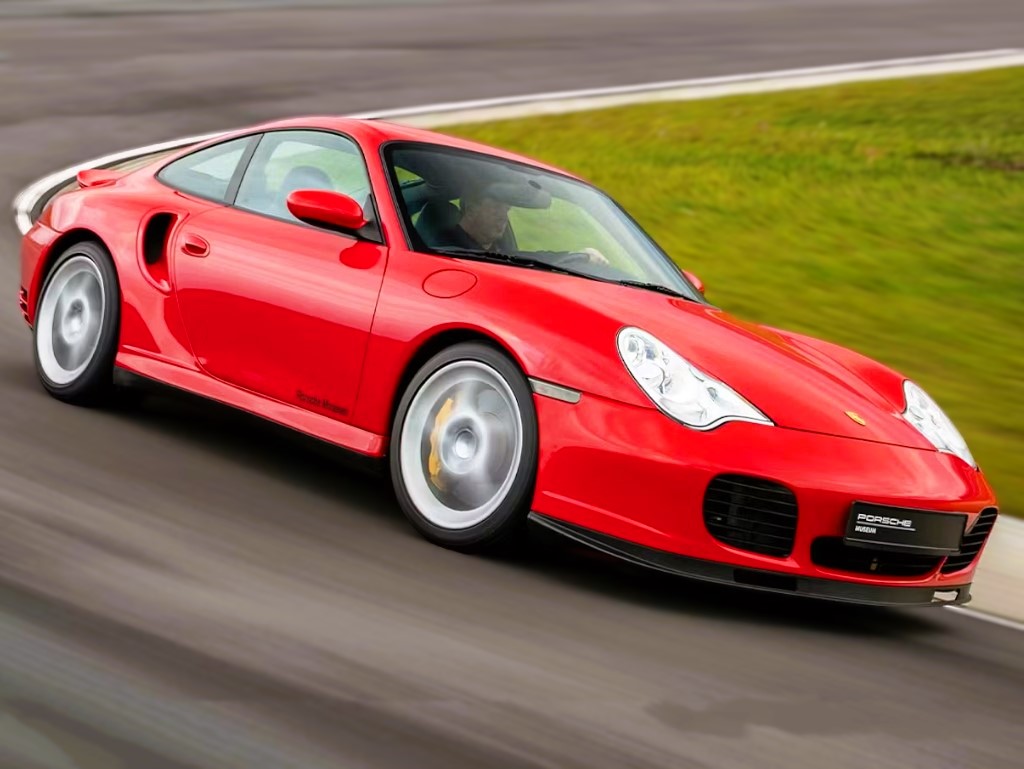
The 996 Turbo departed from its air-cooled convention with a 414 hp liquid-cooled twin-turbo boxer engine.
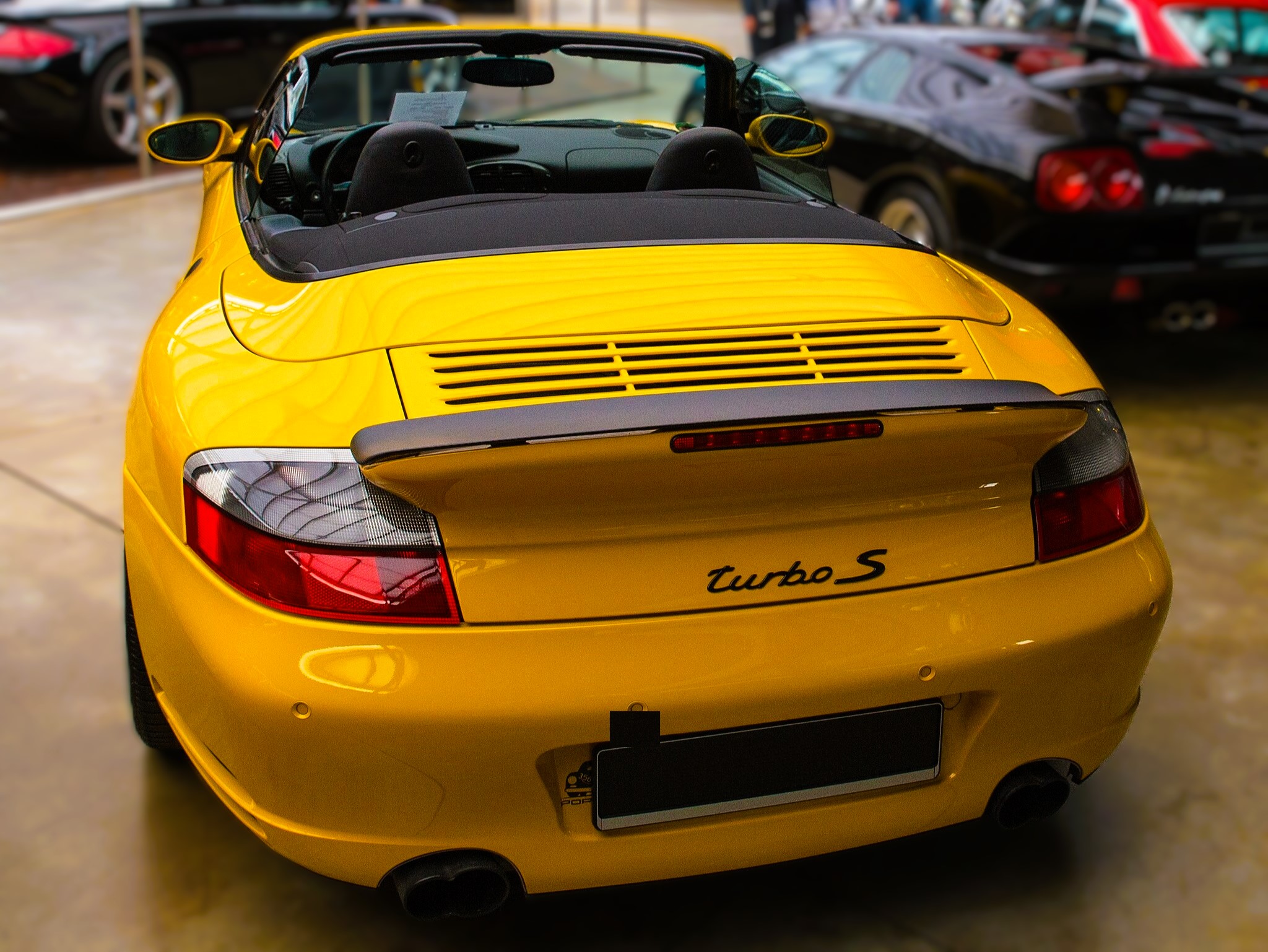
The 996 Turbo also came as a Cabriolet (convertible). Turbo S models made 444 hp.
997 Turbo (2006-2012)
Launched in February 2006, the 997 Turbo’s wider AWD body, retractable rear wing, and rear quarter air vents distinguish it from base 997 models. Two BorgWarner variable turbine geometry (VTG) turbochargers, a first for a Porsche production car, are fitted with a two-stage resonance intake system. Output is rated at 473 hp and 620 Nm (680 Nm at over boost) of torque managed by Porsche Traction Management (PTM) system in conjunction with the Porsche Stability Management (PSM) resulting in 0-100 km/h in 3.9 seconds with the 6-speed manual, 3.7 seconds with the 5-speed Tiptronic S, and a top speed of 310 km/h.
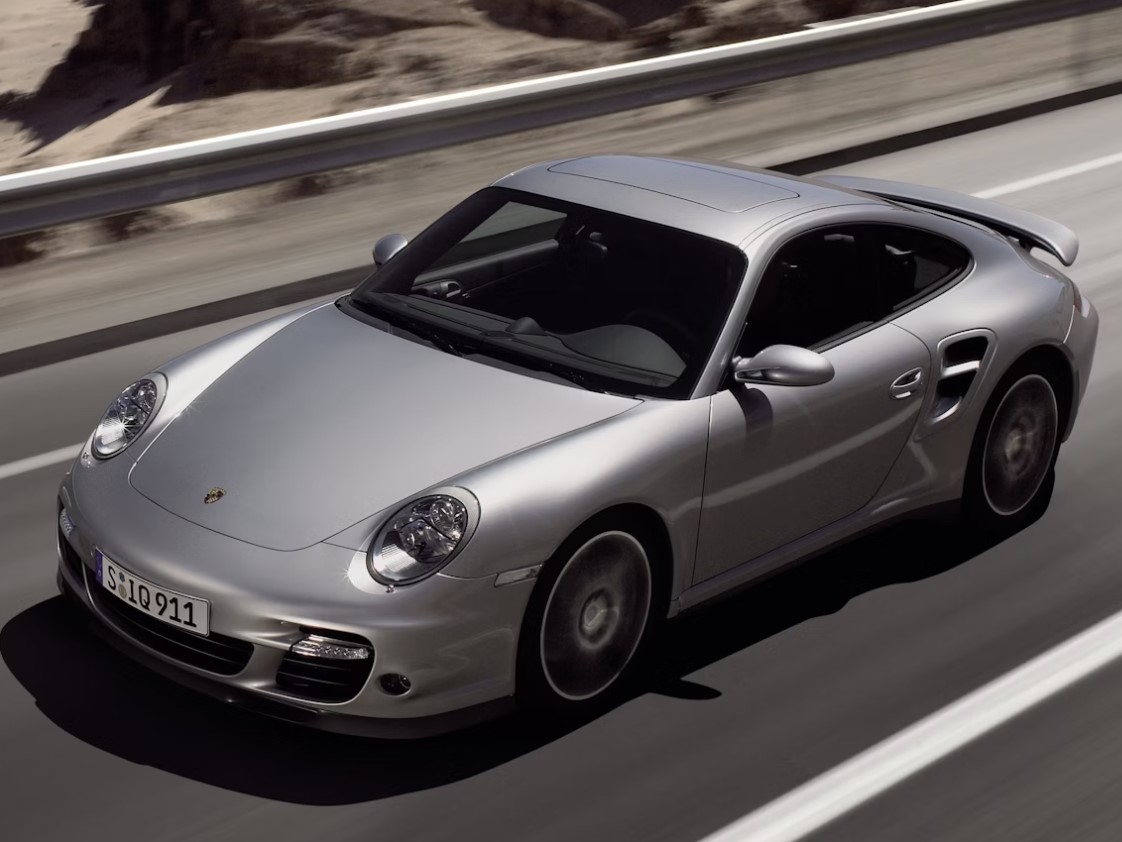
997 Turbo chucked the 996’s ovoid healights and returned to round headlights. 473 hp and 620 Nm of torque is managed by PTM and PSM.
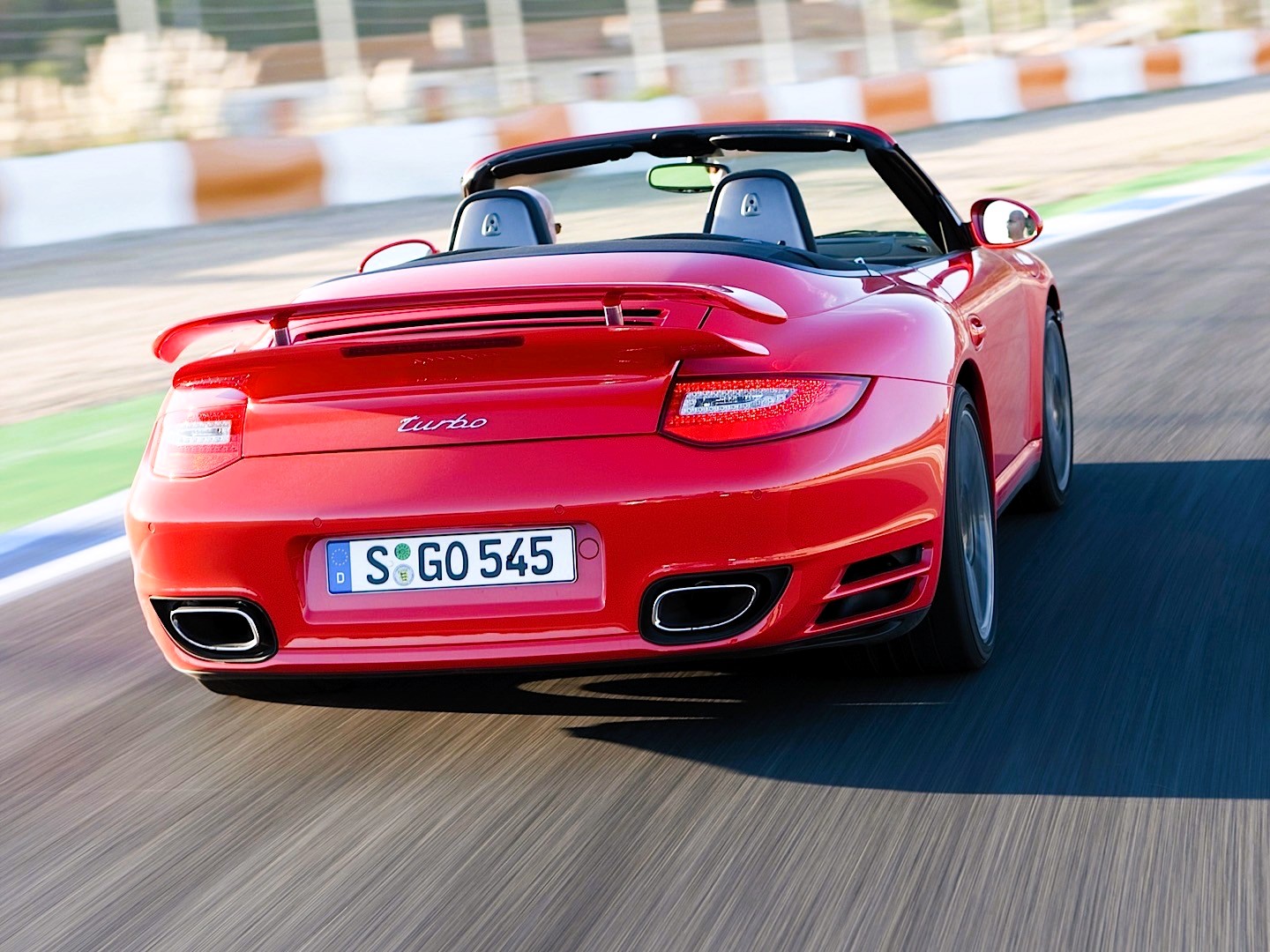
“Wind in your hair” takes a whole different meaning in a 997 Turbo Cabriolet.
991/991.2 Turbo (2013-2019)
The 991 Turbo debuted in May 2013 with a twin-turbocharged 3.8-liter boxer engine that generated 513 hp and 620 Nm of torque. The Turbo S upgraded the output to 552 hp and 700 Nm (750 Nm at over boost) to accelerate from 0 to 100 km/h in just 2.9 seconds. Both versions are equipped with the 7-speed PDK dual-clutch automatic transmission and all-wheel drive. The Cabriolet variant debuted in September 2013, the updated 991.2 Turbo and Turbo S models were launched in December 2015, while limited edition Turbo S Exclusive Series was unveiled in June 2017.
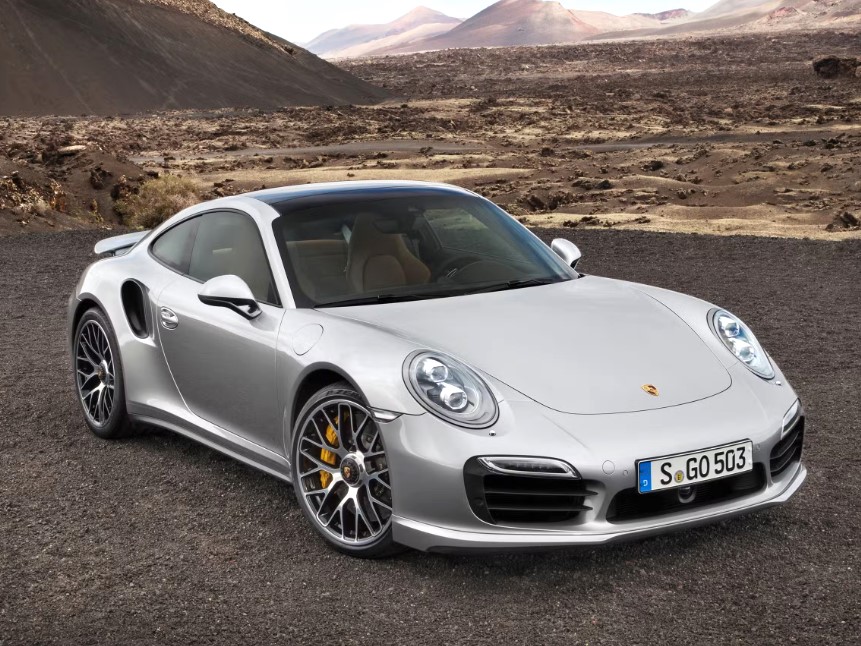
PDK-equipped 991 Turbo with twin-turbo 3.8-liter boxer engine made 513 hp and 620 Nm while Turbo S made 552 hp and 700 Nm (750 Nm at over boost).
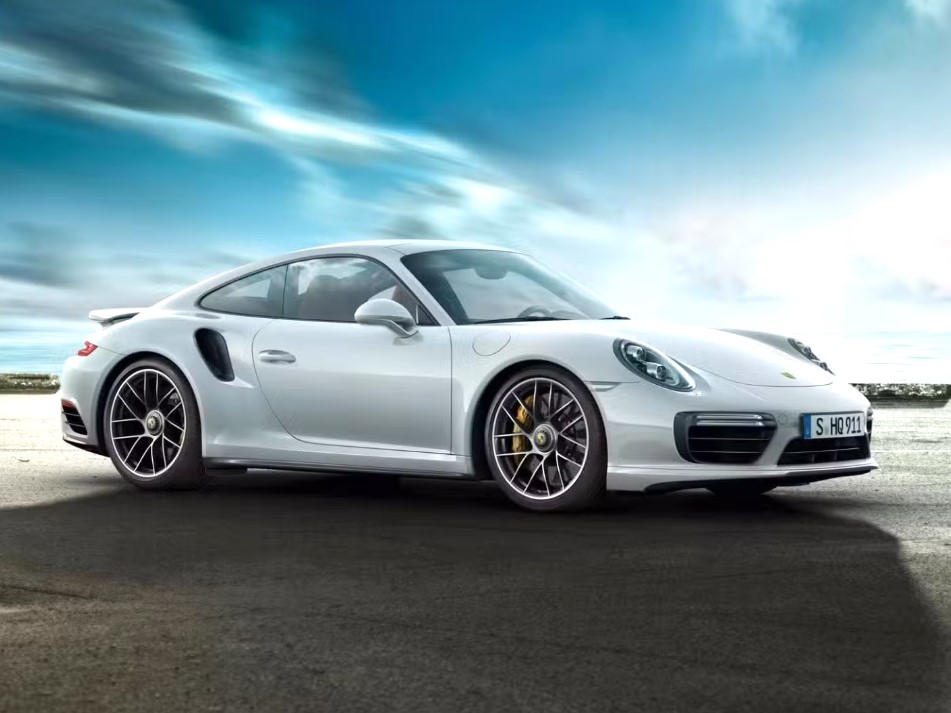
Spot the difference: 991.2 Turbo had some mechanical and cosmetic updates.
992 Turbo (2020-Present)
The S-version of the 992 Turbo was introduced in March 2020 and it featured a twin-turbo 3.7-liter boxer engine rated at 641 hp and 800 Nm that can accelerate it to 100 km/h in 2.7 seconds and reach a top speed of 330 km/h. Standard equipment included Porsche dynamic chassis control (PDCC), rear-axle steering and ceramic composite brakes. The non-S Turbo variant was introduced in July 2020 with 572 hp and 750 Nm due to a slightly smaller turbo compressor wheel and different mapping. The Turbo version comes standard with four square exhaust tips, cast-iron brake discs with red calipers and five-lug wheels while the Turbo S comes with twin oval sport exhaust system, carbon ceramic brake discs with yellow calipers and center lock wheels. The Turbo can be optioned with nearly all of the extras available to Turbo S.
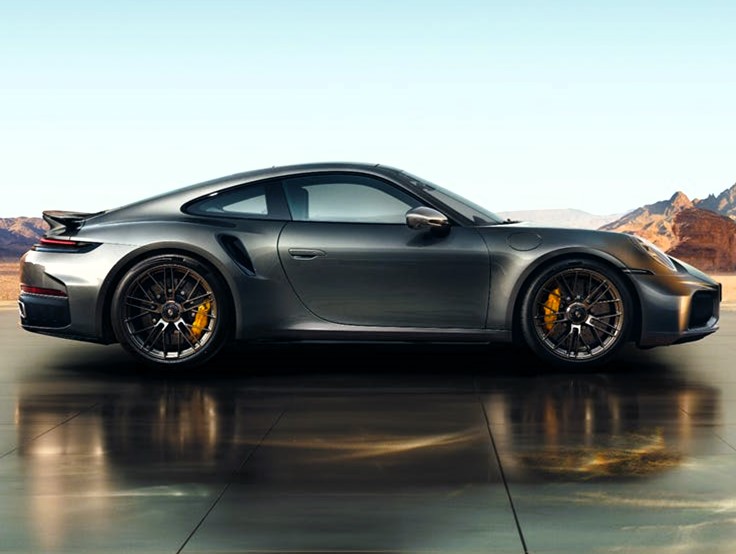
992 Turbo spews out 572 hp and 750 Nm while Turbo S models make 641 hp and 800 Nm of torque.
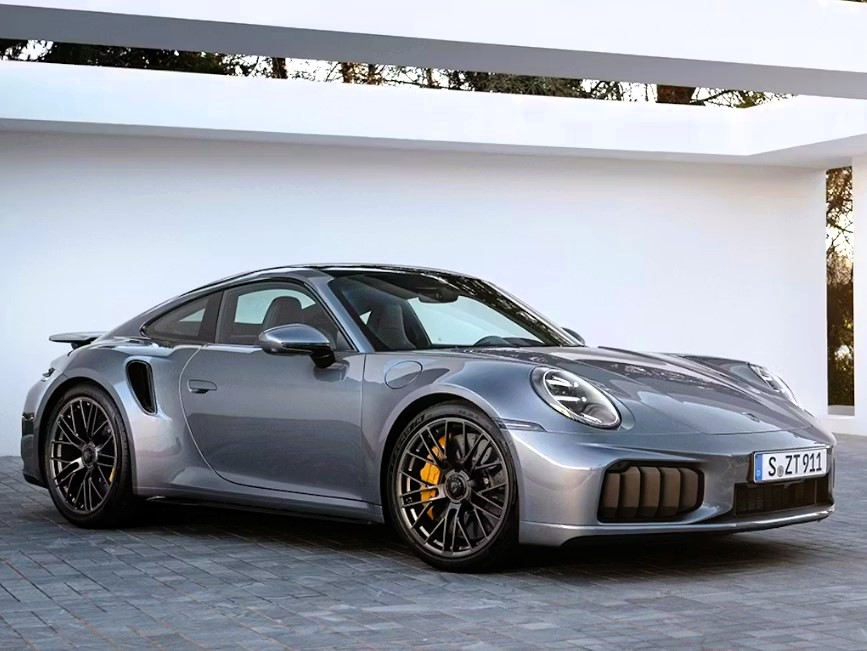
The current Porsche 911 Turbo model is the Type 992.2 with cosmetic and tech upgrades over the 992.
Porsche 911 Turbo 50
Porsche introduced a special limited-edition model, the 911 Turbo 50, in 2024 to commemorate the 911 Turbo’s 50th Anniversary. A total of 1,974 units were produced worldwide, symbolizing the year 1974 when the first 911 Turbo was unveiled at the Paris Auto Show. Designed with collectors in mind, the 911 Turbo 50 is a 992.2 Turbo with a Heritage Design Package with details such as Tartan-patterned trim similar to the interior of Ferry Porsche’s personal 930-Series 911 Turbo. The special edition sports car combined modern performance with retro styling cues to honor the legacy of the Porsche 911 Turbo.
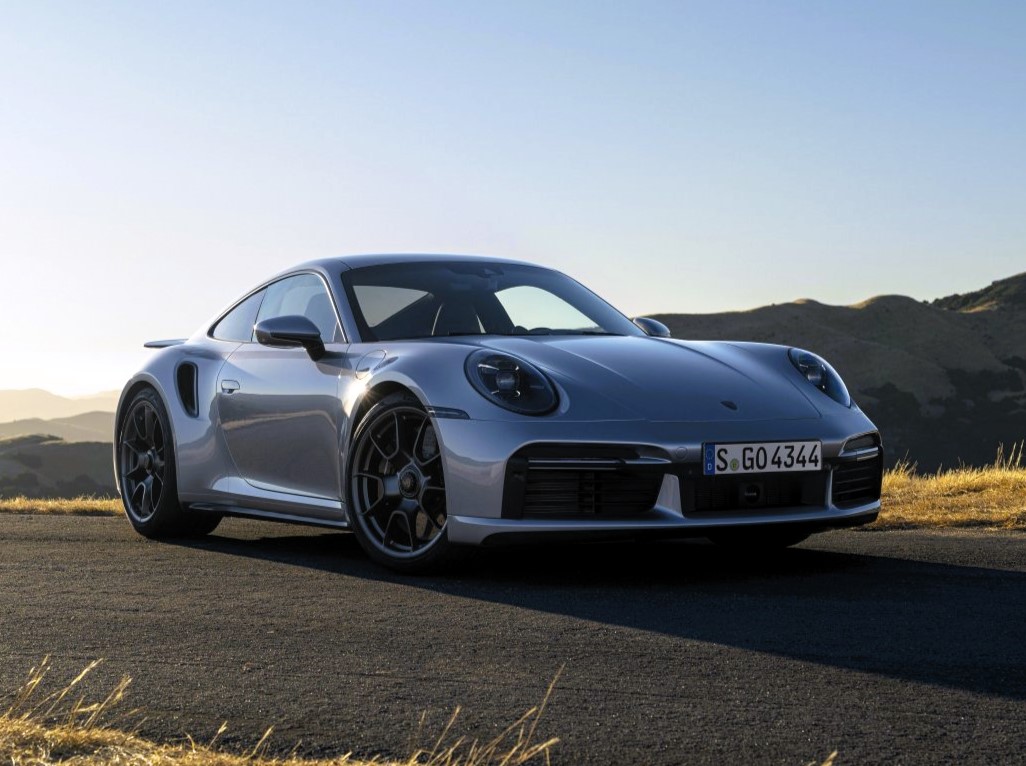
The 2024 Porsche 911 Turbo 50 is a limited-edition model with only 1,974 examples made.
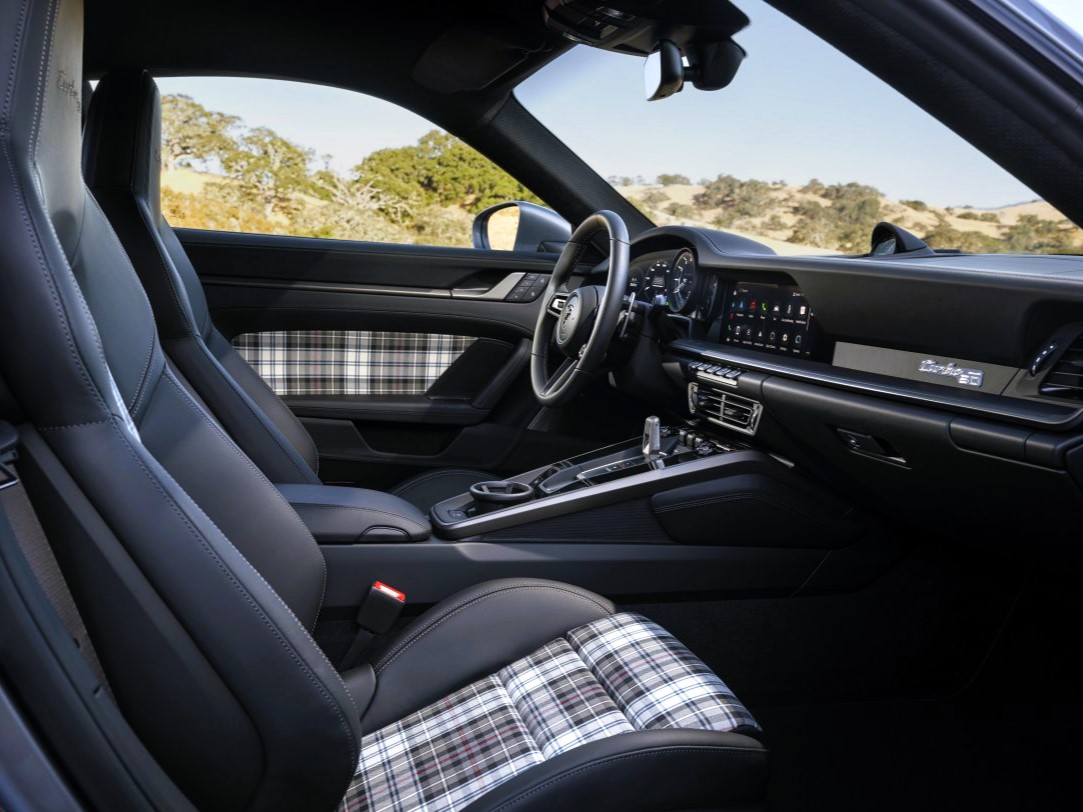
Inspired by Ferry Porsche’s personal 911 Turbo, the Tartan-patterned interior is part of the 911 Turbo 50’s Heritage Design Package.
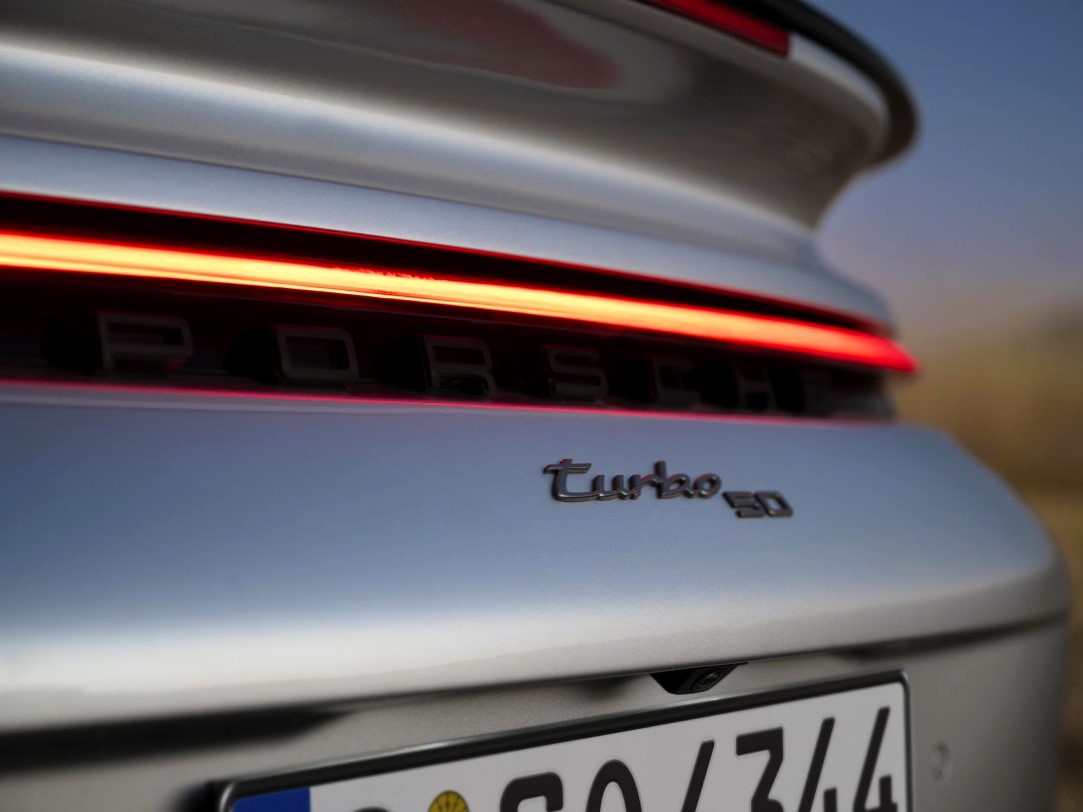
Rear script identifies it as a special, limited -edition 911 Turbo 50…
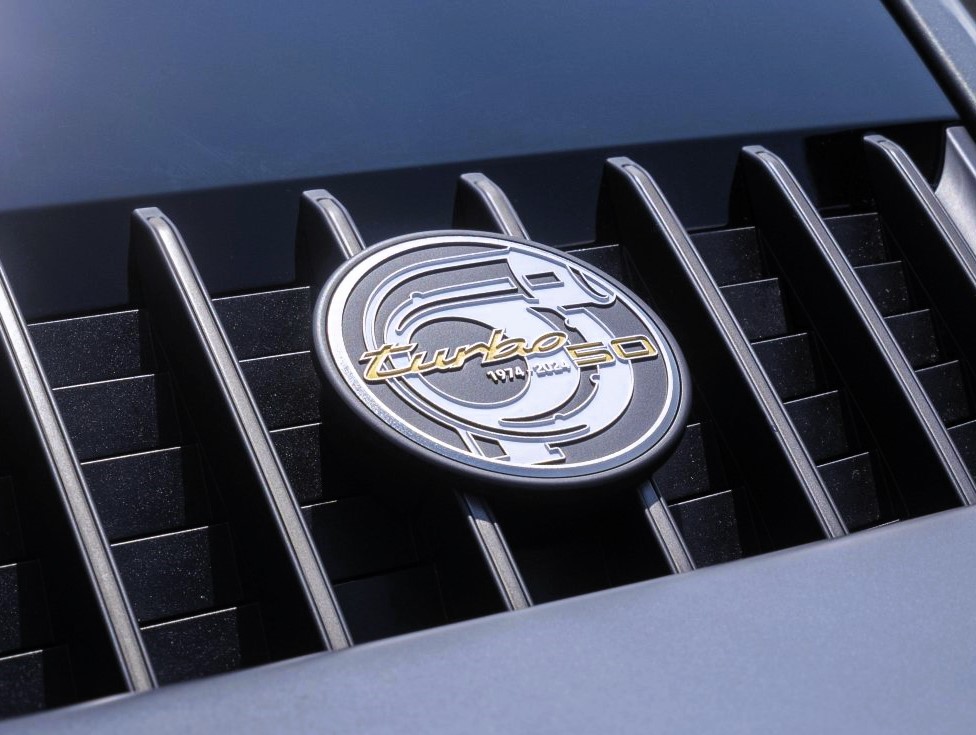
… while the medallion on the grille atop the rear engine cover commemorates 50 years of the 911 Turbo.
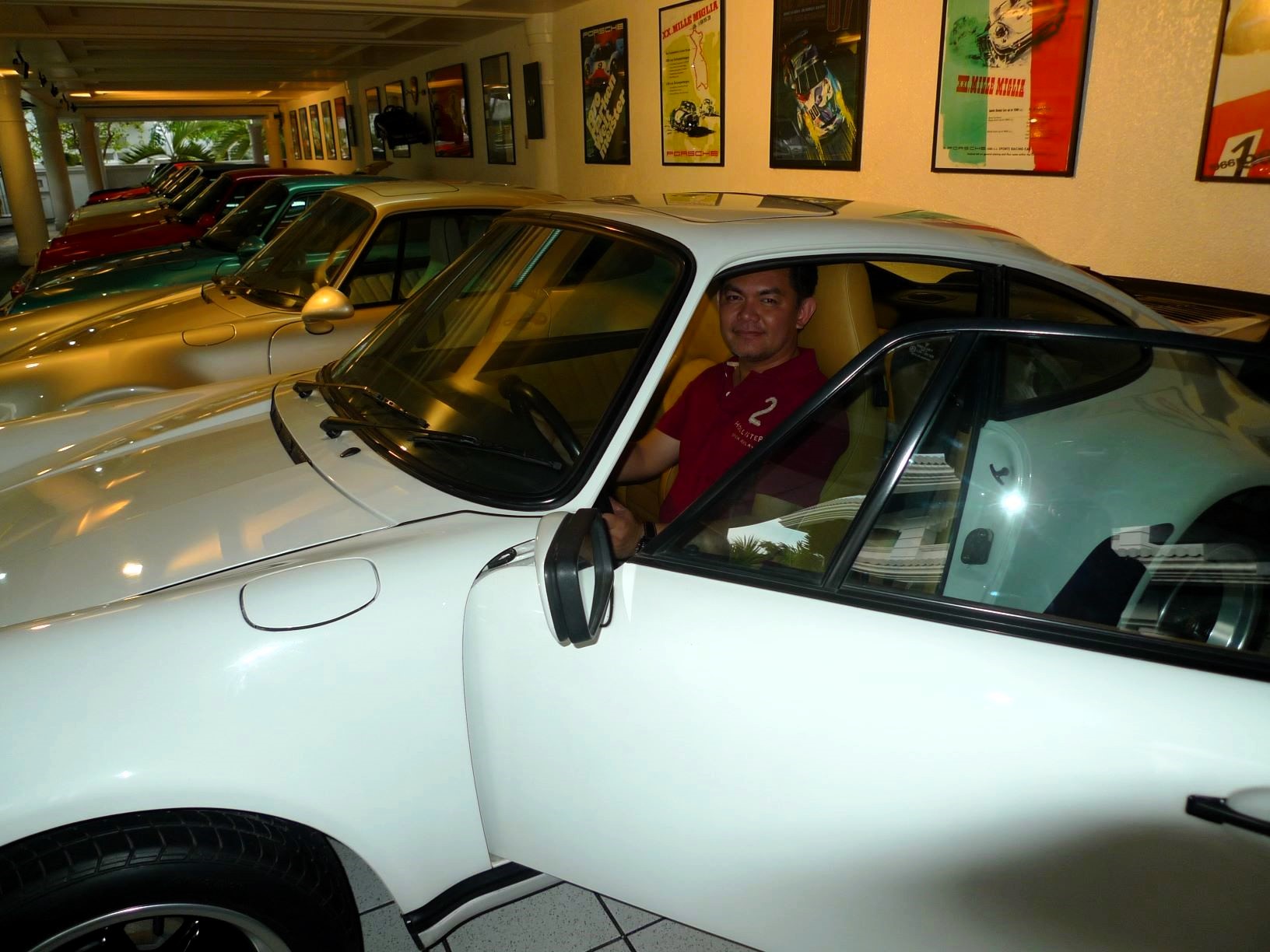
The author, Lester Dizon, is a big fan of the Porsche 911 Turbo. His dream car is a 930 Turbo from 1988 (the year he graduated from college) but he’ll settle for any 911 Turbo series that his meager budget can afford.