 Power Wheels Magazine A Notch Above

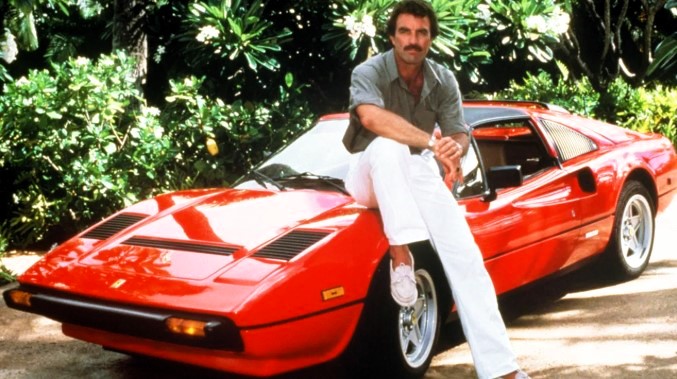
The Ferrari 308 GTS became famously recognized from 1980 to 1988 as the red sports car driven around Oahu, Hawaii by private detective Thomas Magnum, played by Tom Selleck, in the popular TV series “Magnum, P.I.”. Few people actually know that the Ferrari 308 GTB “Berlinetta” coupe debuted five years earlier at the 1975 Paris Motor Show while the GTS “Spider”, with its removable “targa” roof, bowed two years after. Sì, signore, this beautiful and exciting Italian two-seat sports car has already turned 50 years old!
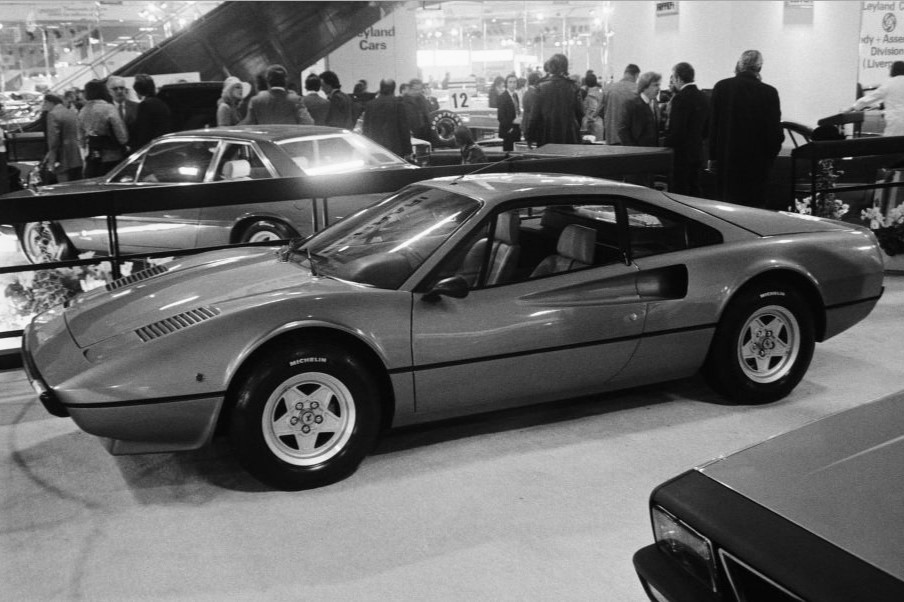
The Ferrari 308 GTB debuted at the 1975 Paris Motor Show.
Pininfarina designer Leonardo Fioravanti, who was responsible for the Ferrari Daytona, Dino, and 365 Berlinetta Boxer, lifted several design elements from these iconic models to create an automobile that Road & Track magazine praised as “Beauty is its reason for being”. The 308 GTB/GTS featured a tube frame with separate body built by Carrozzeria Scaglietti. The first 308 Berlinetta bodies were made of glass-reinforced plastic (GRP) / fiberglass, which is vetroresina in Italian. In June 1977, Ferrari switched to steel bodies after making just 808 vetroresina models in 308 GTB guise.
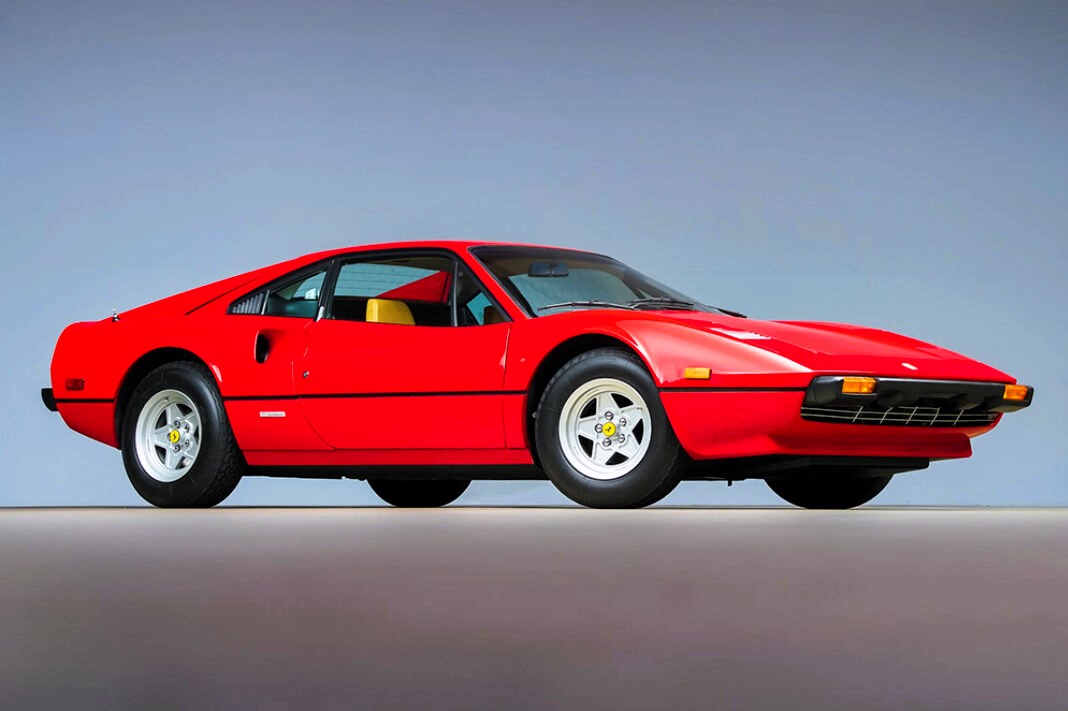
Fiberglass-bodied 308 GTB “Vetroresina” models are now highly-sought after by car collectors.
Exotic Quad Cam Power
Power for the 308 GTB/GTS came from a transversely-mounted 2.9-liter 90° V8 engine with a flat-plane crankshaft, two belt-driven overhead camshafts per cylinder bank (making it a “quad cam”), four twin-choke Weber 40DCNF carburetors and single coil ignition. European 308 GTB/GTS with dry lump lubrication made 252 horsepower at 6,600 rpm but American versions with wet sumps had “only” 237 hp because of emissions controls. Mounted below the V8 engine was a fully-synchromesh “dog-leg” 5-speed manual transmission.
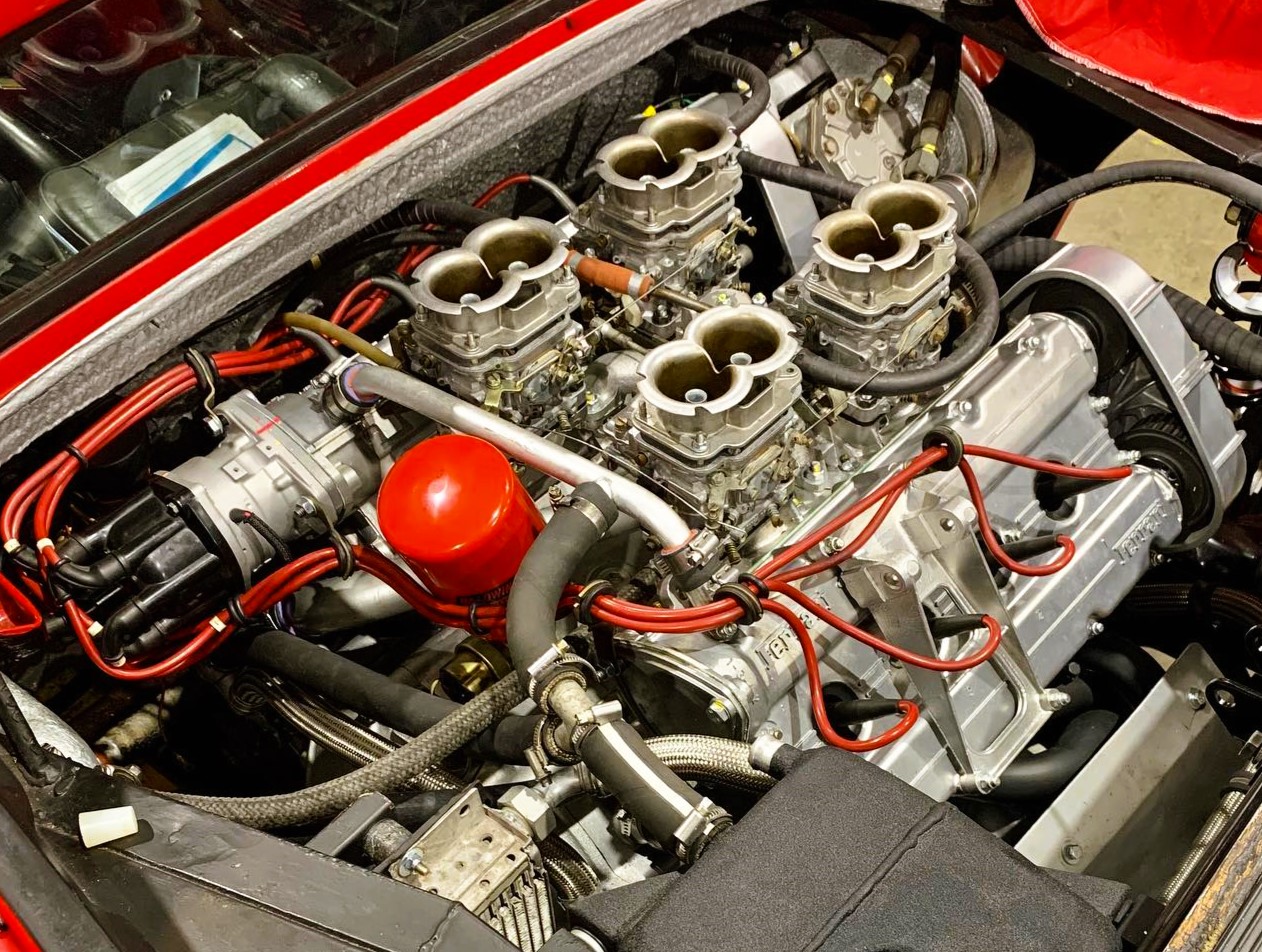
308 GTB/GTS 2.9-liter 90° V8 engine with DOHC per cylinder bank and 4 Weber carburetors.
A clutch-type limited-slip differential delivered the power to the rear wheels while an all-independent suspension comprised of double wishbones, coaxial coil springs, hydraulic dampers and anti-roll bars handled road undulations and handling duties. Ventilated disc brakes were fitted on all four corners to effectively rein in the speed while unassisted rack and pinion steering provided unfiltered feedback. Five-spoke 14-inch alloy wheels were standard while optional 16-inch wheels were available later. 2,897 GTB and 3,219 GTS carbureted units found enthusiastic owners from 1975 to 1980.
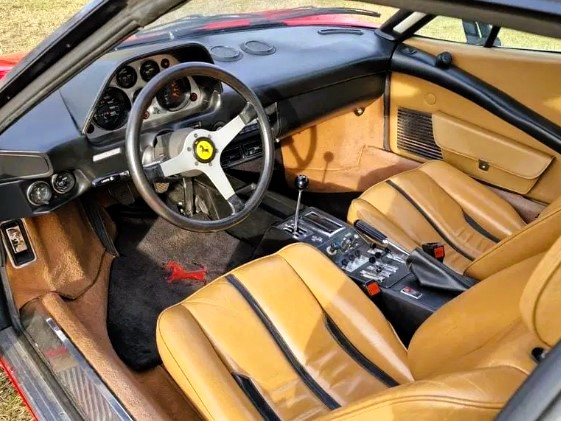
No power steering, gated shifter: 308 GTS cockpit provides an analog yet exciting driving experience.
1980-1982 Ferrari 308 GTBi/GTSi
In 1980, Ferrari introduced the Bosch K-Jetronic fuel injection and coupled it with a Magneti Marelli Digiplex electronic ignition that uses two ignition modules – a separate module for each cylinder bank. The new fuel delivery system necessitated a model name change to 308 GTBi/GTSi to differentiate it from the carbureted models. Other than the additional “i” on the emblem, it looked the same as the previous model, except power dropped from 252 to 211 hp on European models and from 237 to 202 hp on US models.
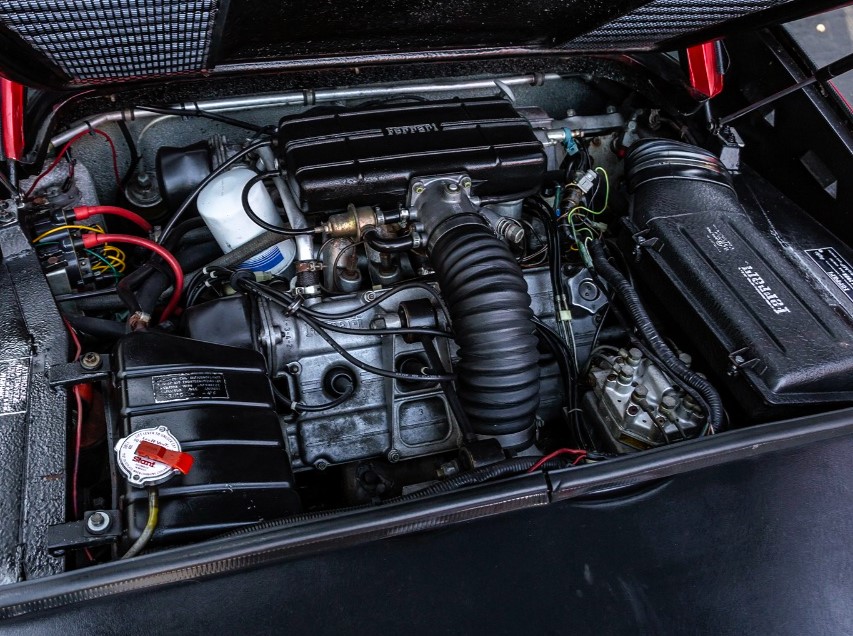
Bosch K-Jetronic fuel injection replaced the carburetors in the 308 GTBi/GTSi…
The standard 14-inch wheels had a slightly different design and were fitted with Michelin TRX radial tires while the optional 16-inch wheels were shod in Michelin XWX radials. The interior changes included a black steering wheel with three perforated spokes, a different pattern on the seats, and the center console-mounted clock and oil temperature gauge. Ferrari produced 494 GTBi and 1,743 GTSi models from 1980 to 1982.
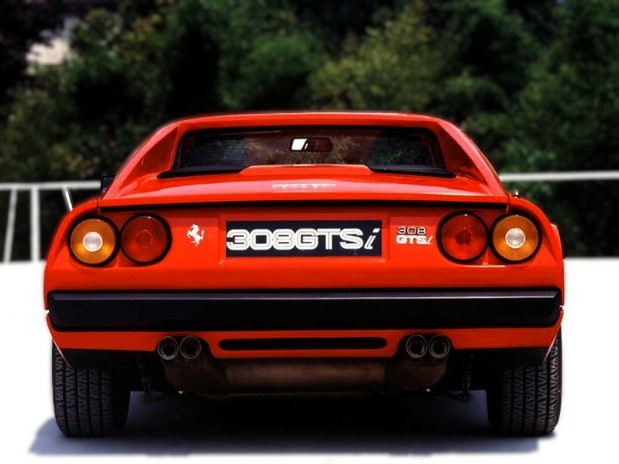
… while Ferrari added a stylized letter “i” to the rear emblem.
1982-1985 Ferrari 308 GTB/GTS QV
At the 1982 Paris Motor Show, Ferrari launched the 308 GTB/GTS QV with an updated pair of DOHC 32-valve cylinder heads for its 2.9-liter 90° V8 engine. Each cylinder had four valves –quattrovalvole in Italian – which produced 240 hp at 7,000 rpm and 260 Nm of torque at 5,000 rpm for European models, 230 hp at 6,800 rpm and 255 Nm at 5,500 rpm for US models. The gear and final drive ratios were changed to match the characteristics of the new quattrovalvole (QV) V8, which carried over the Bosch K-Jetronic fuel injection and Magneti Marelli Digiplex electronic ignition.
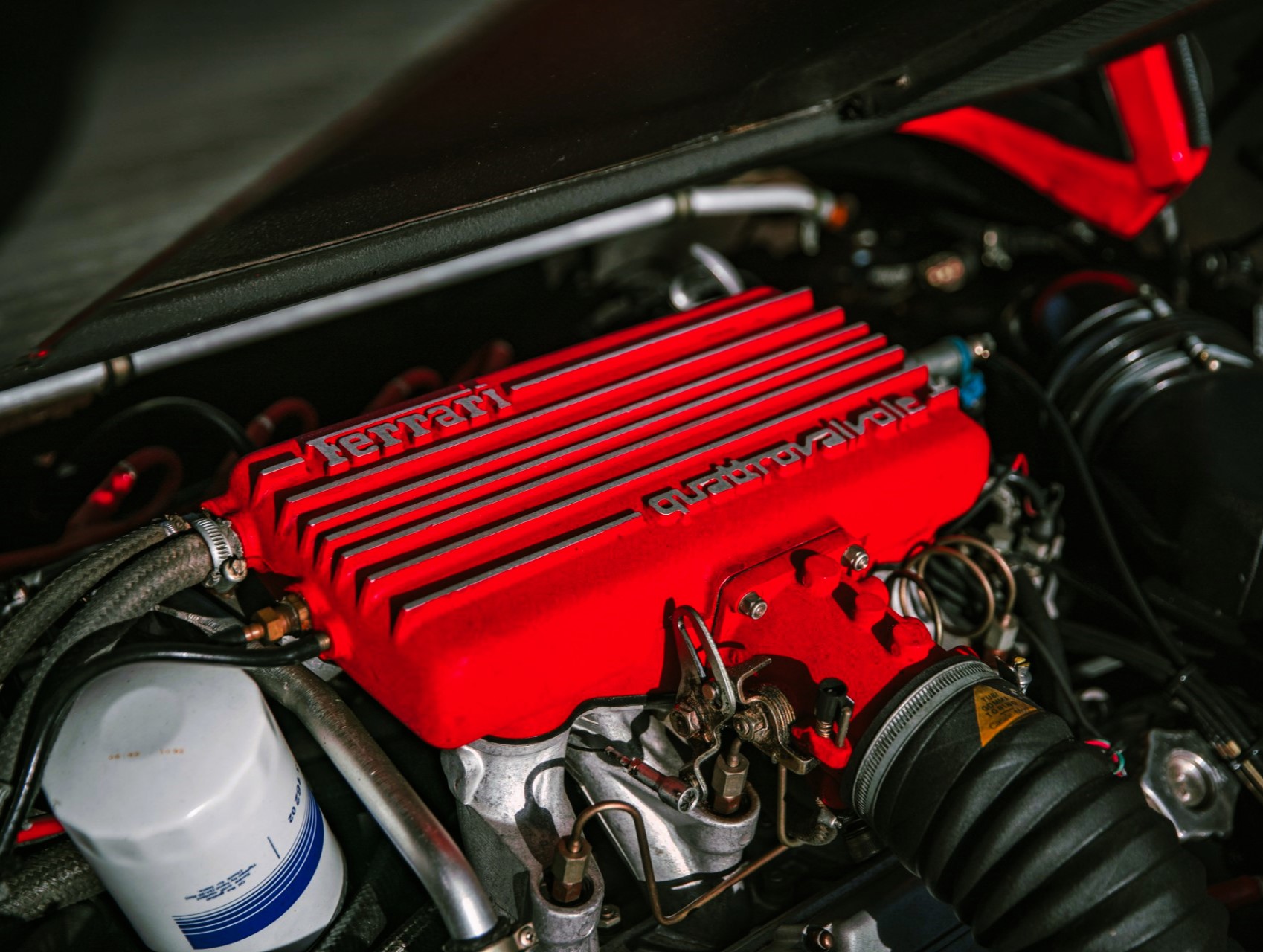
A pair of 32-valve cylinder heads updated the V8 with four valves per cylinder or quattrovalvole in Italian.
The 308 GTB/GTS QV models were differentiated by a slim louvered panel in the front lid (to help radiator cooling), power-operated side mirrors (with a small enamel Ferrari badge), a redesigned radiator grille with rectangular driving lights on each side, and rectangular (instead of round) side signal lights. Interior upgrades included a black three-spoke steering wheel with triangular center and optional cloth seat centers, while exterior options included metallic paint, front spoiler, roof aerofoil and 16-inch Speedline wheels with Pirelli P7 tires. Customers ordered 748 GTB and 3,042 GTS units between 1982 and 1985.
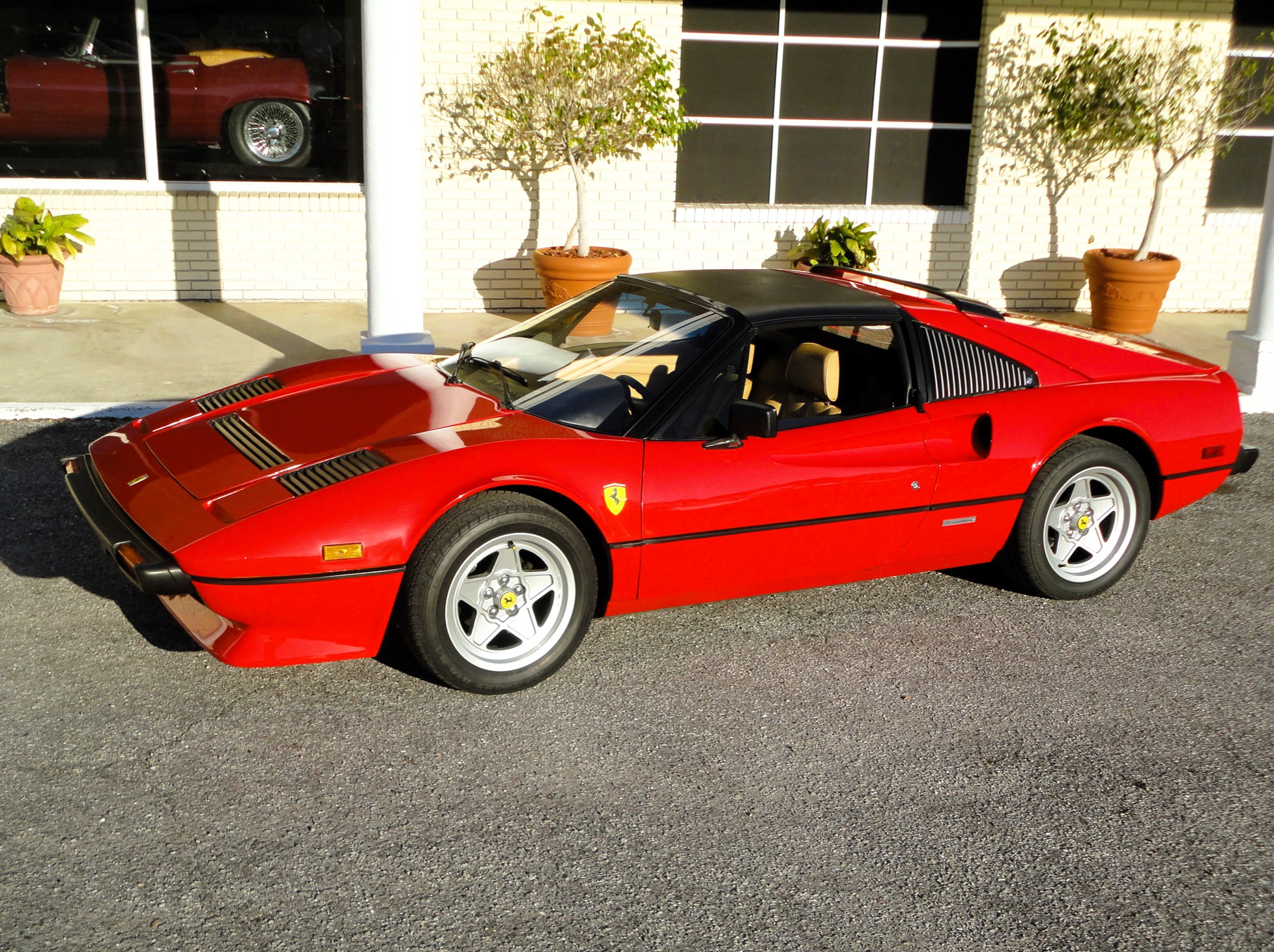
The 1983 Ferrari 308 GTS QV featured a slim louvered panel in the front lid to help dissipate heat from the radiator.
1984-1987 Ferrari 288 GTO & 1985-1989 Ferrari 328 GTB/GTS
In 1984, Ferrari created a special homologation version of the 308 GTB QV and unleashed their first supercar – the 288 GTO or Gran Turismo Omologato. Power came from a similar 90° quad cam 32-valve V8 but with a smaller bore (2.8-liter) and twin turbochargers making 395 hp and 496 Nm of torque. The GTO retained the general body lines of the 308 GTB enhanced with extended wheel arches, different side air vents, and bigger rear spoiler. The wheelbase was 5 inches longer and while the factory tube frame was replaced by a central tubular space frame chassis. Ferrari limited production to only 272 units.
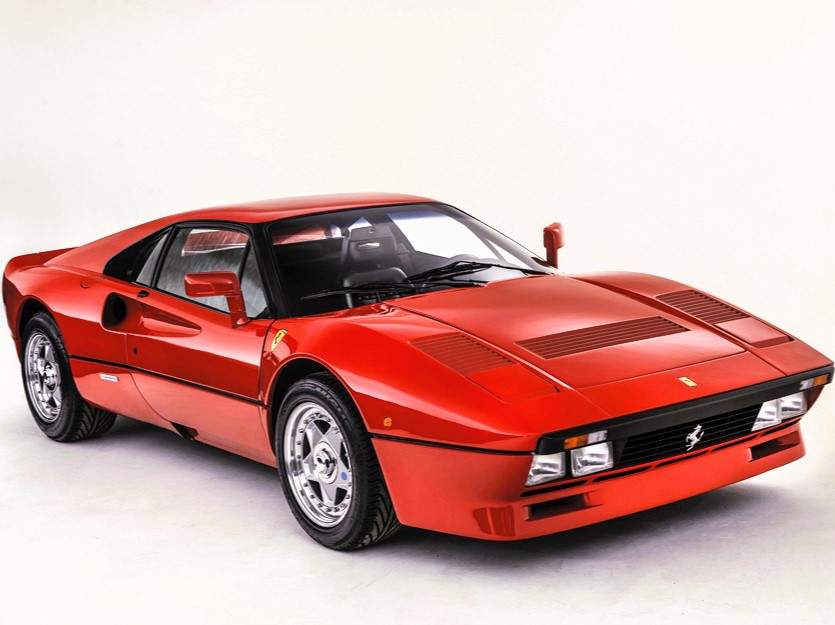
The 288 GTO was a 2.8-liter twin-turbo homologation of the GTB QV and was considered as Ferrari’s first supercar.
The Ferrari 328 GTB/GTS debuted in 1985 and maintained the classically beautiful Fioravanti shape with a few upgrades. With a larger 3.2-liter V8 that made 270 hp at 7,000 rpm, it maintained the analog driving feel of the 308 but added speed, excitement and reliability. The 328 proved to be very popular with 1,344 GTB and 6,068 GTS models produced between 1985 and 1989. With nearly 20,000 units produced, the Fioravanti-penned, Pininfarina-designed 308/328 GTB/GTS family became one of the most commercially successful models for Ferrari.
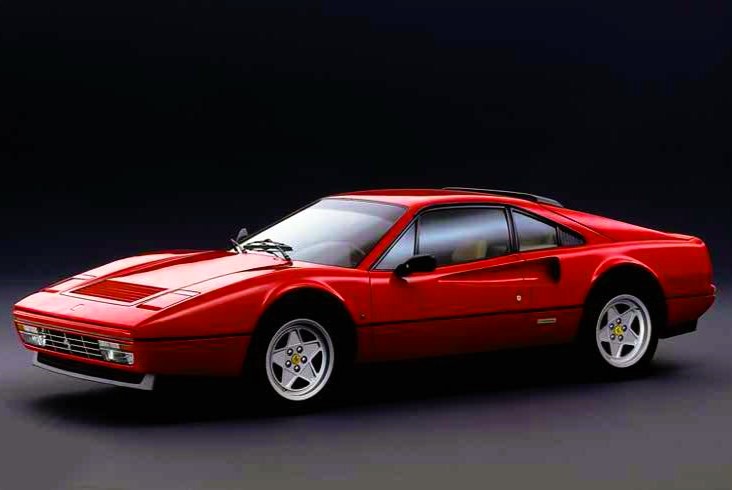
The 1985-89 328 GTB/GTS maintained the sexy Fioravanti design with factory 16-inch wheels and some minor updates for the times.
And to think that it all started with a little 308 GTB that debuted in the 1975 Paris Motor Show five decades ago, became a TV star in the Eighties, started the popularity of V8-powered Ferraris and turned the Italian carmaker into a powerhouse brand that it is today.
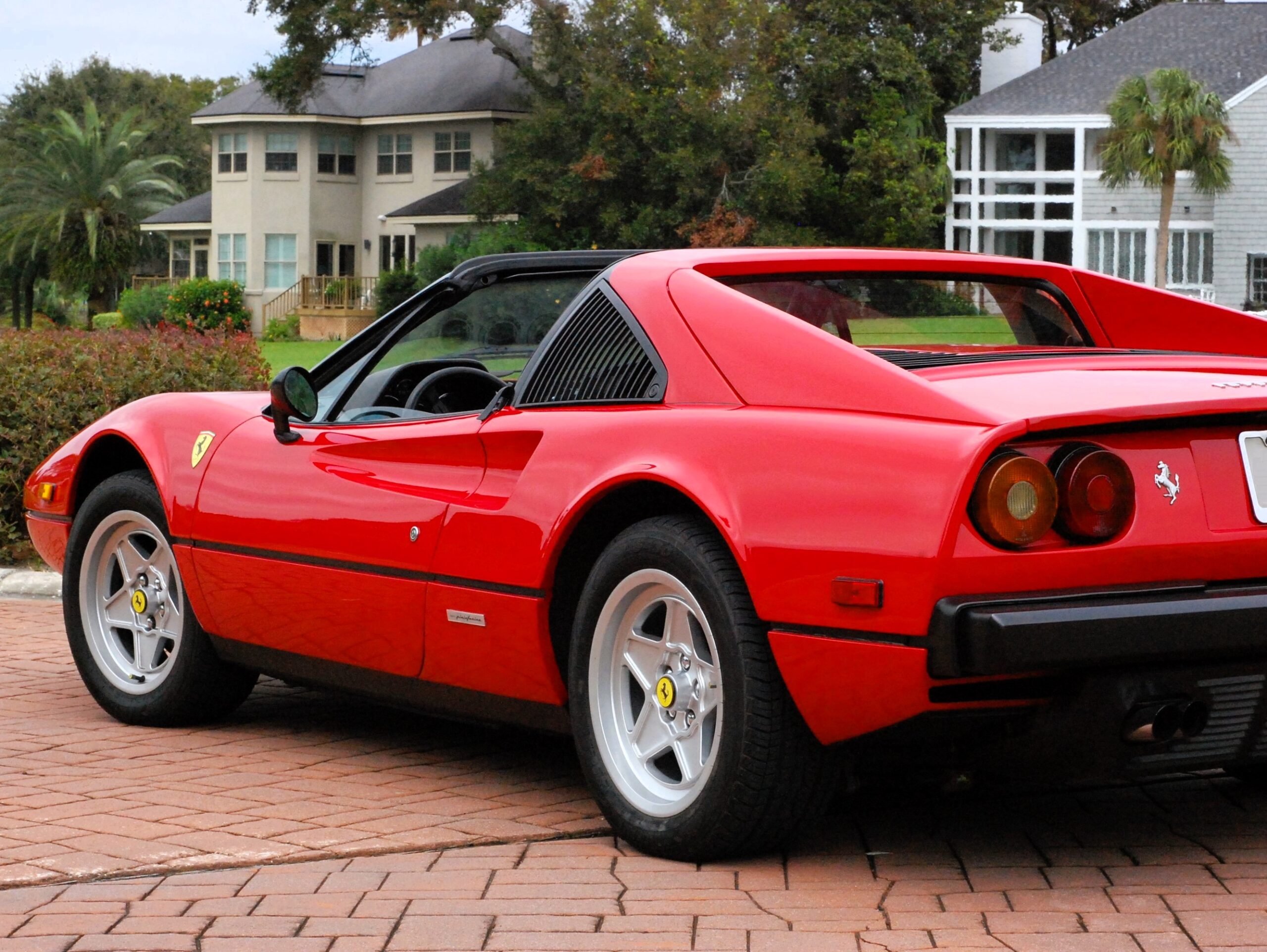
Some 20,000 308/328 units were sold, which was the most successful Ferrari model at the time.