 Power Wheels Magazine A Notch Above

2026 marks my 25th year as a motoring journalist but I’ve been an avid car enthusiast long before that. I’ve seen, experienced, and written about the evolution of automobiles and their propulsion from carburetion to electronic fuel injection (EFI) to the early battery electric vehicles (BEV) and the various hybrid (HEV) models, from mild hybrids (MHEV) to plug-in ones (PHEV). I’ve been privileged to drive most of these vehicles and was fortunate enough to own some as the vehicles evolved.
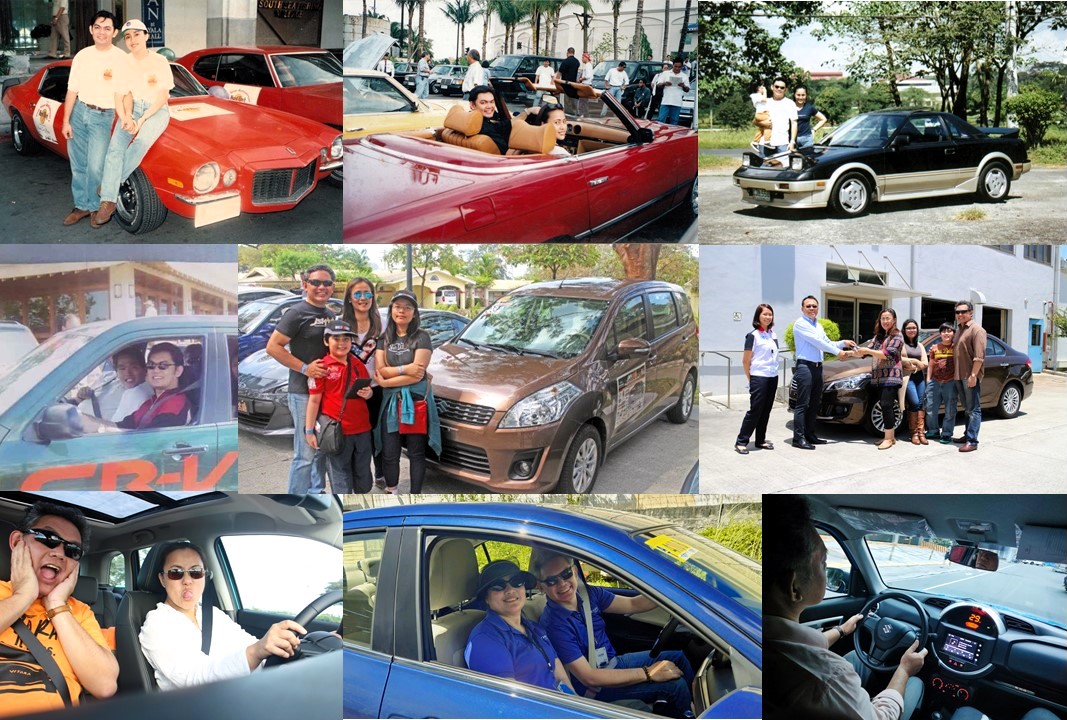
I’ve been a car enthusiast all my life and I’ve driven almost everything from carbureted V8 muscle cars to EFI econocars to hybirds and EVs.
One of the first Suzuki vehicles I’ve test driven early in my journalism career was the Grand Vitara, which was then being marketed as the upmarket compact SUV a slot above the popular and capable Jimny. The “Vitara” nameplate came from the Latin word vita, which connotes vitality. Launched globally in 1998, the Grand Vitara that I drove was the second generation model, followed by the third generation Vitara in 2005. In 2015, the fourth generation Vitara shifted from an off-road SUV to a more road-oriented crossover.
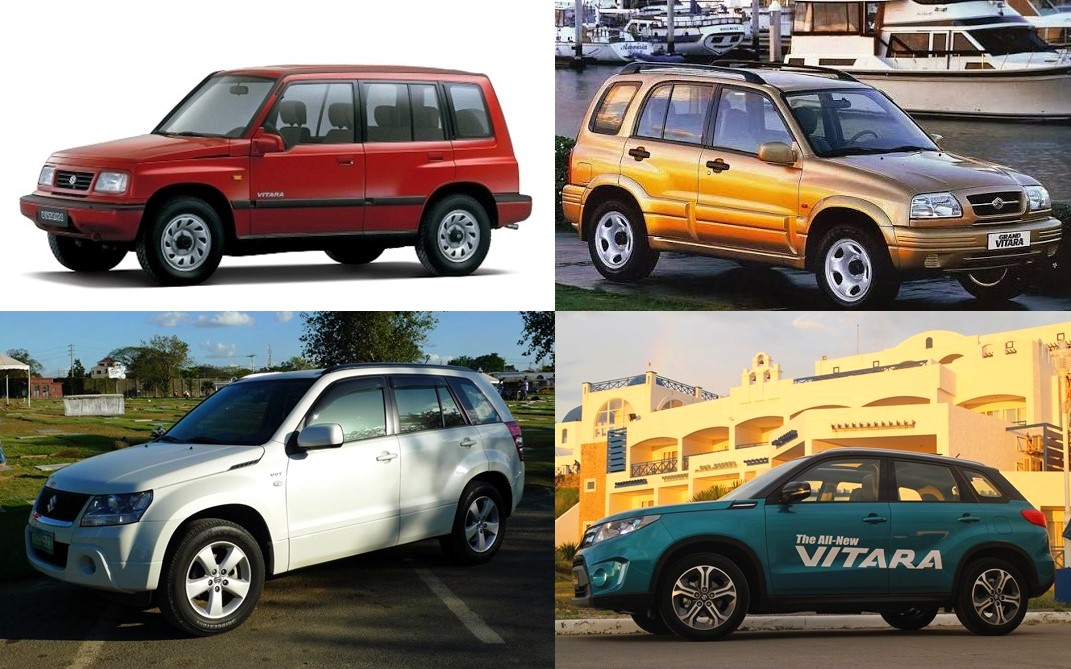
The evolution of the Suzuki Vitara, from the 1st gen 1988-1996 ET/TA (red), to the 2nd gen 1997-2004 Grand Vitara FT/GT (gold) to the 3rd gen 2005-2015 Grand Vitara JT (white) to the 4th gen 2016-2024 crossover LY (blue-green).
Suzuki’s Very First BEV
At the Philippine International Motor Show (PIMS) held in June 2026, the Automobile Division of Suzuki Philippines Inc. (SPH) unveiled the brand’s first all-electric battery-powered vehicle – the Suzuki e-Vitara. Produced in India by Maruti Suzuki, the e-Vitara was promoted as the company’s approach to achieve carbon neutrality as it takes a multi-pathway to address environmental issues. Continuing its direction as an urban crossover, the e-Vitara is a front-wheel drive (FWD) all-electric compact crossover with a “Metal Beast” modern cubist design.

SPH Managing Director Norminio “Boying” Mojica, SPH President Koichiro Hirao, SPH Automobile Division Director & General Manager Norihide Takei, and After-Sales Service & Marine Division General Manager Yukio Sato pose with the all-new all-electric Suzuki e-Vitara during its unveiling at PIMS 2026.
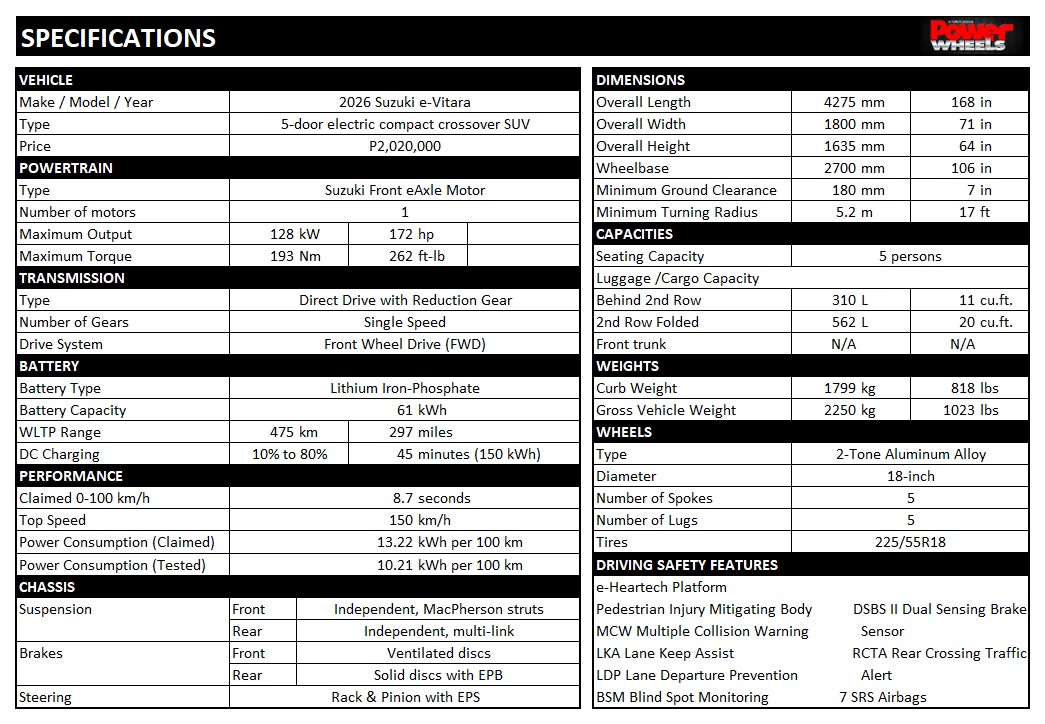
With an overall length of 4,275 mm, the e-Vitara is 280 mm longer than its hybrid stablemate, the Suzuki Fronx. Its 2,700 mm wheelbase is also 180 mm longer while its 1,800 mm overall width and 1,635 mm overall height makes the e-Vitara 35 mm wider and 85 mm taller than the Fronx. SPH listed its ground clearance at 180 mm, which is ideal to clear most road ruts and undulations around the country, while its turning radius is measured at 5.2 meters, which is good for maneuvering the polygonal-designed e-Vitara around narrow streets with ease.
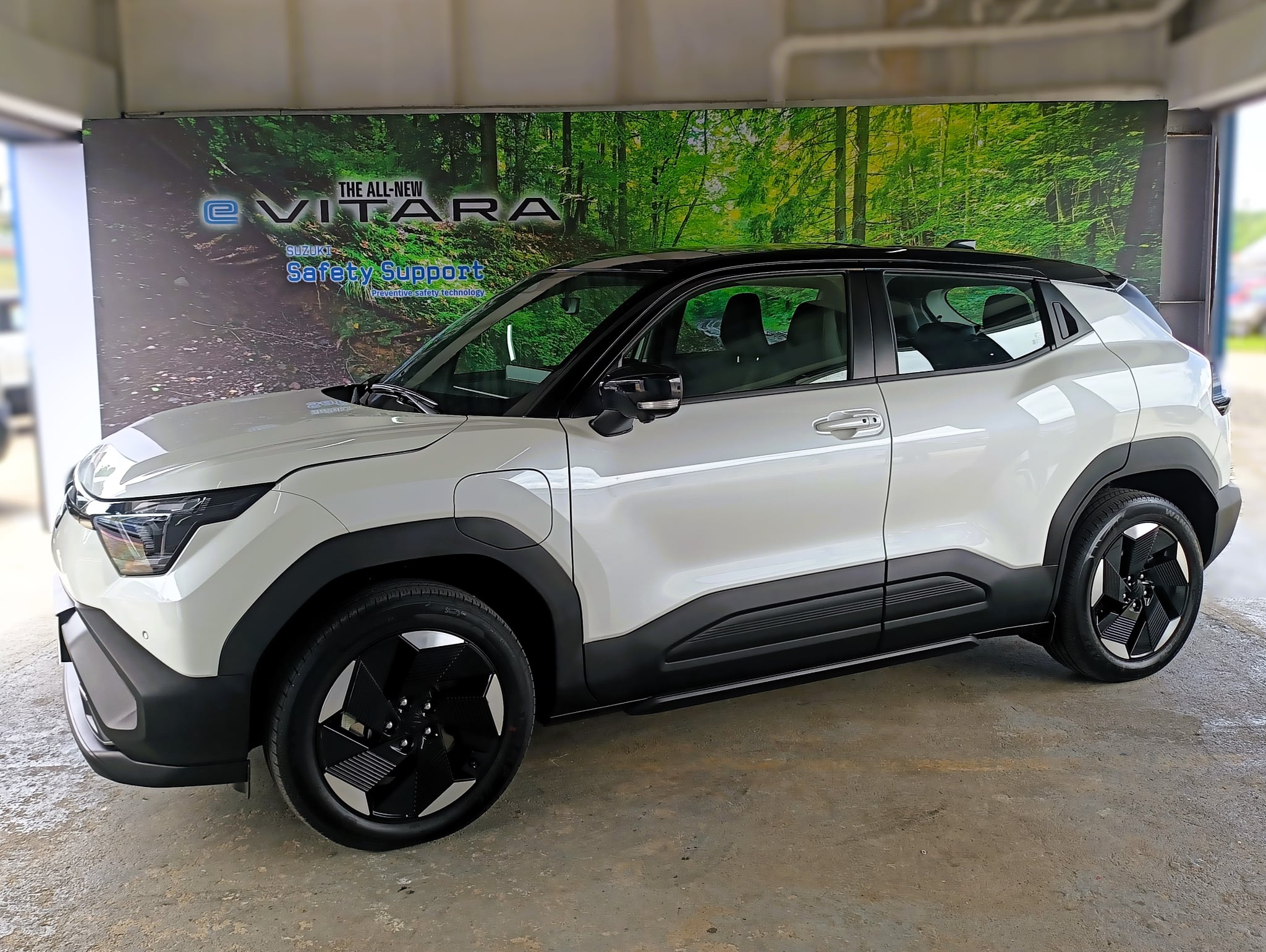
An Arctic White Pearl Metallic Suzuki e-Vitara with Bluish Black Pearl roof was one of the several units on display at the BRC paddock area.
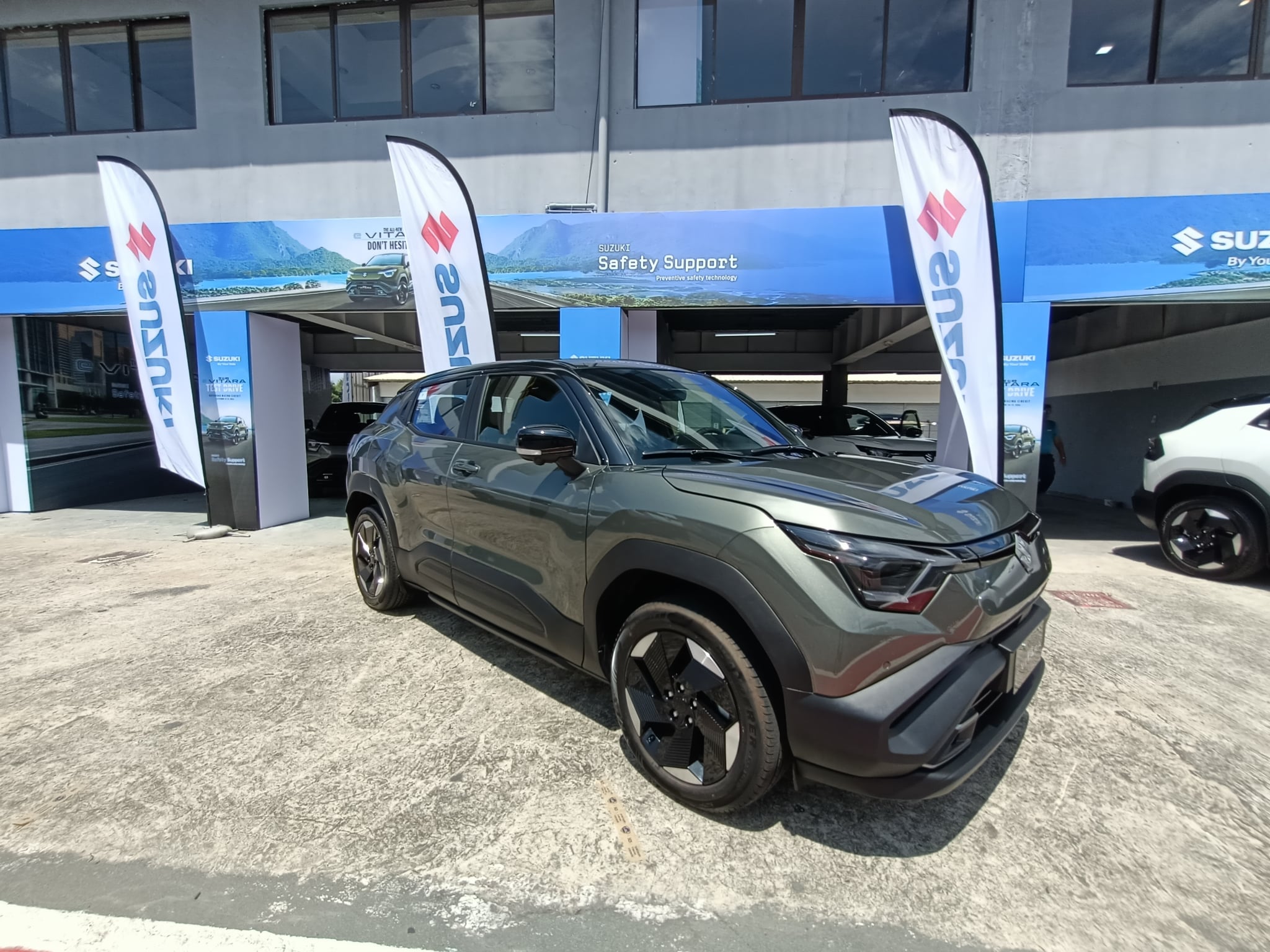
The two-tone FWD all-electric compact crossover features a “Metal Beast” modern cubist/polygonal design. We love the Land Breeze Green Pearl Metallic finish on this one.
Electrifying Energy Efficiency
The e-Vitara is propelled by Suzuki’s all-new eAxle single-speed electric drive that packaged an electric motor, inverter and reduction gear into a compact FWD unit that churns out 172 horsepower (174 PS / 128 kW) and 193 Newton-meters (143 ft-lbs) of instantaneous torque. Electric power is supplied by a 61 kWh Lithium-Phosphate battery pack with 120 cells that is mounted under the floor for a low center of gravity. Suzuki listed a 475-kilometer driving range under New European Driving Cycle (NEDC) test conditions.
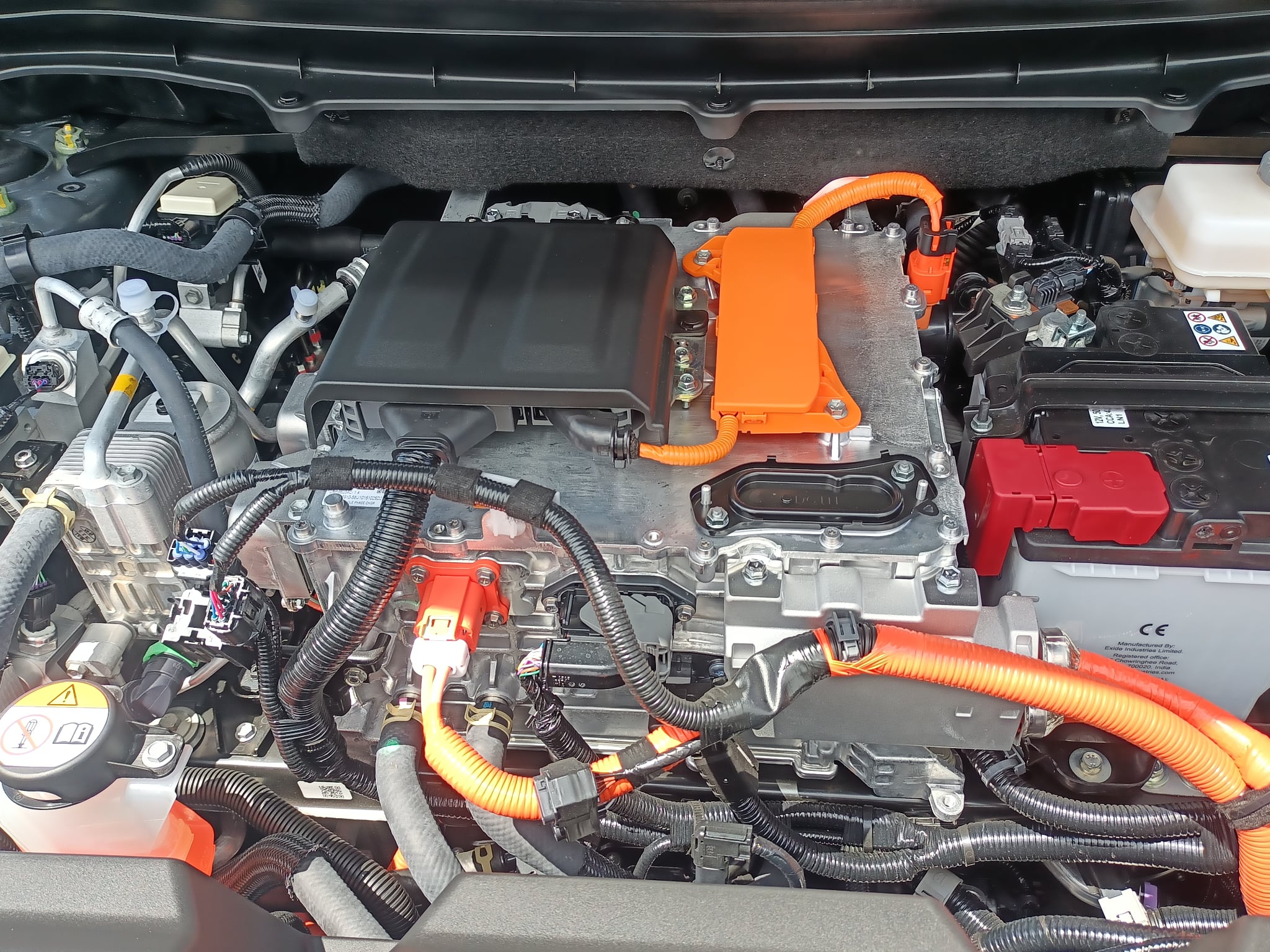
Suzuki’s all-new eAxle single-speed electric drive combines its electric motor, inverter and reduction gear into a lightweight and compact unit that churns out 172 hp and 193 Nm of torque.
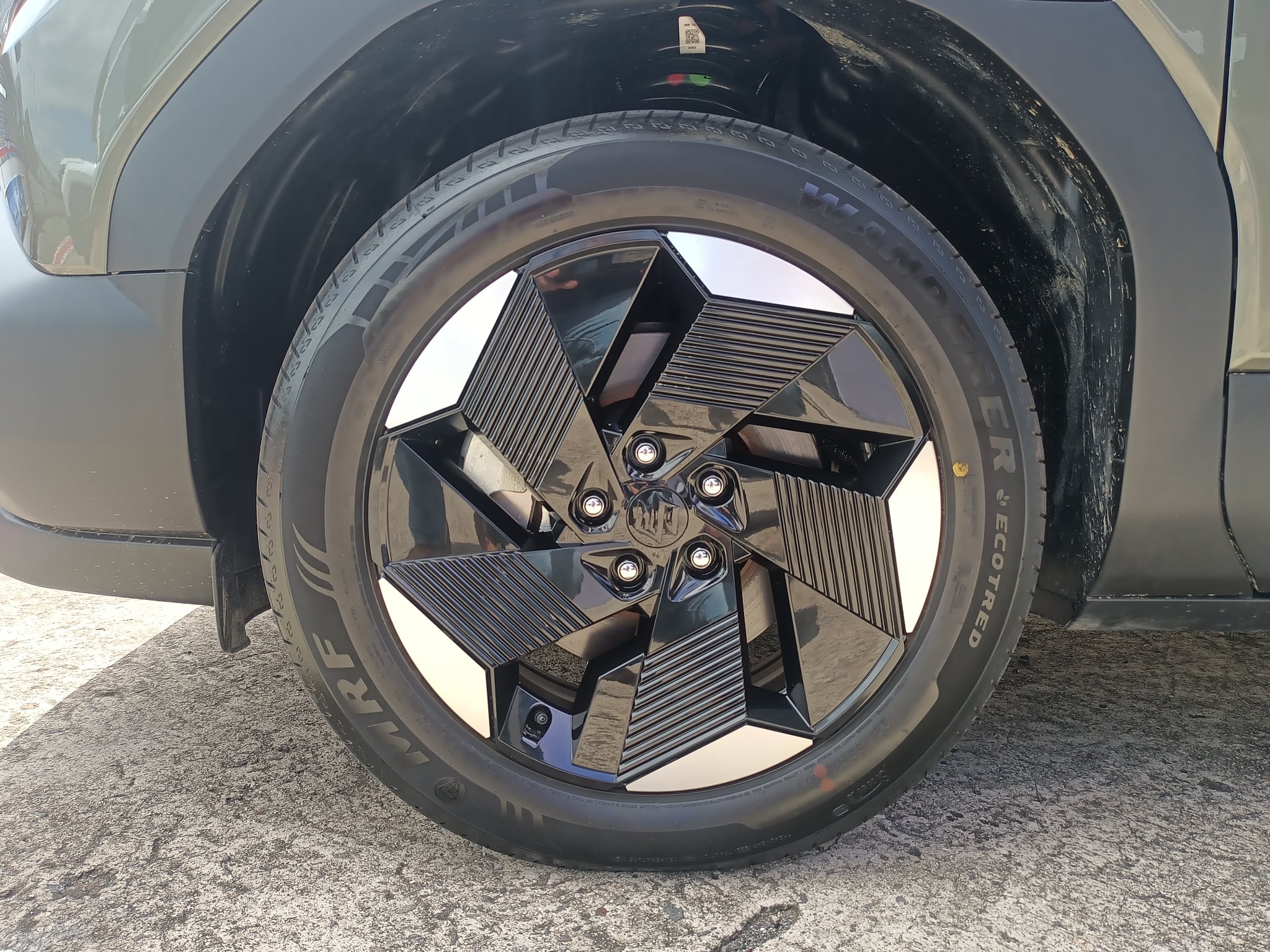
Meaty 225/55R18 MRF Wanderer tires transmit the e-Vitara’s power and torque from the innovative FWD eAxle to the ground.
Suzuki also listed an energy consumption of 132.15 watt-hours (0.132 kWh) per kilometer, which is equivalent to around 68 kilometers per liter (km/L) for gasoline internal combustion models. Local tests conducted by the Automobile Association Philippines (AAP) at highway speeds averaging between 60 and 70 km/h revealed an actual range of 429.7 kilometers with 20% remaining charge, which could potentially reach a total range of around 537 kms. AAP observed an actual energy efficiency of 102.1 watt-hours (0.102 kWh) per km or 87.2 km/L.
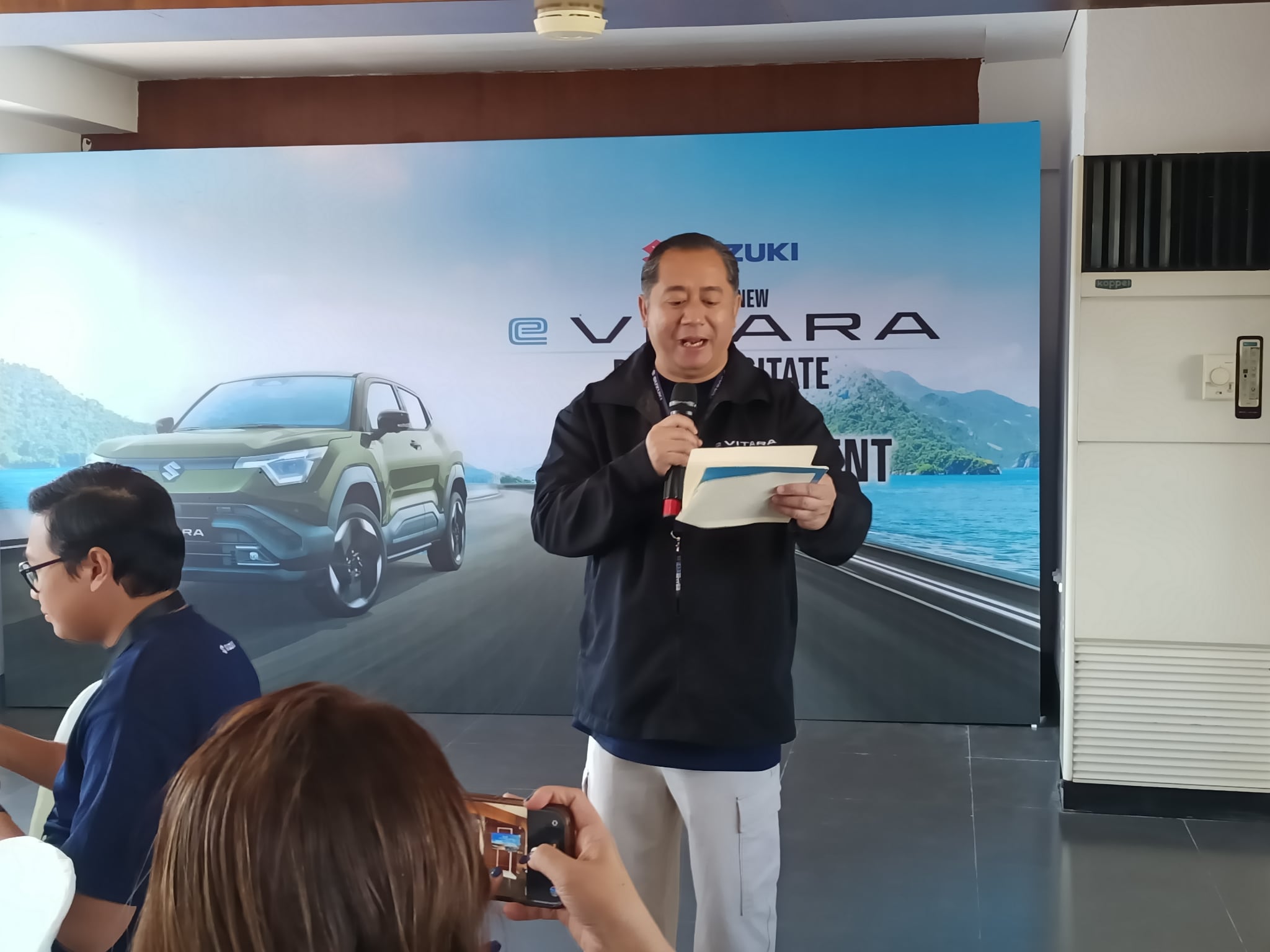
SPH Auto Division Brand Communications Group Head Jeff Lopez got the ball rolling before lunch so the media participants can have a longer time to explore the e-Vitara around the track.
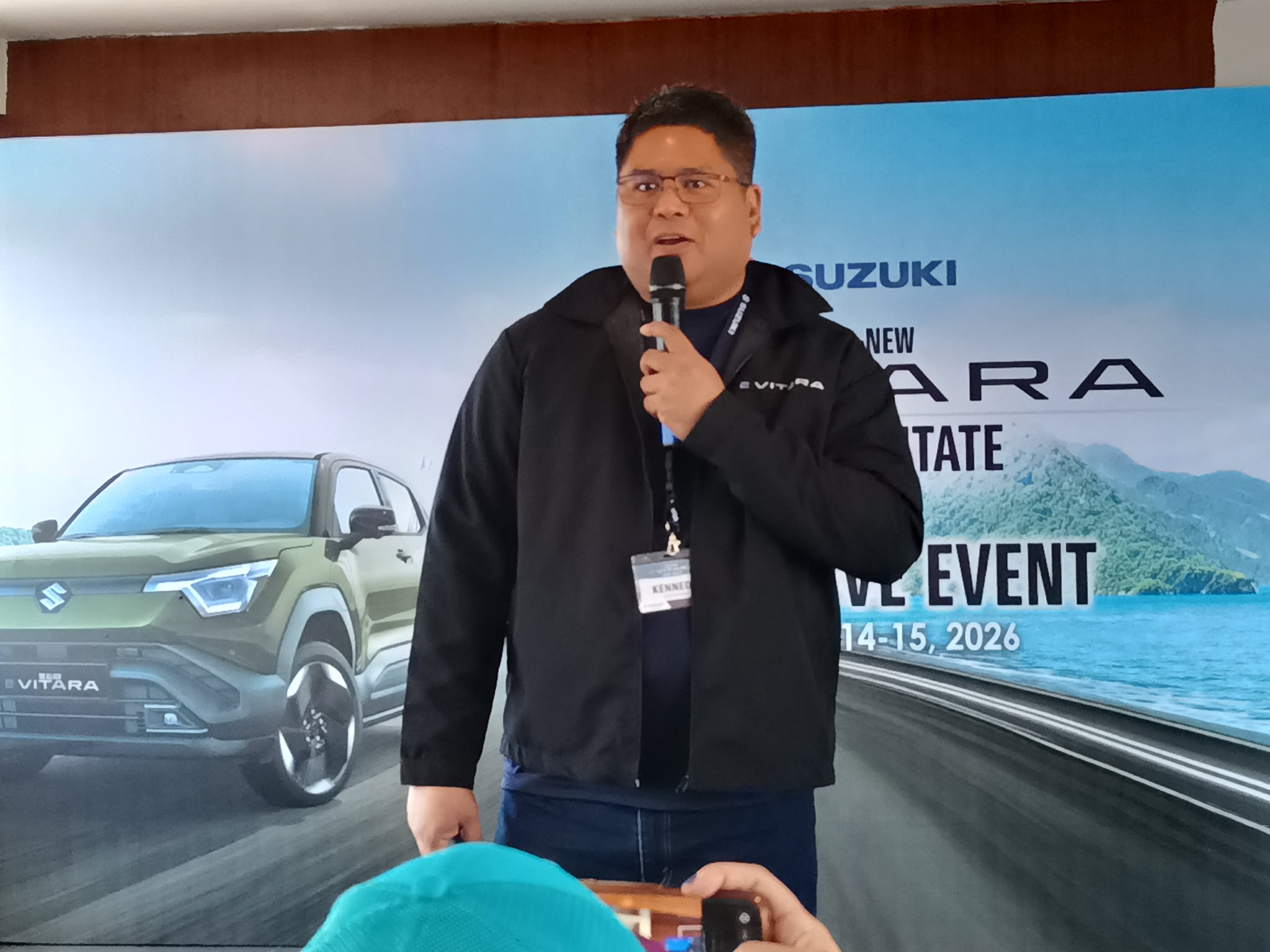
SPH Auto Division Product Planning & Development Manager Kennedy Adia guided the media participants through the technical features of the all-electric e-Vitara.
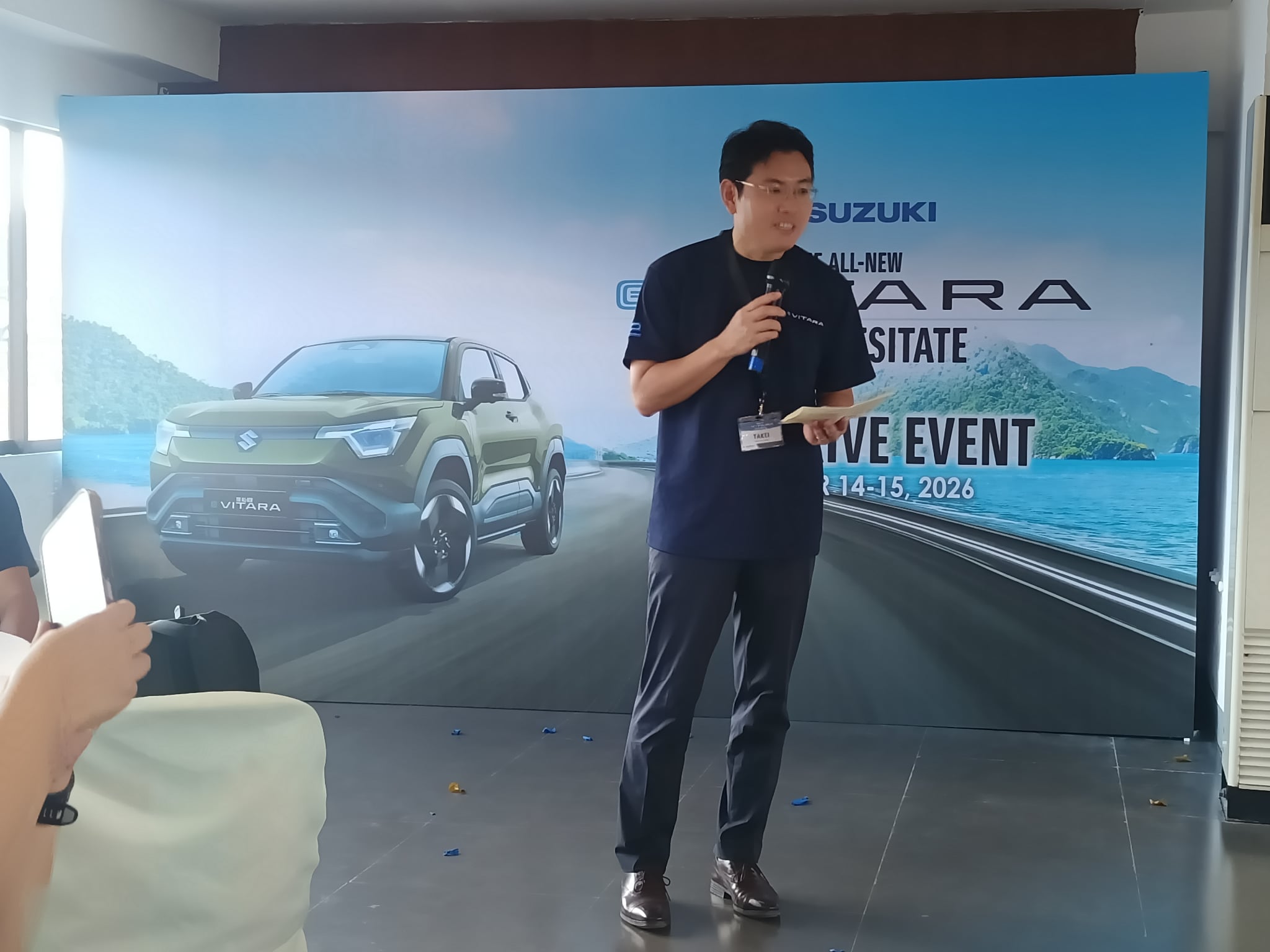
SPH Director and Automobile Division General Manager Norihide Takei invited the media participants to fully experience and enjoy the driving capabilities of Suzuki’s first BEV.
e-Vitara Vitality Visited
Impressive as the e-Vitara on paper and during NEDC and AAP test cycles, SPH invited several members of the local motoring media to Rosario, Batangas to experience its electric performance for several laps around the Batangas Racing Circuit (BRC) in October 15, 2026. SPH was assisted by former AAP Motorsports Director and 10-time National Rally Champion Vip Isada and a team of veteran rally drivers, including his son Ivan Isada, along with Henry Buenconsejo, Warren Gabriel, Art Guevara, Manny Lubitania, Bebot Reyes, and Mike Reyes.
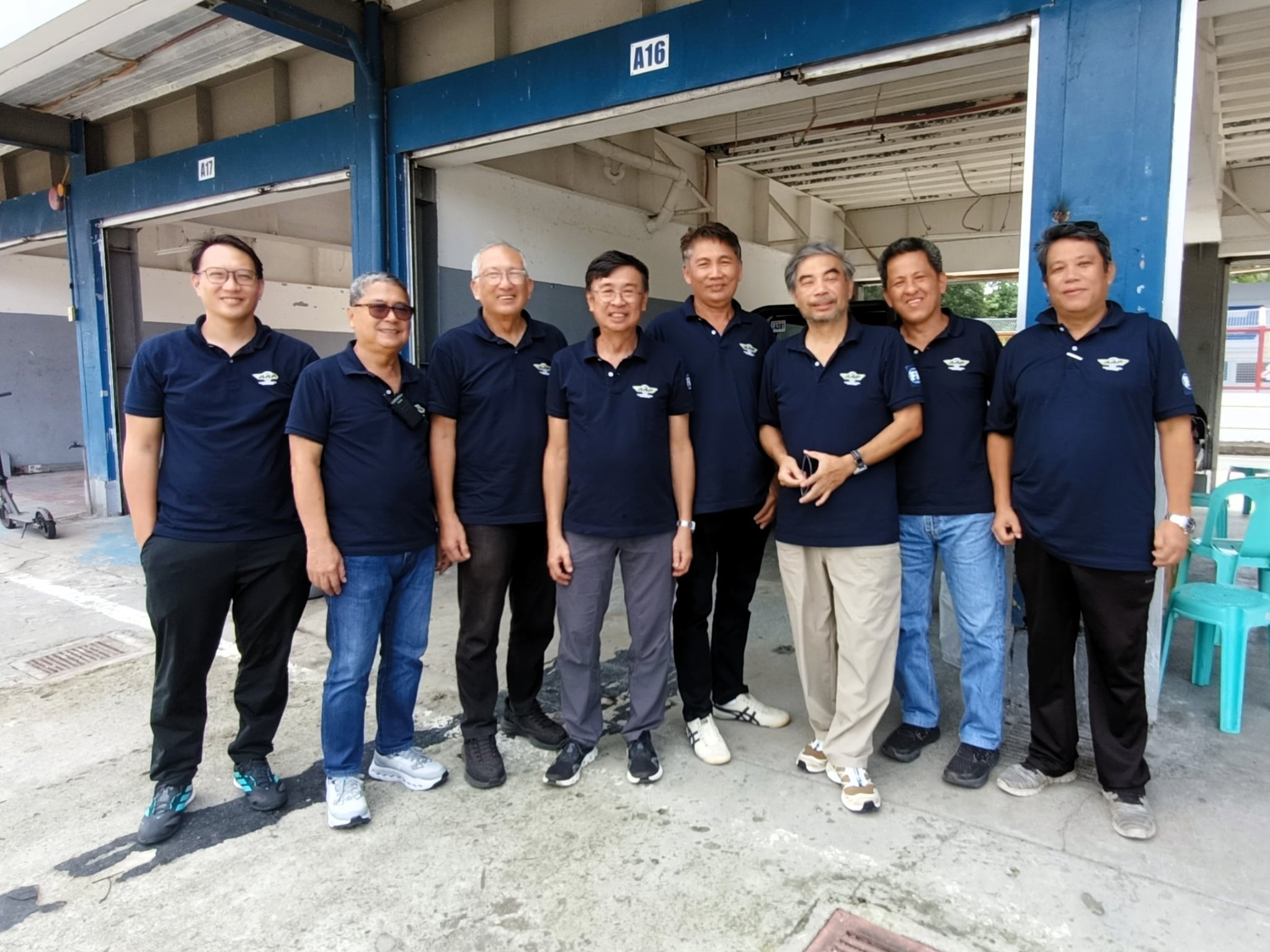
Hail, hail, the gang’s all here! The media participants were accompanied by these accomplished gentlemen rally drivers from AAP Motorsports as we drove around BRC. We know we were in good hands.
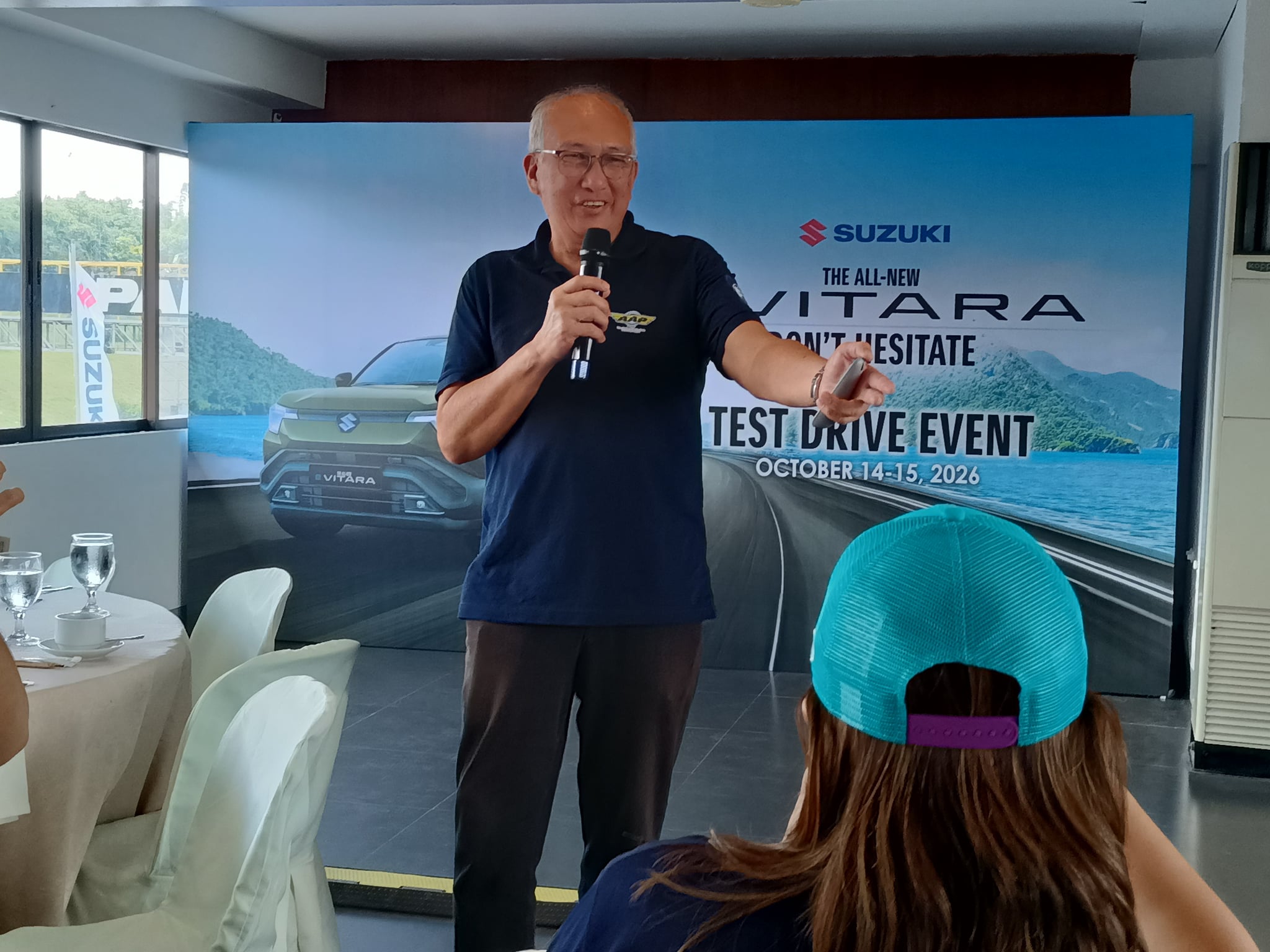
Coach Vip Isada asked us to keep the speeds at 80 km/h at the straights and not around the corners and chicanes, if we can help it…
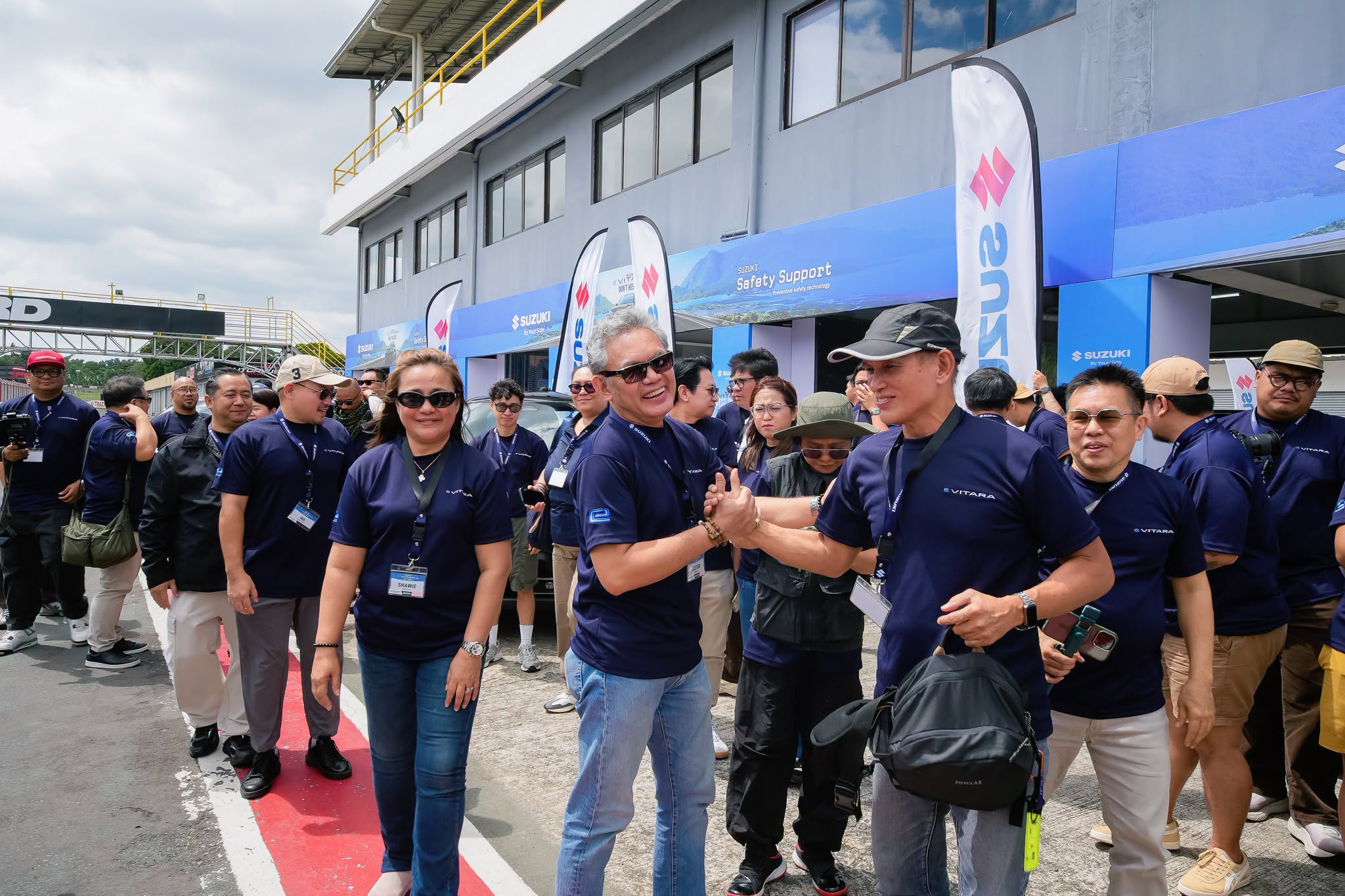
Aside from our motoring media colleagues, it was great to see Filipino competiton driving champions like Mike Potenciano join us at the track.
Before we went out on the track with the e-Vitara, “Coach Vip” (as we fondly call him) first briefed us on our drive around BRC. He said that we will have an “out lap”, where we will exit the pit lane and drive around the track until we reach the Start-Finish line. This will be the start of our individual lap around BRC and after we complete the lap, we veer right into the pit lane, where we will have a driver change so we can observe the ride of the e-Vitara from the rear passenger’s seat. He politely asked us to keep the speeds at 80 km/h and joked not to keep it at 80 km/h around the corners and chicanes.
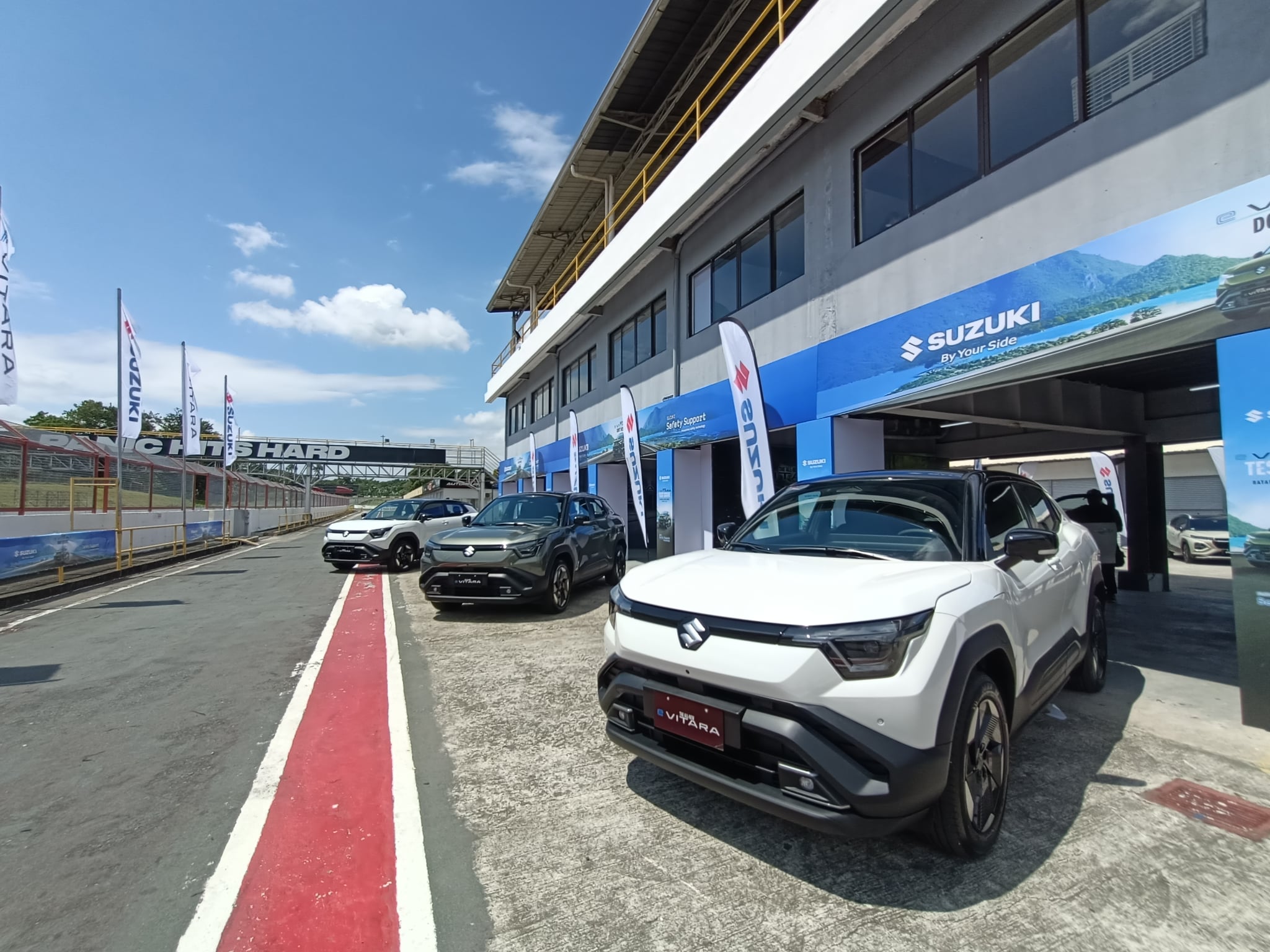
SPH activated and charged four Suzuki e-Vitara units for the media participants’ evaluation around BRC.
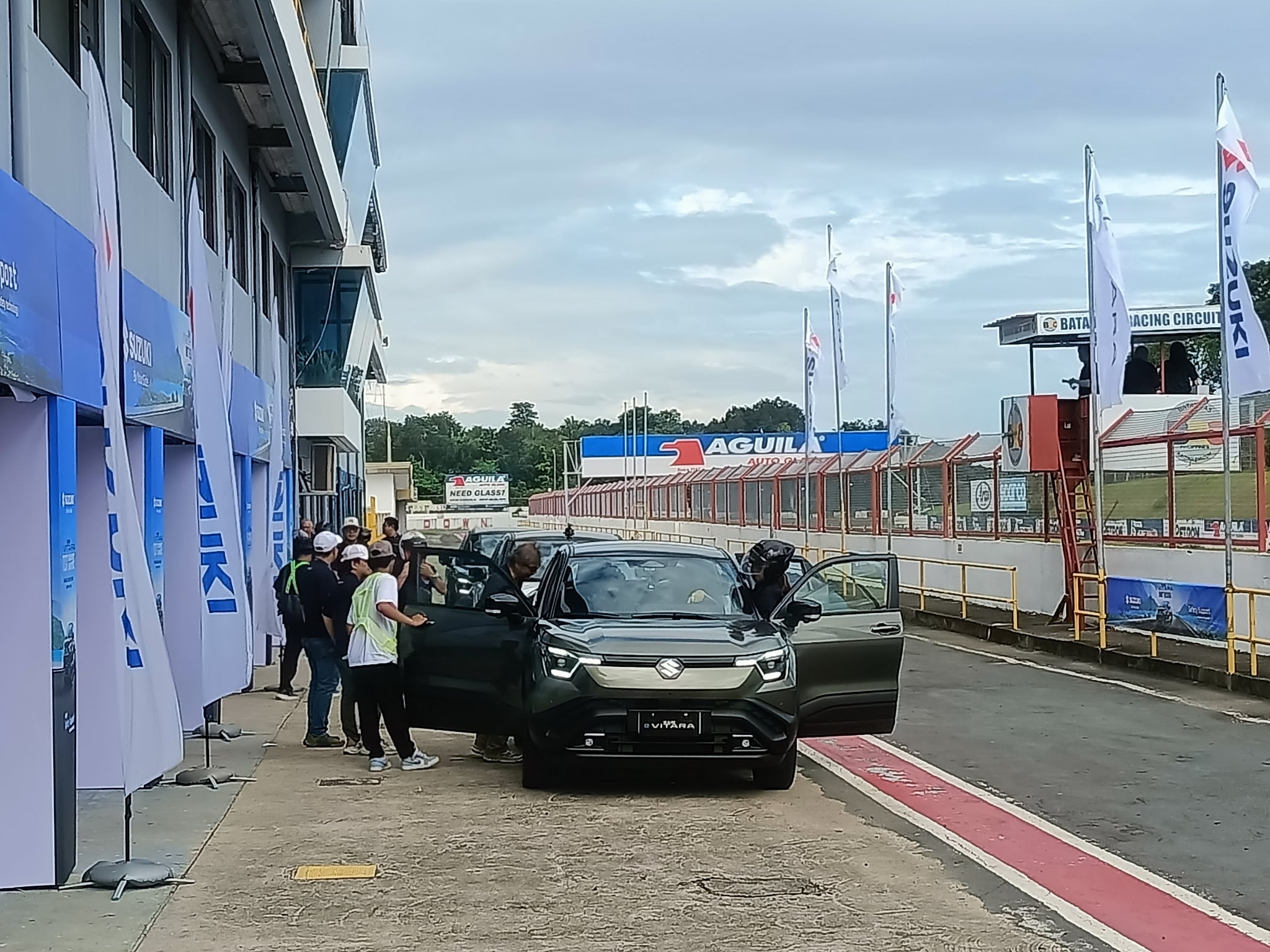
We were divided into several batches of 12 participants with 3 particpants per vehicle, along with a marshal/instructor to guide us around the track.
Electrifying Ride Minus One
There was supposed to be four occupants inside our e-Vitara tract test drive – me, my wife Shawie, Warren Gabriel (our marshal/instructor), and another motoring journalist, who instead asked to join another vehicle to be with his colleagues from their publication. It was a blessing in disguise because one less passenger made our e-Vitara lighter around the track and we can have an extra lap if we wanted to. (Thank you, Mr. Motoring Journalist! Hehehe – Ed.) For the first driving stint, Shawie took the wheel and I sat in the back seat to observe and take videos and photos.
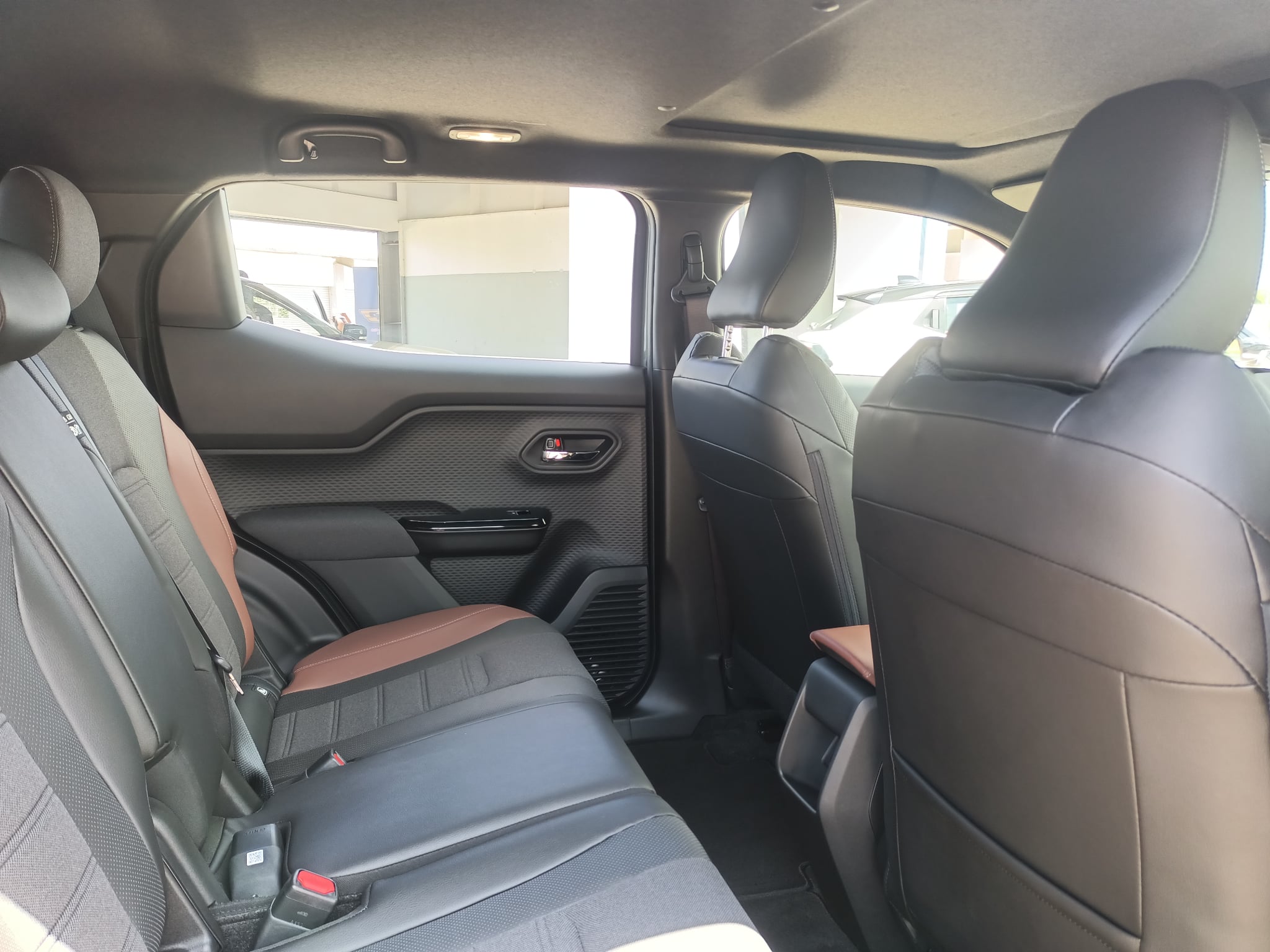
Shawie took the first driving stint and I took the backseat to take photos and videos. It’s spacious and comfortable back here…
.
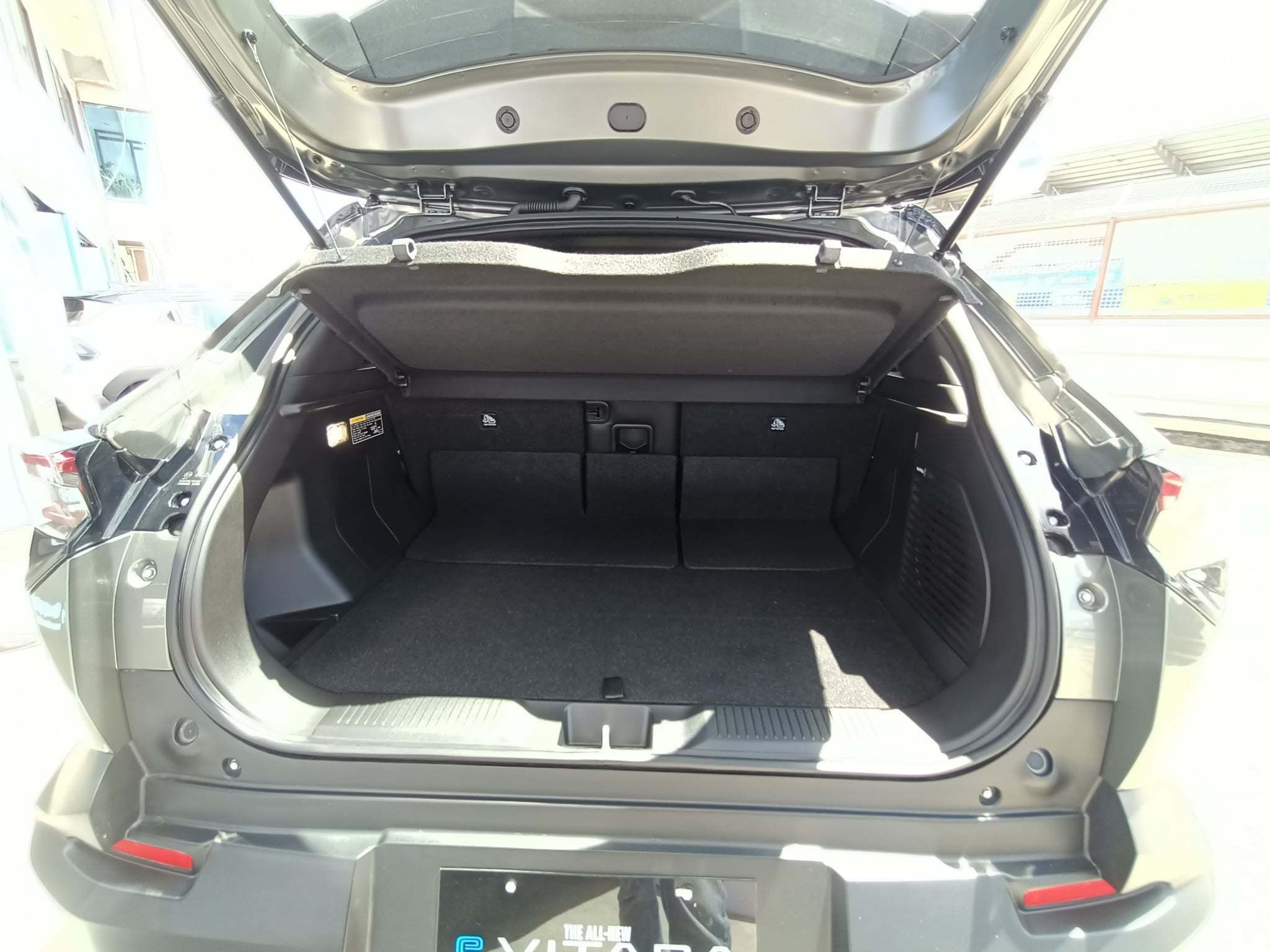
I avoided any critique of Shawie’s driving around the track or else, she might stuff me into the 310-liter trunk, which can be expanded to 562 liters with the 40/20/40 folding seatback.
The first thing that I noticed was how quiet it was inside the e-Vitara. Suzuki engineers did an excellent job with the NVH (noise, harshness and vibration) components while the rear bench seat with 40/20/40 folding backrest felt comfortable and supportive, even around the curves and corners around BRC. Shawie was driving with civility around the track and stated that driving the e-Vitara was just like driving her 2016 Suzuki Ciaz, except it was quieter, accelerated faster, and felt lighter and easier to drive overall. She pulled into the pit lane as scheduled and it was my turn to drive.
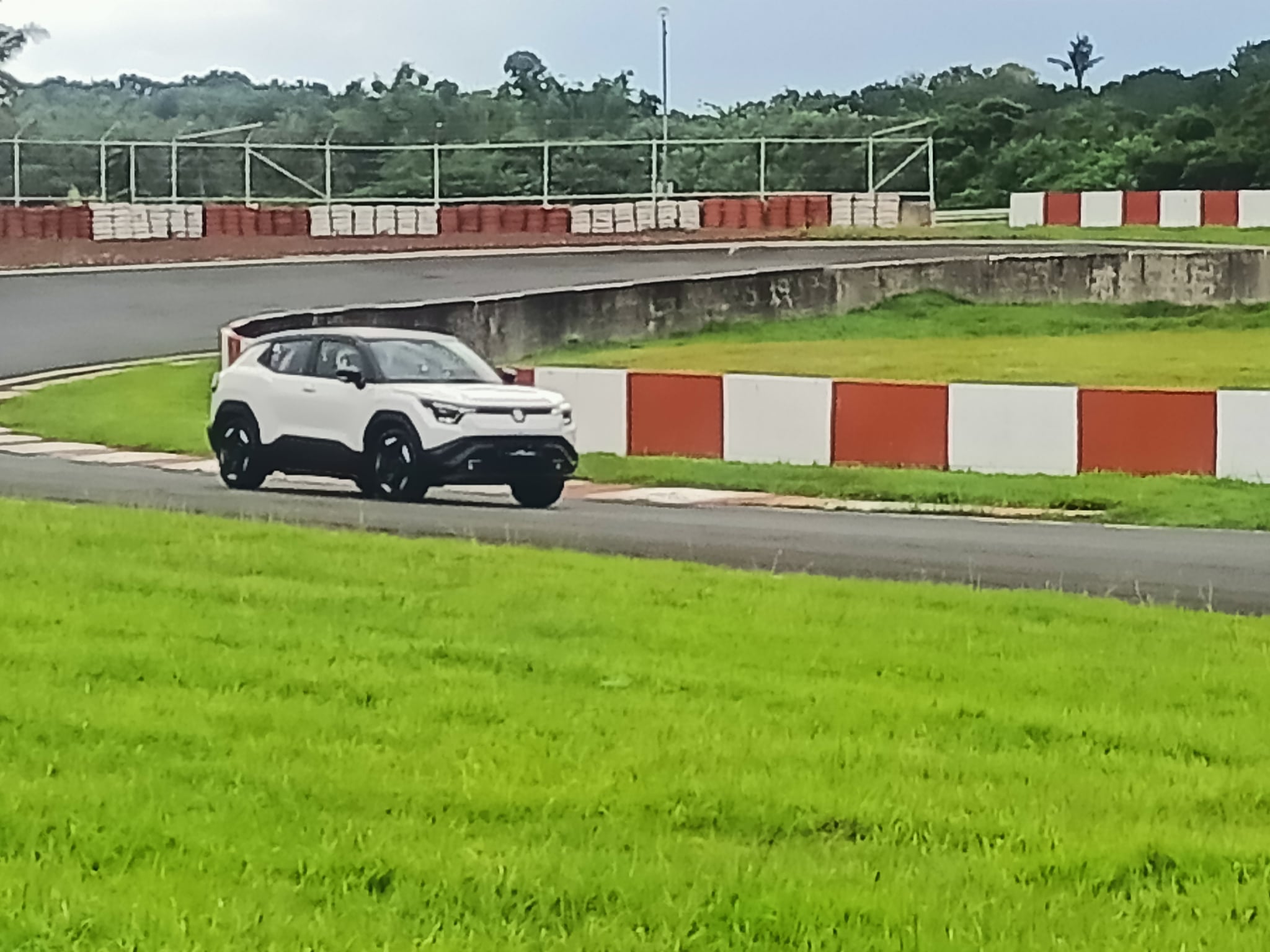
Shawie drove with restraint and civility around the track, which demonstrated the comfortable ride, easy maneuverability, and impressive NHV components that made the e-Vitara’s interior quite quiet inside.
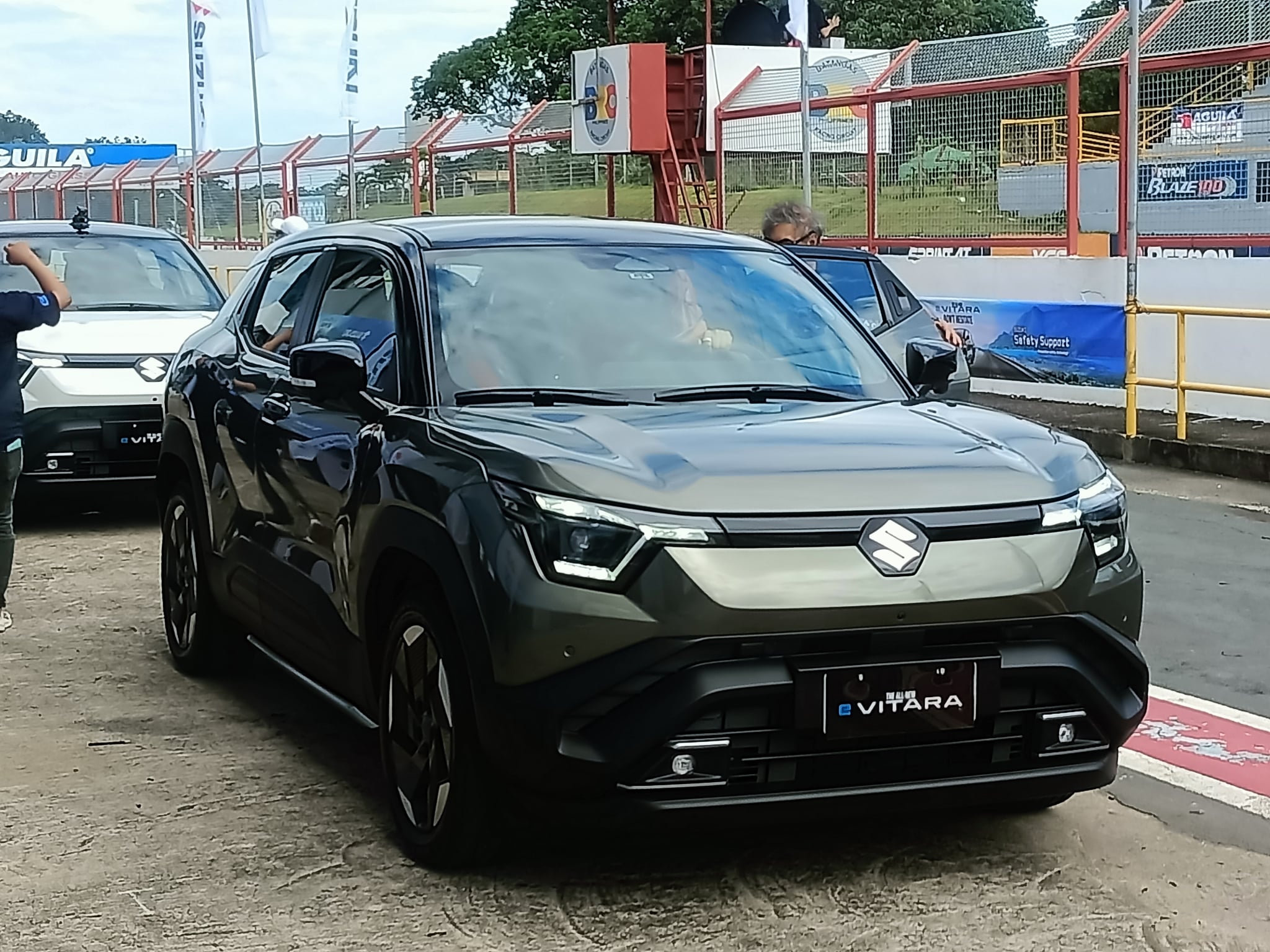
While we were swapping seats, I can’t help but take another look at the cool Land Breeze Green Metallic finish on the e-Vitara behind us at the pit lane.
Electrifying Drive Plus +
I tried to follow Coach Vip’s instructions to keep the speeds at around 80 km/h but having 172 hp and 193 Nm of torque at your command in an e-Vitara that weighs just around 1,799 kilos was a bit too tempting. With just three occupants instead of four, the e-Vitara accelerated to 80 km/h in no time and easily reached 140 km/h on the long straight after the Start-Finish line. Warren agreed with me that the car felt balanced at speed around the tight corners until the 225/55R18 MRF Wanderer tires would squeal to remind us that we are going near their traction limits.
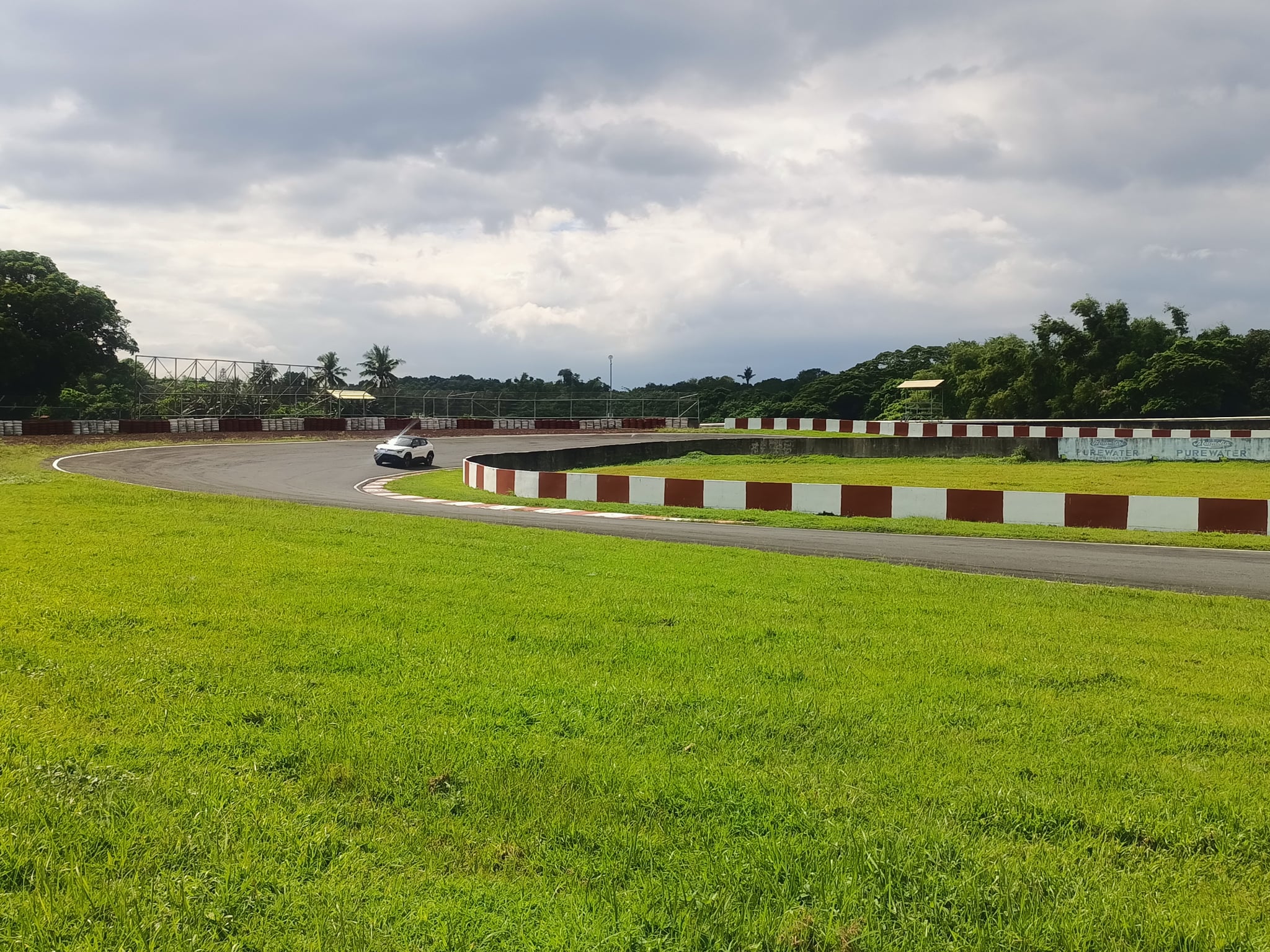
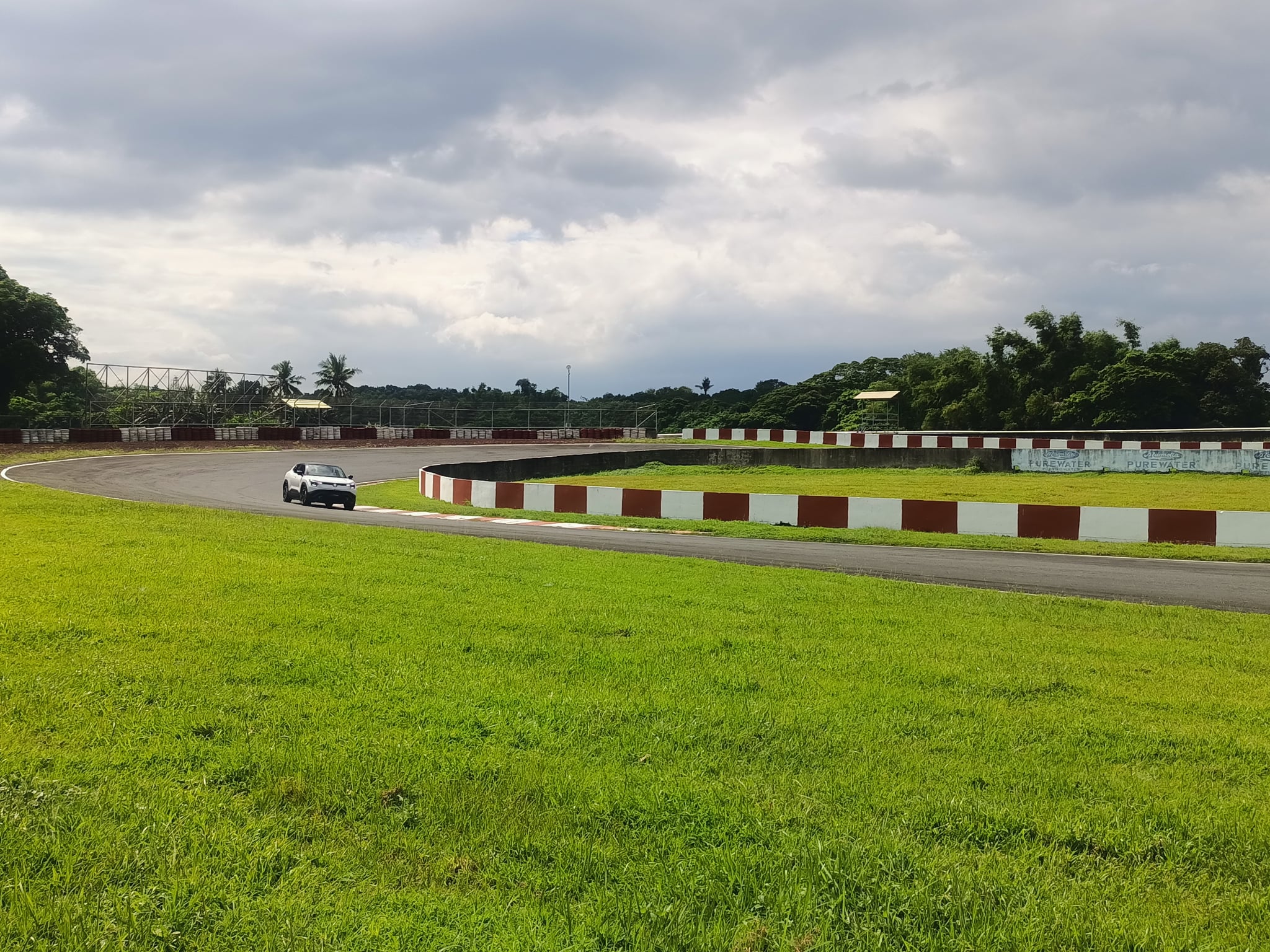
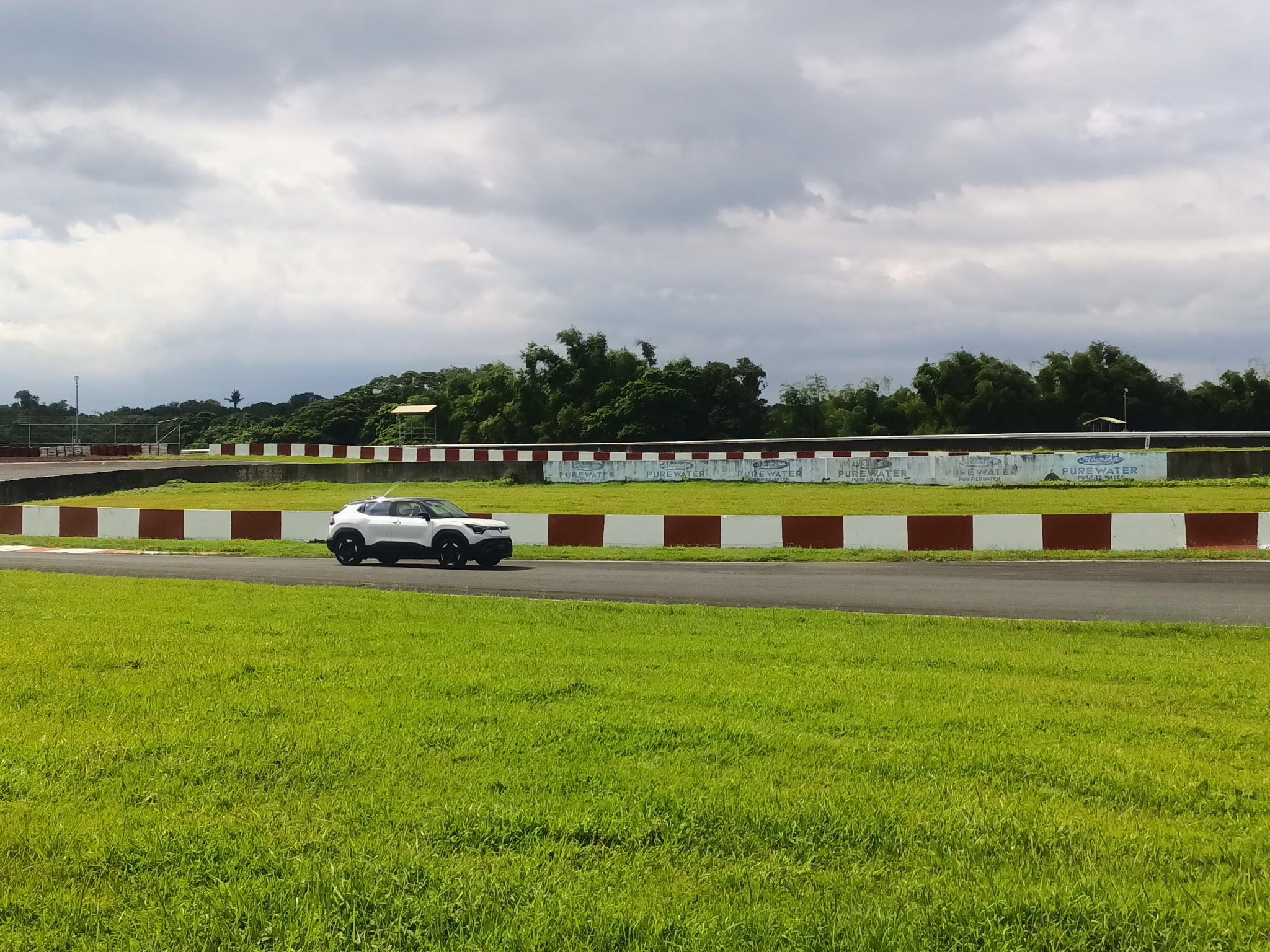
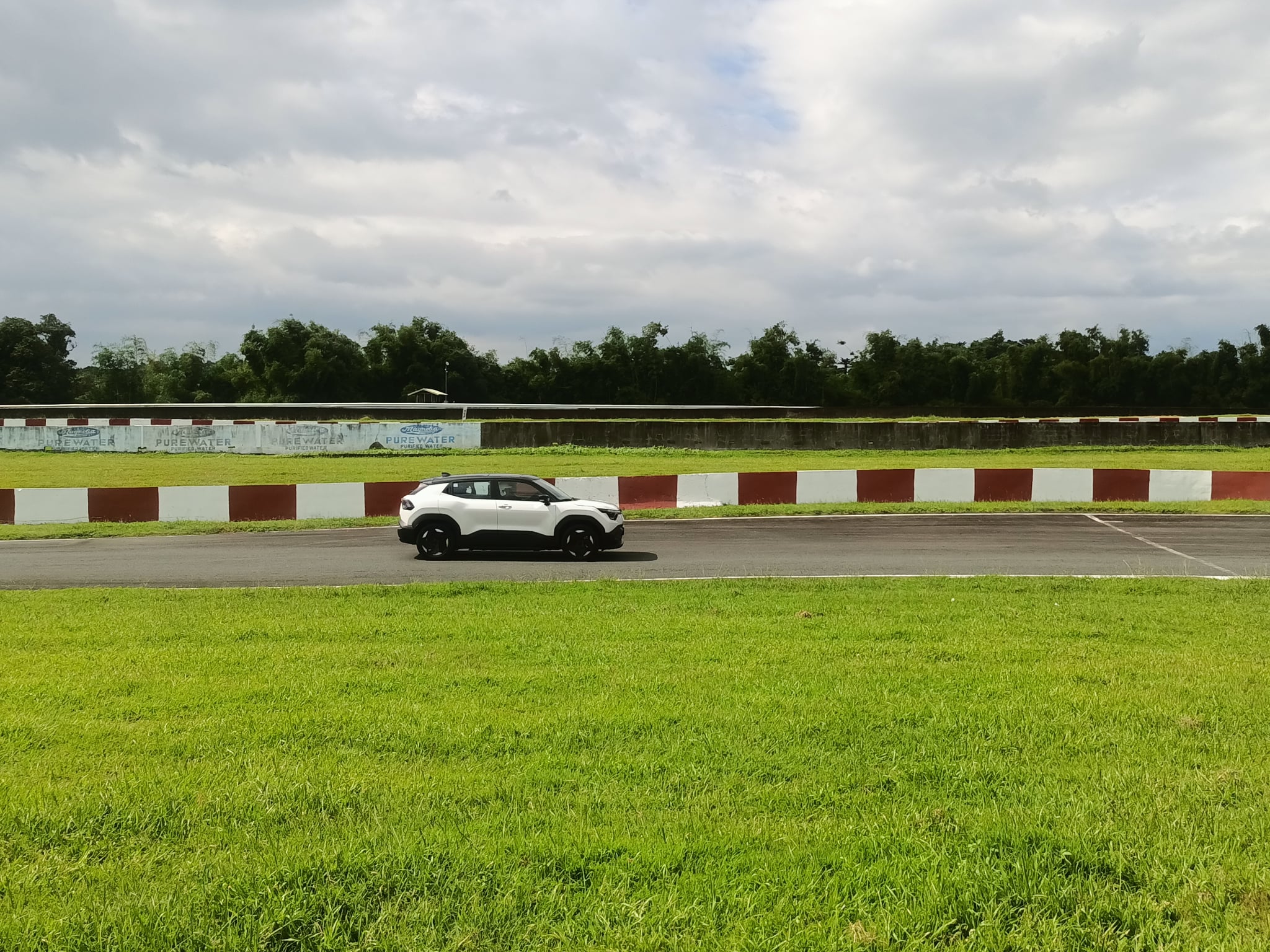
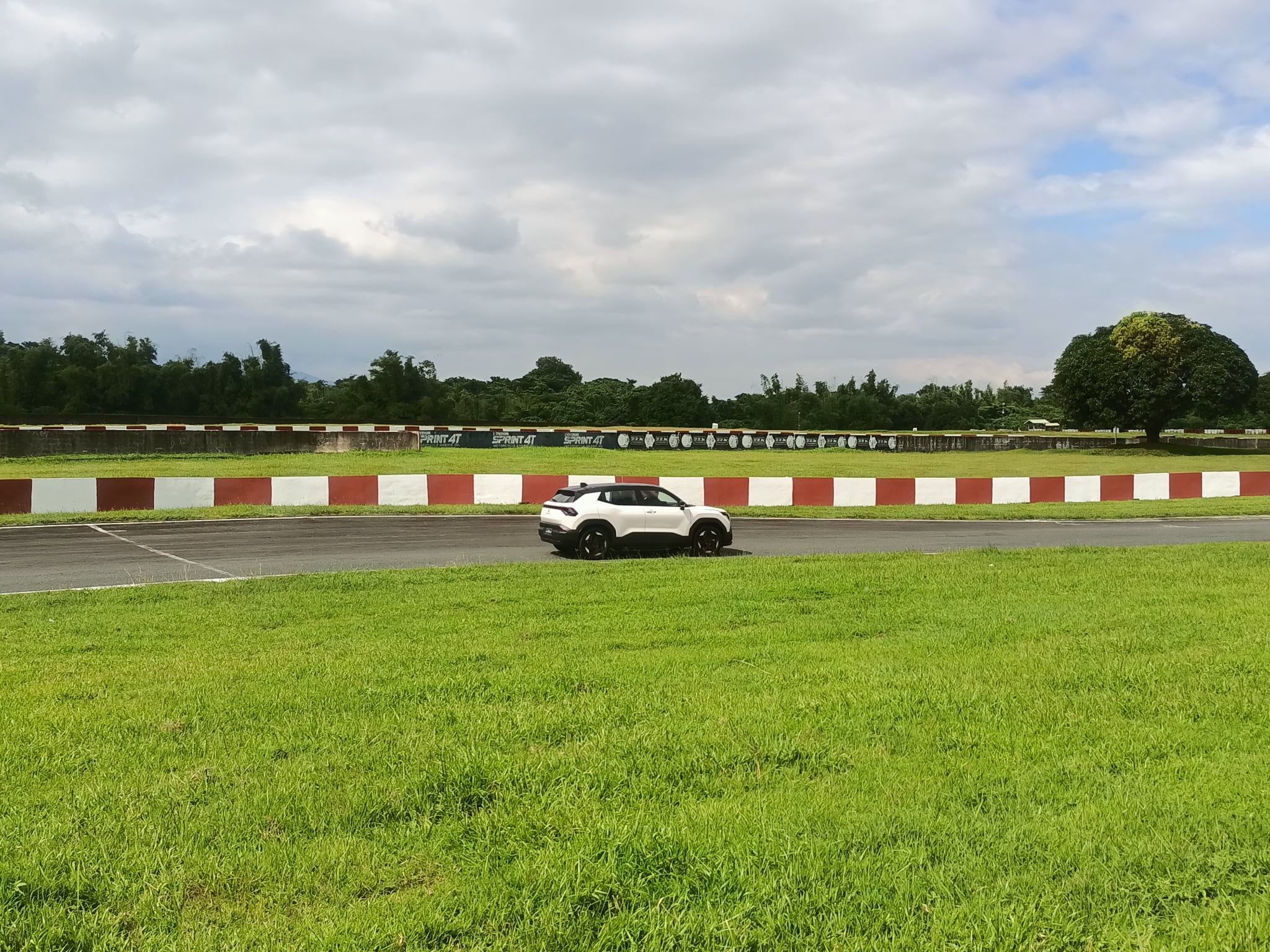
The new Heartech-e platform was developed by Suzuki exclusively for the e-Vitara to enable the installation of the larger battery pack while protecting the high-voltage components, such as the ECU, front e-Axle, heater, compressor and wiring harness, in case of collision to prevent fires and electrocution of its occupants. Scrubbing the tires at speed around the corners showed the rigidity of the new platform, which added driving confidence, comfort and peace of mind. Coach Vip jokingly asked us not to test the 7 SRS airbags, the crumple zones, or the Pedestrian Injury Mitigating Body, and thankfully, none of the drivers that afternoon did.
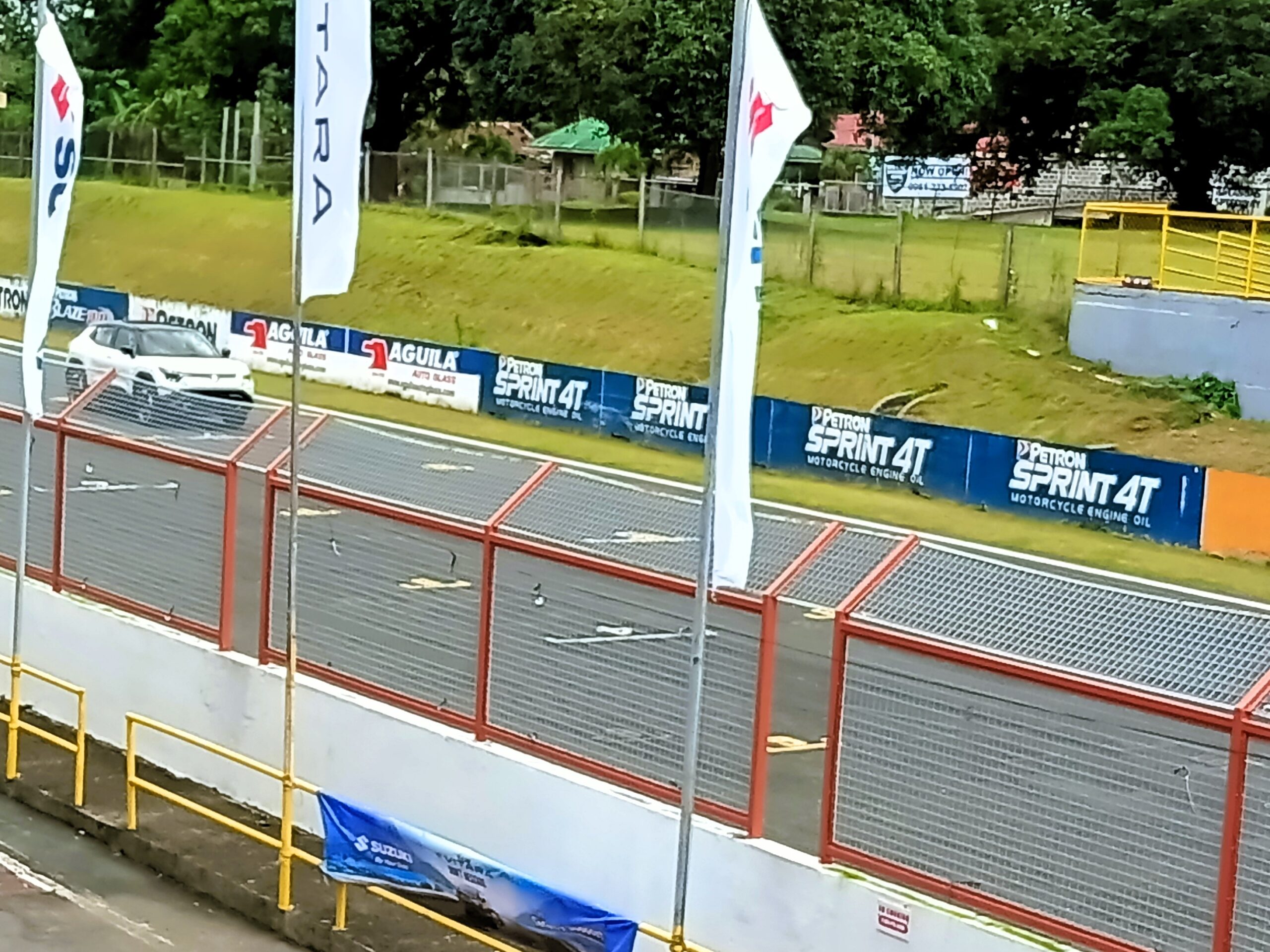
I stopped at the beginning of the long BRC straight to confirm the acceleration time from zero to 100 km/h of 8.7 seconds…
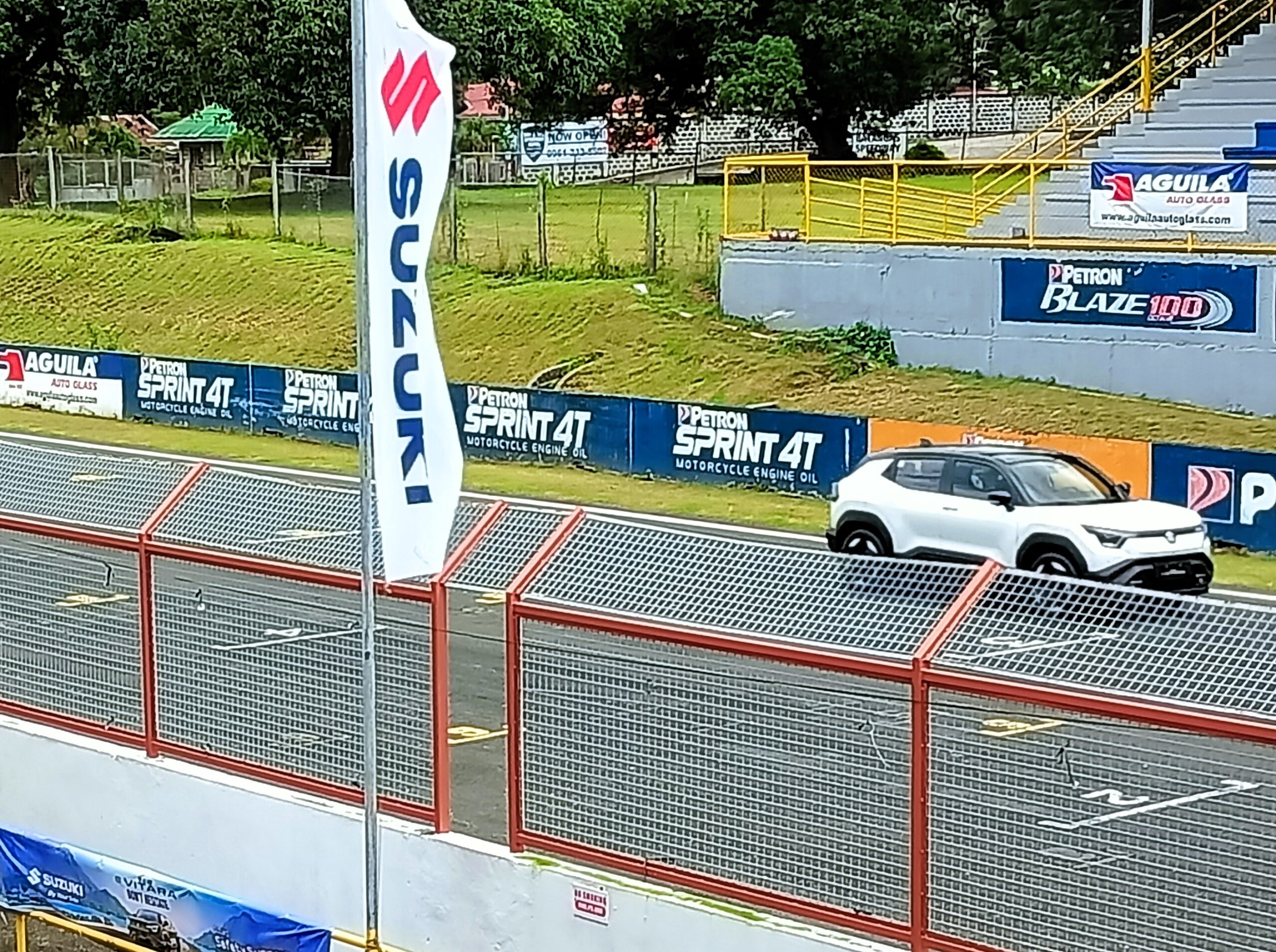
… and sped up to 130 km/h until Warren pointed to the braking points before going into the left hairpin.
Comfortable & Compleat Crossover
The front bucket seat with their contemporary longitudinal design and side bolsters felt comfortable and supportive as I flicked the e-Vitara around the corners. The leather-wrapped square-ish two-spoke multifunction steering wheel had a pleasant tactile feel and was a pleasure to hold on to. The glass sunroof adds light and a sense of openness while it features a manual sliding sun shade for easier and quicker opening (or closing, when the sun gets too hot). We did not have the chance to test the Harman Infinity sound system but I am delighted with the practical Integrated Display System (IDS), which combines the 10.25-inch instrument cluster and 10.1-inch center display.
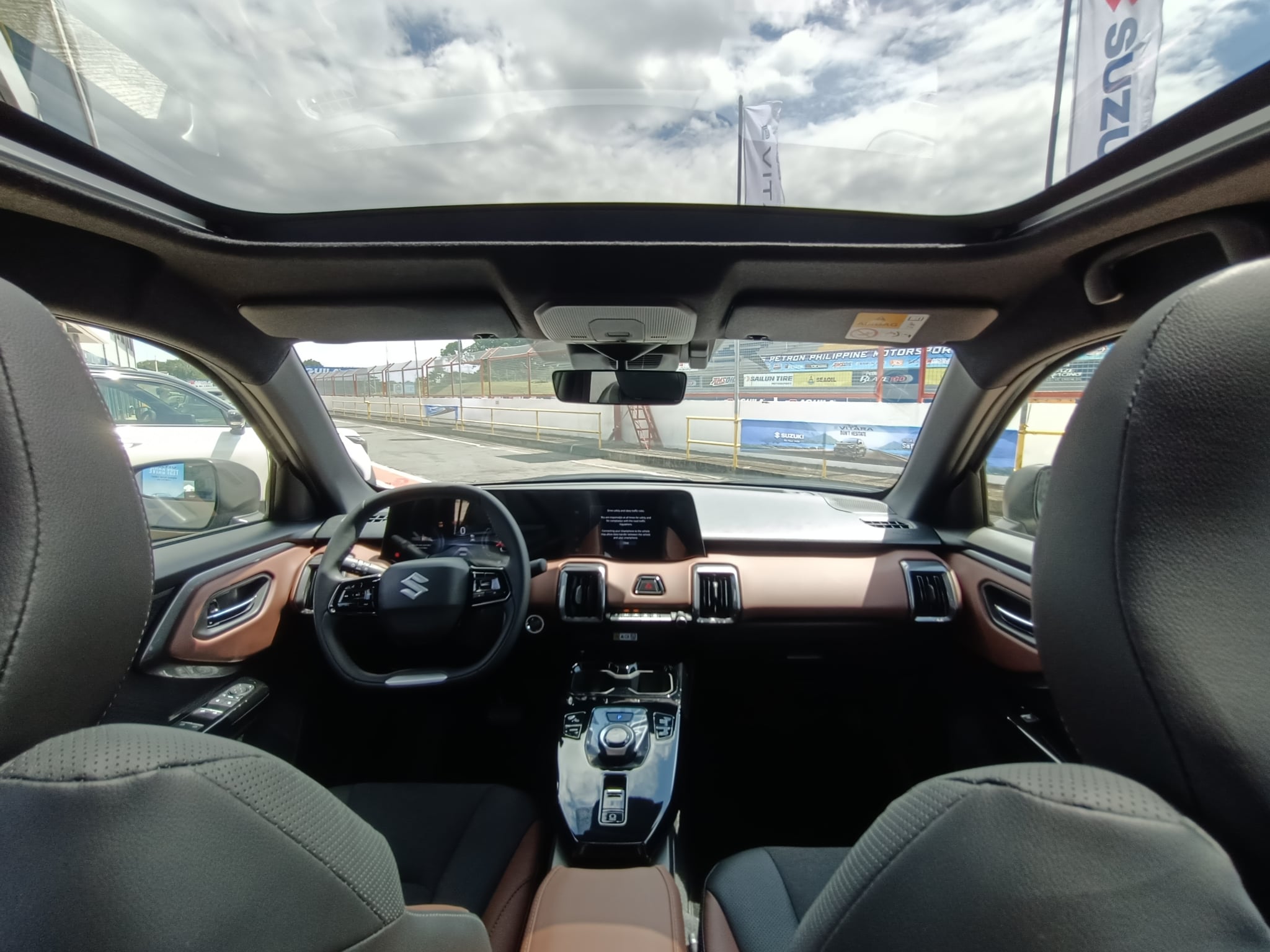
The view out front was augmented by the sun roof, which provided the interior with a spacious, light and airy feeling.
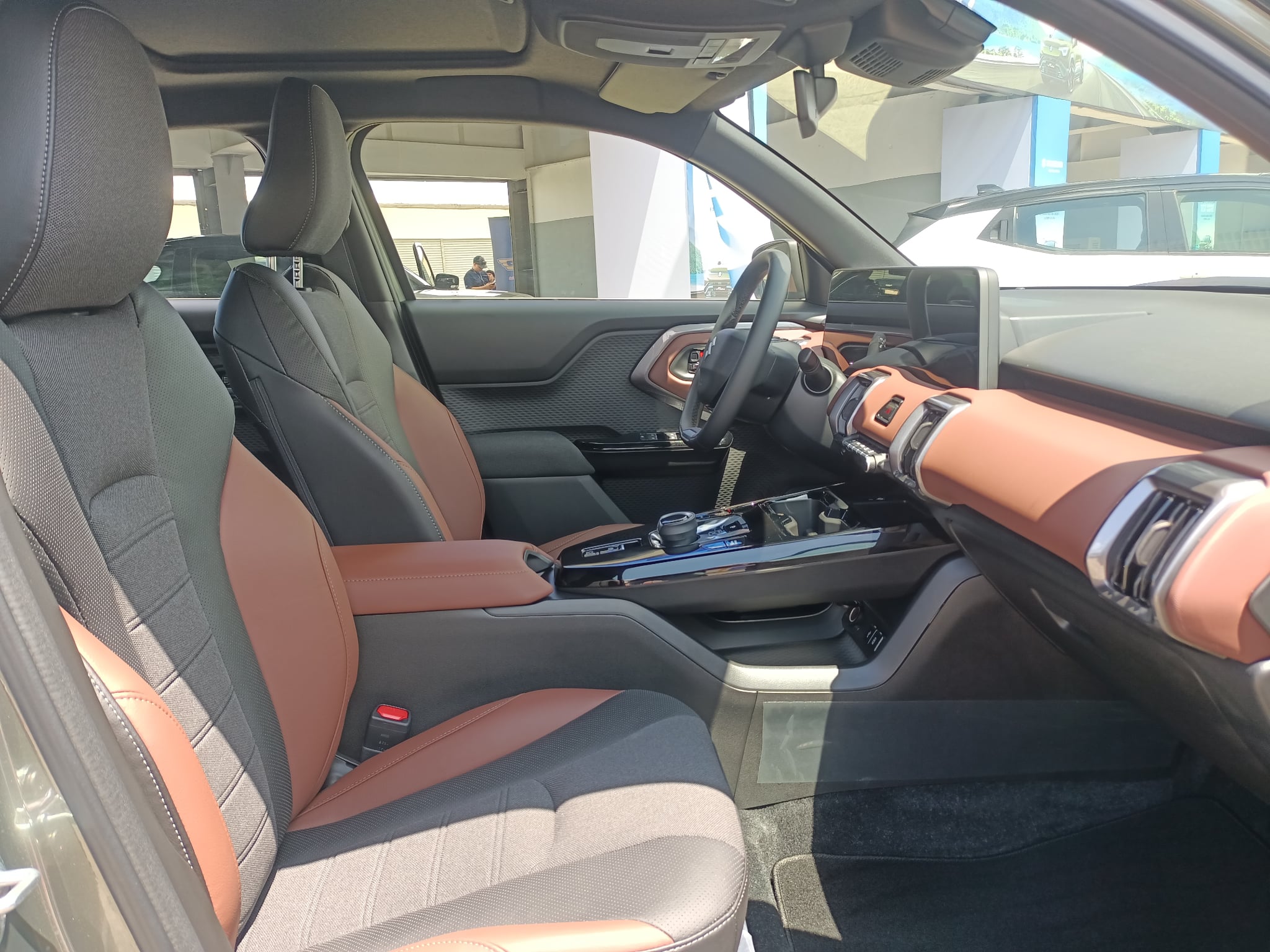
Supportive front bucket seats, multifunction 2-spoke steering wheel, ergonomic controls, Harman Infinity audio system, and highly-practical IDS. What more can you ask for?
The shift-by-wire Dial Gear Selector felt awkward at first since the outer ring (instead of the inner fob) needed to be pressed down and turned to the right for Drive (or left for Reverse) and pressed for Neutral while a separate button activates Park along with the e-Brake. I can only guess that Suzuki engineers designed it that way for safety, especially when kids are in the vehicle so they don’t engage Drive or Reverse accidentally. Anyway, it gets instinctive to use after a few stints at the wheel. It feels even better to know that we’ve been driving around BRC and enjoying the e-Vitara without emitting any harmful carbon molecules into the air.
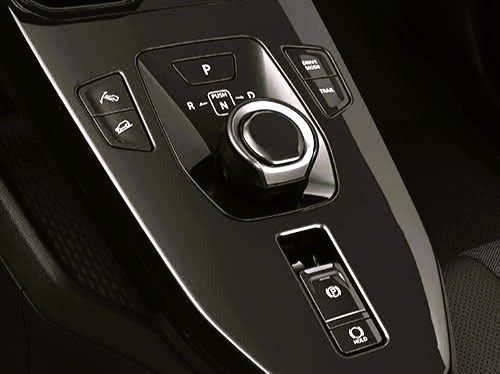
The shift-by-wire Dial Gear Selector felt awkward at first but gets instinctive to use after a few stints at the wheel.
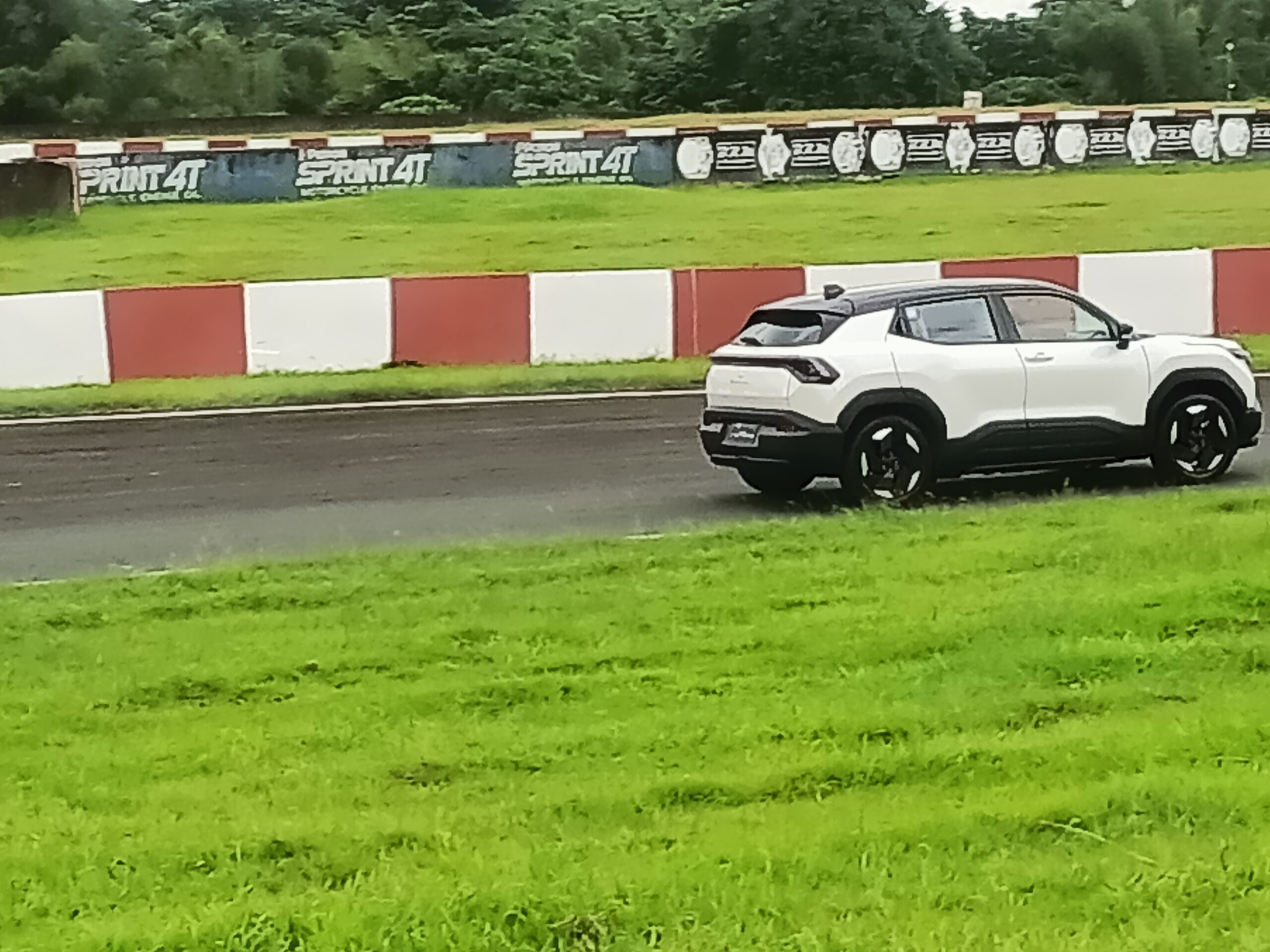
It feels good to know that we were having fun around the track without spewing out any CO2 emissions and using only around 0.132 kWh/km or the equivalent of 68 km/L with an ICE vehicle.
Charging the Battery and the Bank Account
Warren asked me if I would like to take another lap around BRC that was meant for our absentee third journalist but I knew that there were other drivers waiting to take the wheel. Besides, I didn’t want to drain the e-Vitara’s battery pack any further, especially with my hard driving. I later learned that charging the battery from 10% to 80% will only take around 45 minutes with a 150 kW DC charger, or 55 minutes with a 50 kW DC charger. Charging the e-Vitara from 10% to 100% with a 7 kW household AC charger will take around 9 hours, as it sits overnight inside the garage.
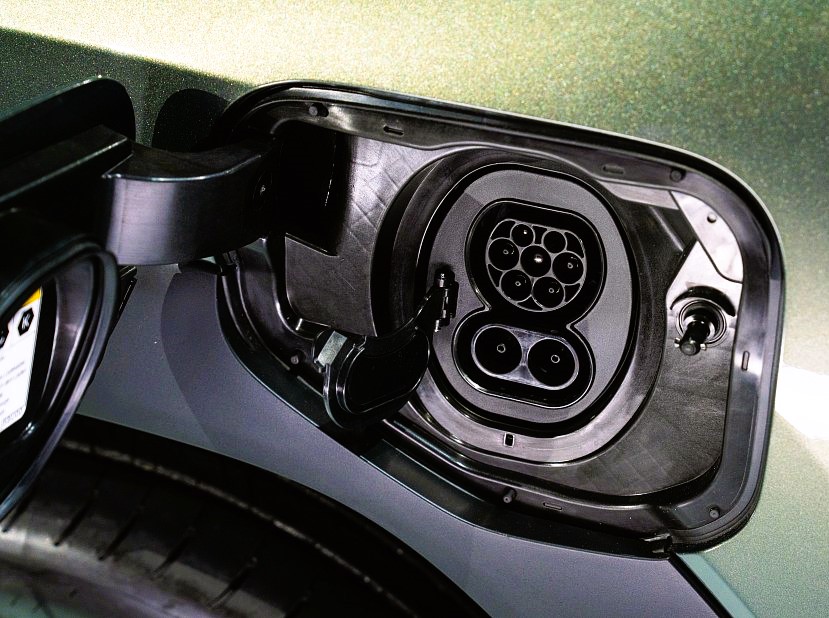
Using a CCS2 or Type 2 port, the battery can be charged from 10% to 80% in 45 minutes with a 150 kW DC charger; 55 minutes with a 50 kW DC charger; or 10% to 100% in 9 hours with a 7 kW AC charger.
Overall, the Suzuki e-Vitara is a great BEV – compact dimension, muscular and modern design, comfortable and highly-functional interior, excellent performance, and simple to charge with its CCS 2 / Type 2 charging port, which is now common with commercial EV Charging Station increasing in numbers around the country. However, with a Suggested Retail price (SRP) of P2,020,000, the e-Vitara will have to compete against the numerous Chinese BEVs and PHEVs that have proliferated in the market, especially those with a lower sub-P2M price range.
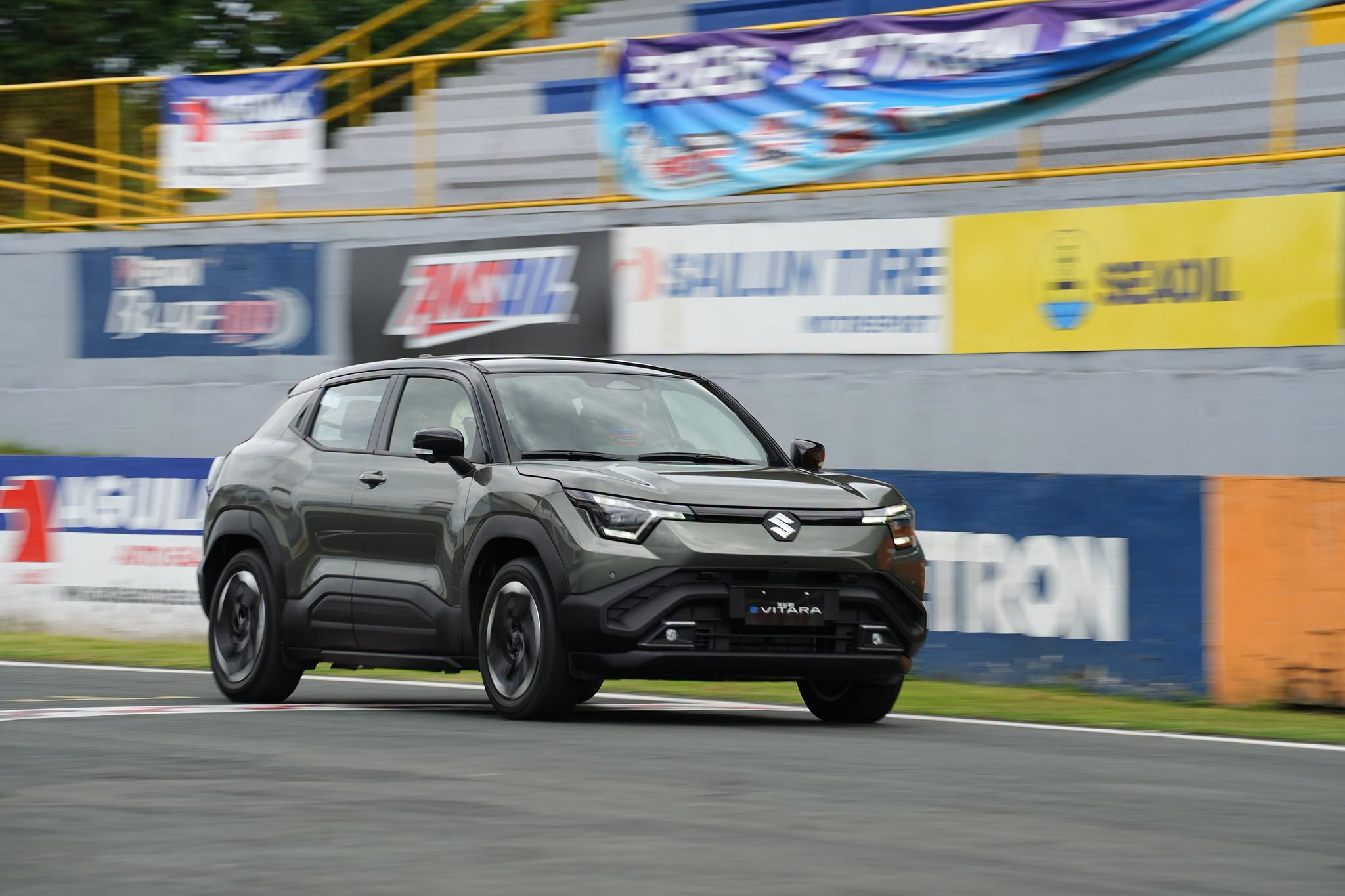
With a price tag of P2,020,000, the all-new all-electric Suzuki e-Vitara faces stiff competition from Chinese car brands that offer BEVs in the sub-P2M price range.
Our experience with our former 2015 Suzuki Ertiga GLXi long term test unit, and our own 2016 Suzuki Ciaz GLXi (which now has more than 100,000 kms on the odometer) demonstrated the aftersales parts and service excellence of Suzuki Auto. Suzuki Philippines’ glowing aftersales record has provided numerous customers around the country with the peace of mind of keeping each Suzuki compact vehicle reliable, efficient, and in tiptop condition. A car brand’s aftersales support is something that any new car buyer must seriously consider, especially in this electrified era of easily accessible EVs. 25 years as a motoring journalist has taught me better.
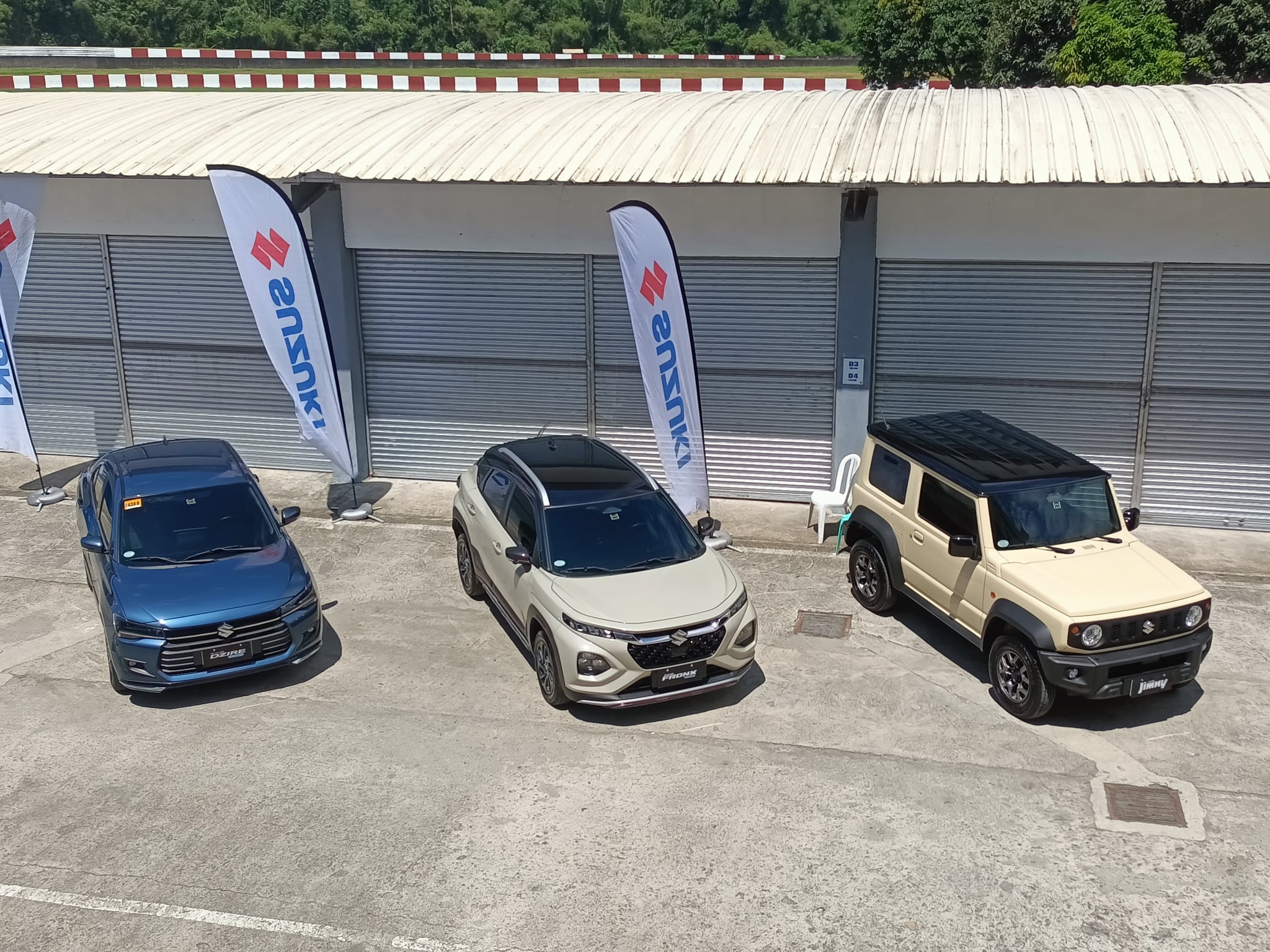
Aside from the all-new Suzuki e-Vitara, SPH displayed other current and available Suzuki models at the paddock area for viewing and test drives.
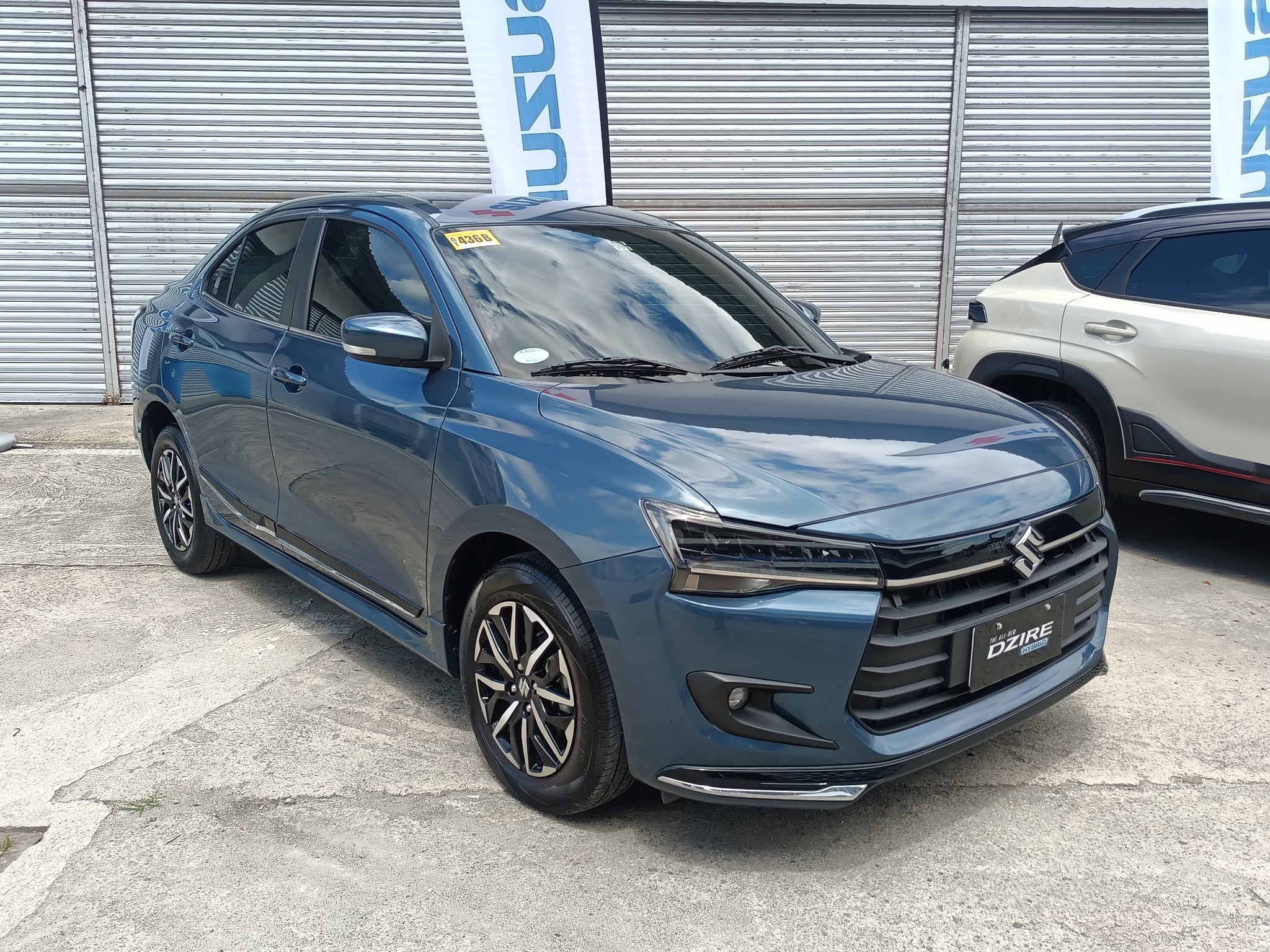
The display and test drive fleet included the 2026 Suzuki Dzire Hybrid 4-door compact sedan…
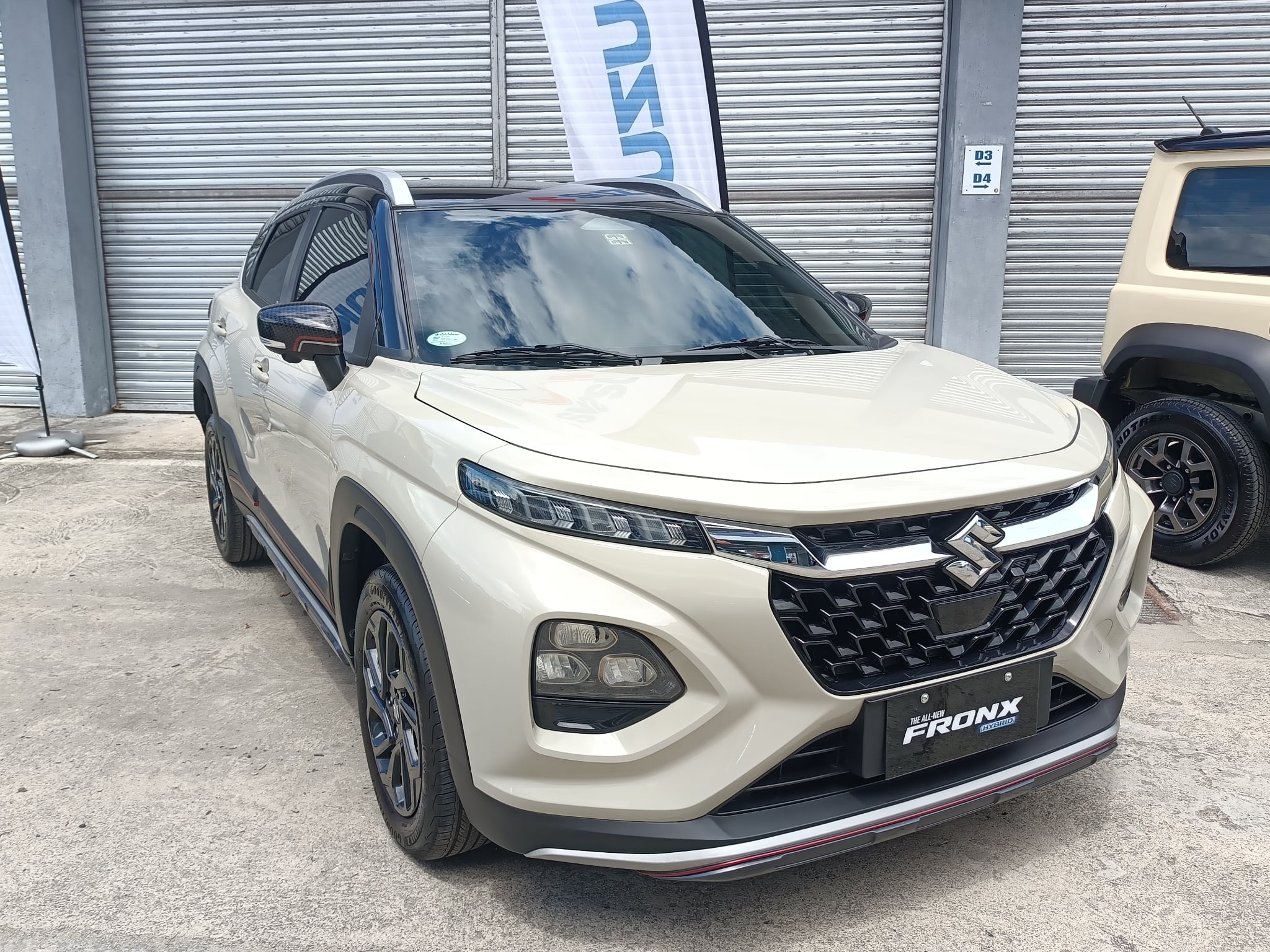
… the 2026 Suzuki Fronx Hybrid 5-door compact crossover…
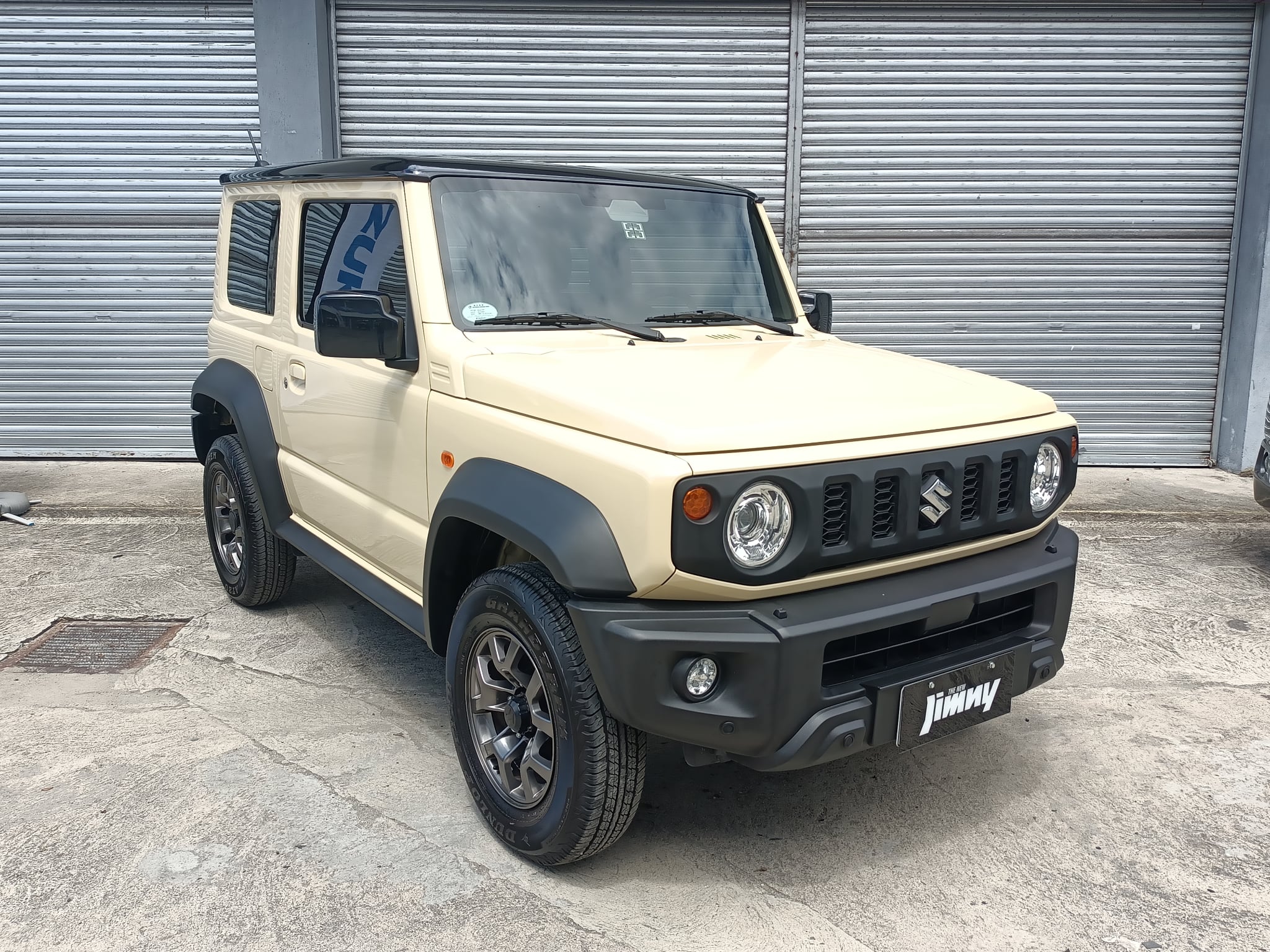
… and the 2026 Suzuki Jimny 3-door compact SUV, now with Suzuki Safety Support ADAS.
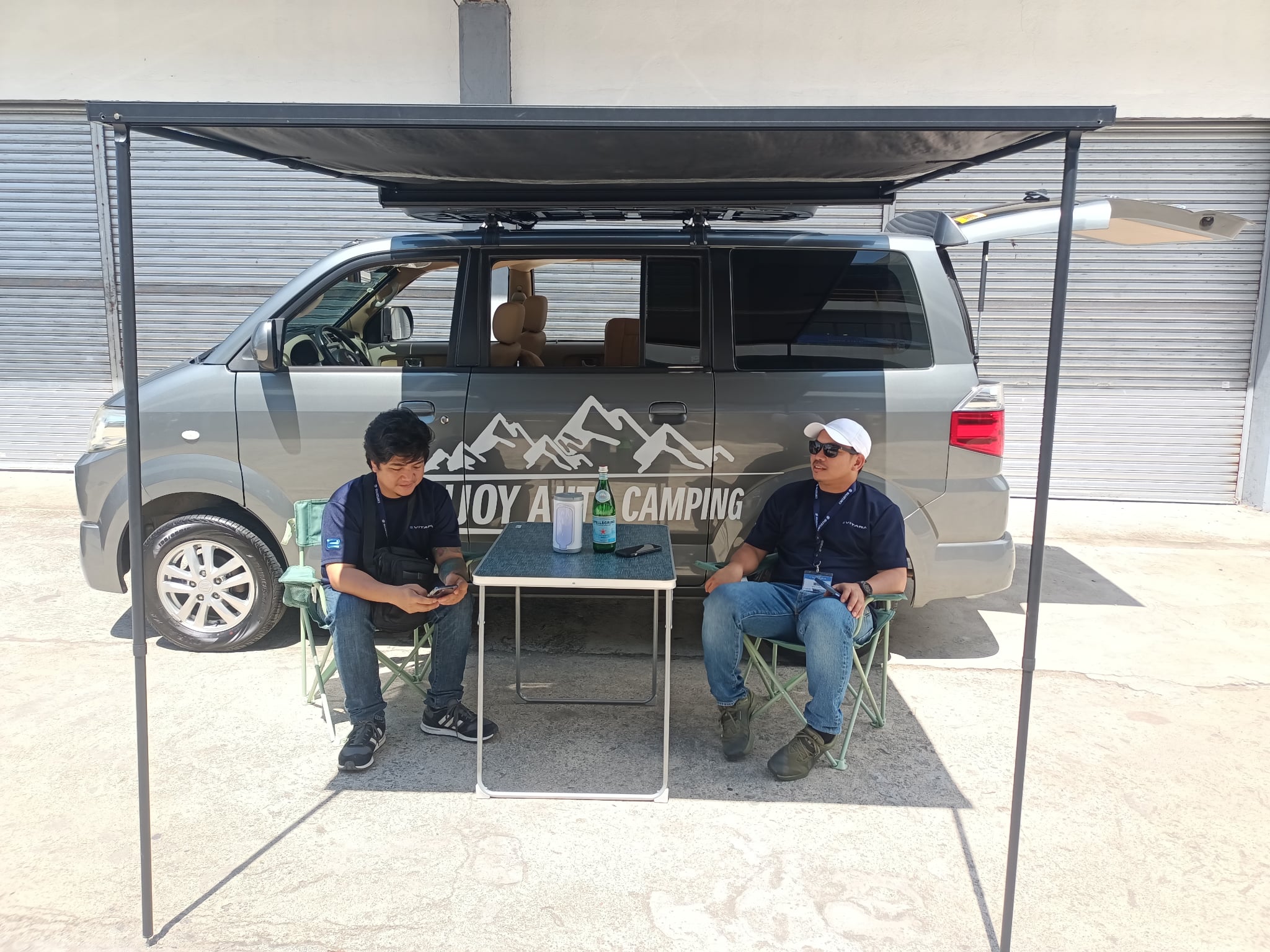
SPH also displayed a 2026 Suzuki APV all-purpose passenger van that they fitted with a roof-mounted roll/folding canopy…
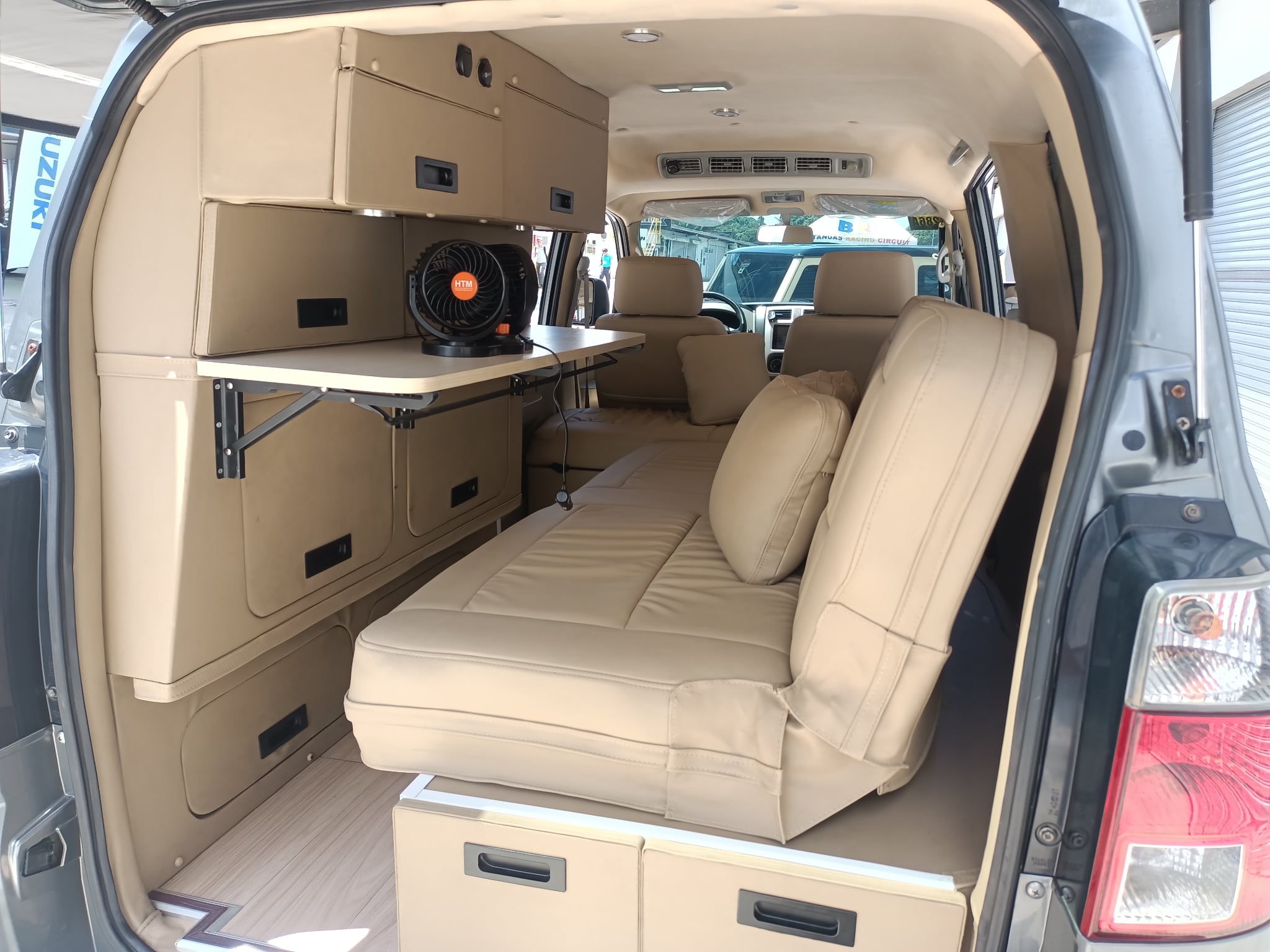
… and converted the rear section into a folding bed, sofa, with functional cabinets for camping and overlanding activities.
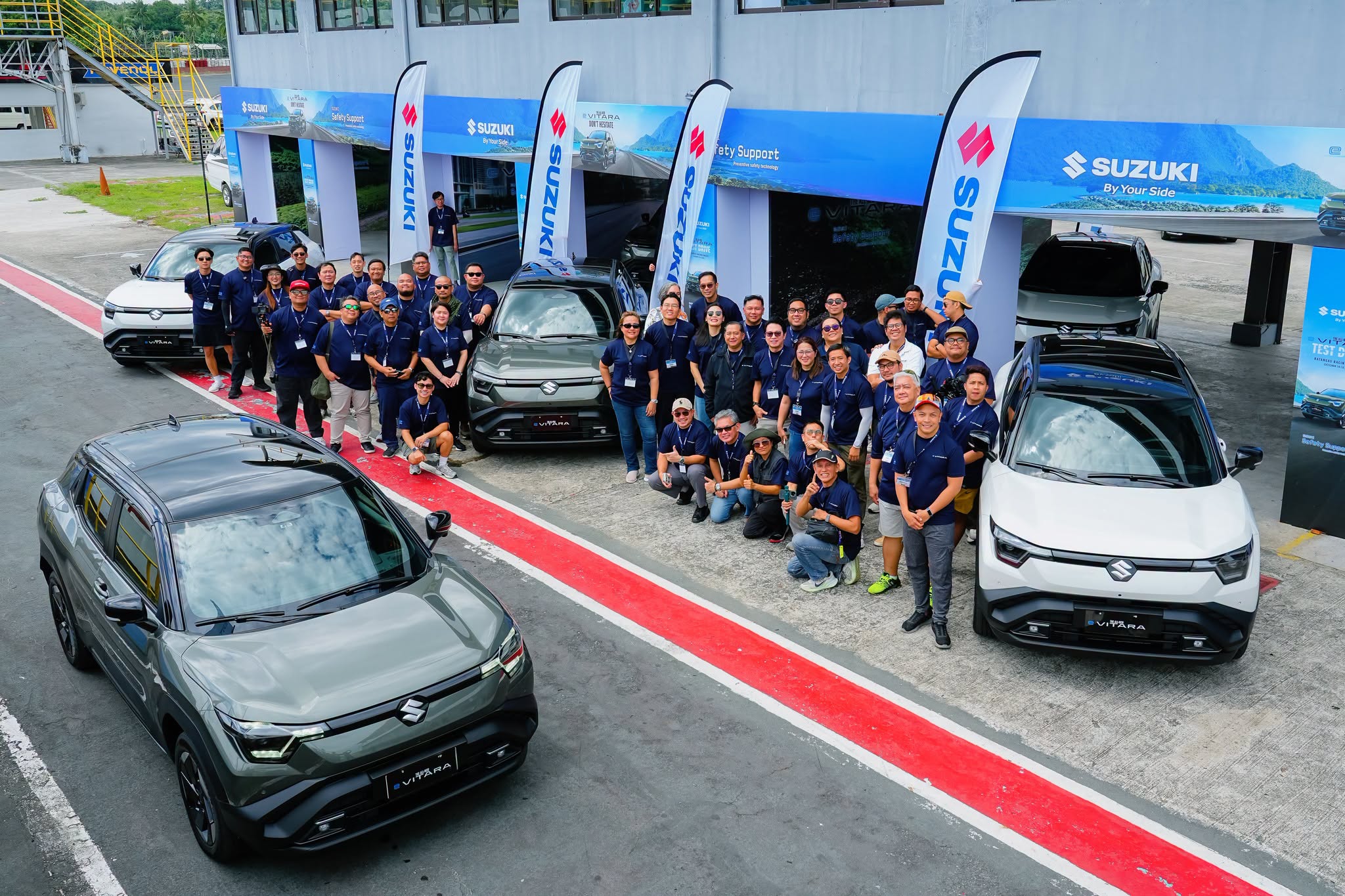
Overall, we had a fun and revealing day at the track with the all-new all-electric Suzuki e-Vitara.