 Power Wheels Magazine A Notch Above

Quick question: “When is an HEV (hybrid electric vehicle) not an HEV?” Short answer: “When it is an REEV.” Now, before you protest, please allow us to explain. You see, by definition, an HEV is technically a vehicle that is propelled or driven by a combination of an internal combustion engine and an electric motor. Battery charging comes in two variants: HEV, where the battery pack is charged while vehicle is being driven; and PHEV or plug-in hybrid, where the battery pack can also be charged by an external power source, such as an AC or DC charger.
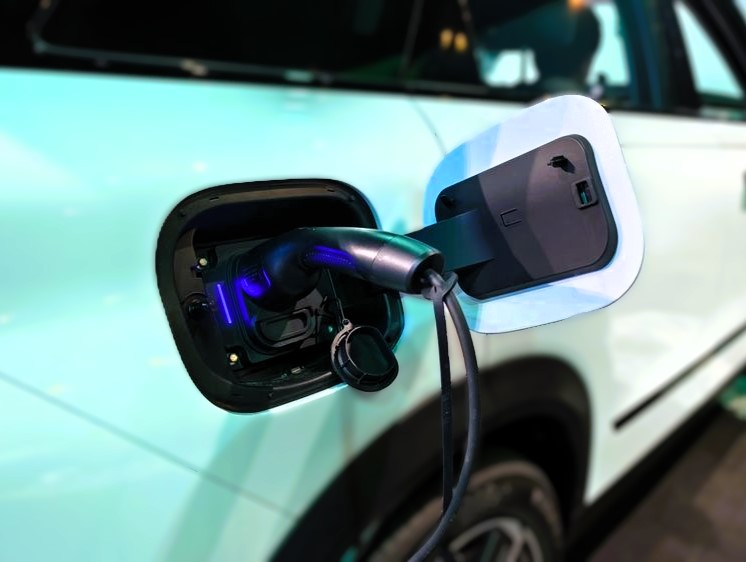
As a PHEV, the J7 SHS Premium’s battery can be charged from 30% to 80% in 180 minutes (3 hours) using an AC charger, or just 20 minutes using a DC charger.
In comparison, a full-electric or battery electric vehicle (BEV) is propelled or driven solely by an electric motor that gets its power from a battery pack. Because EV charging stations are not as common as gasoline stations, most car buyers initially shunned BEVs because of range anxiety. To address this issue, engineers mounted an onboard generator powered by a gas- or diesel-powered engine and created a new breed of EVs – the REEV or range extender electric vehicles. So technically, an REEV is a BEV that can be plugged into an external charger, and is equipped with internal combustion engine that does not propel the vehicle but just drives an onboard generator to extend the battery charge.
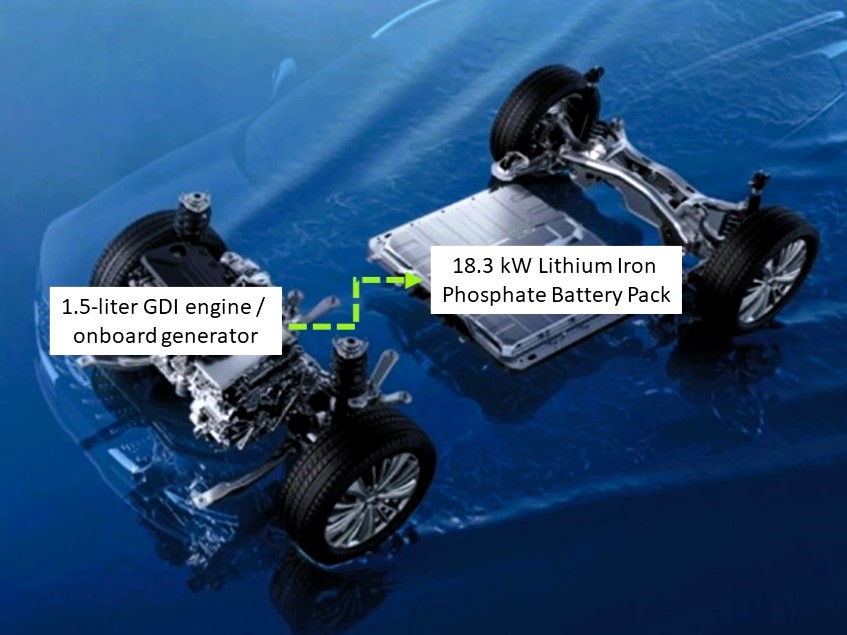
The internal combustion engine of an REEV drives just the generator to charge the battery pack that powers the electric motor/s that propel the vehicle. The engine is not connected to the driving wheels.
PHEV or REEV?
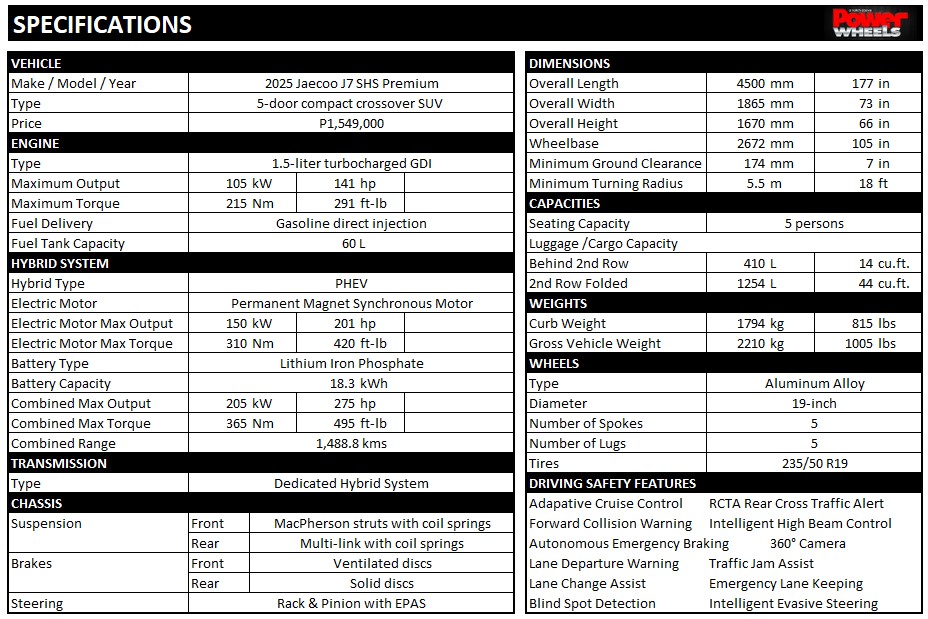
This question came into mind when we test drove the 2025 Jaecoo J7 SHS Premium a week before the holidays. Initially, we thought that it was a PHEV because SHS stands for Super Hybrid System, which was further supported by the J7 SHS Premium’s specs that are listed in the Omoda Jaecoo Philippines website, quoting the horsepower and torque output of the 1.5-liter turbocharged gasoline direct injection (GDI) engine at 141 hp and 215 Nm, and the output of the 150kW permanent magnet synchronous electric motor at 201 hp and 310 Nm. (Don’t forget, there’s also a “PHEV” emblem at the tailgate, which officially makes it a PHEV. – Ed.)
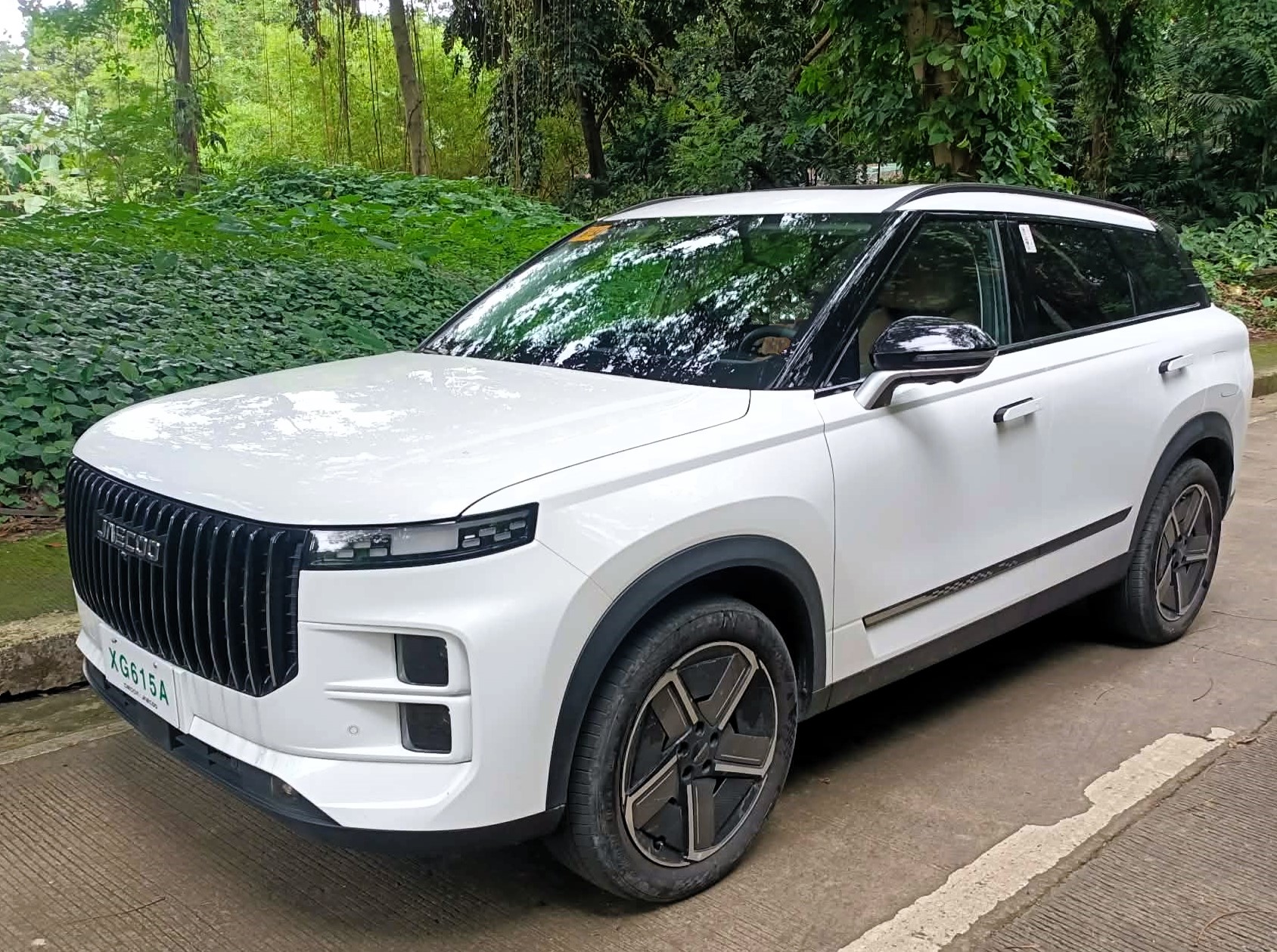
The transition from BEV to hybrid operation was so smooth, we weren’t sure whether this Jaecoo is a PHEV or an REEV.
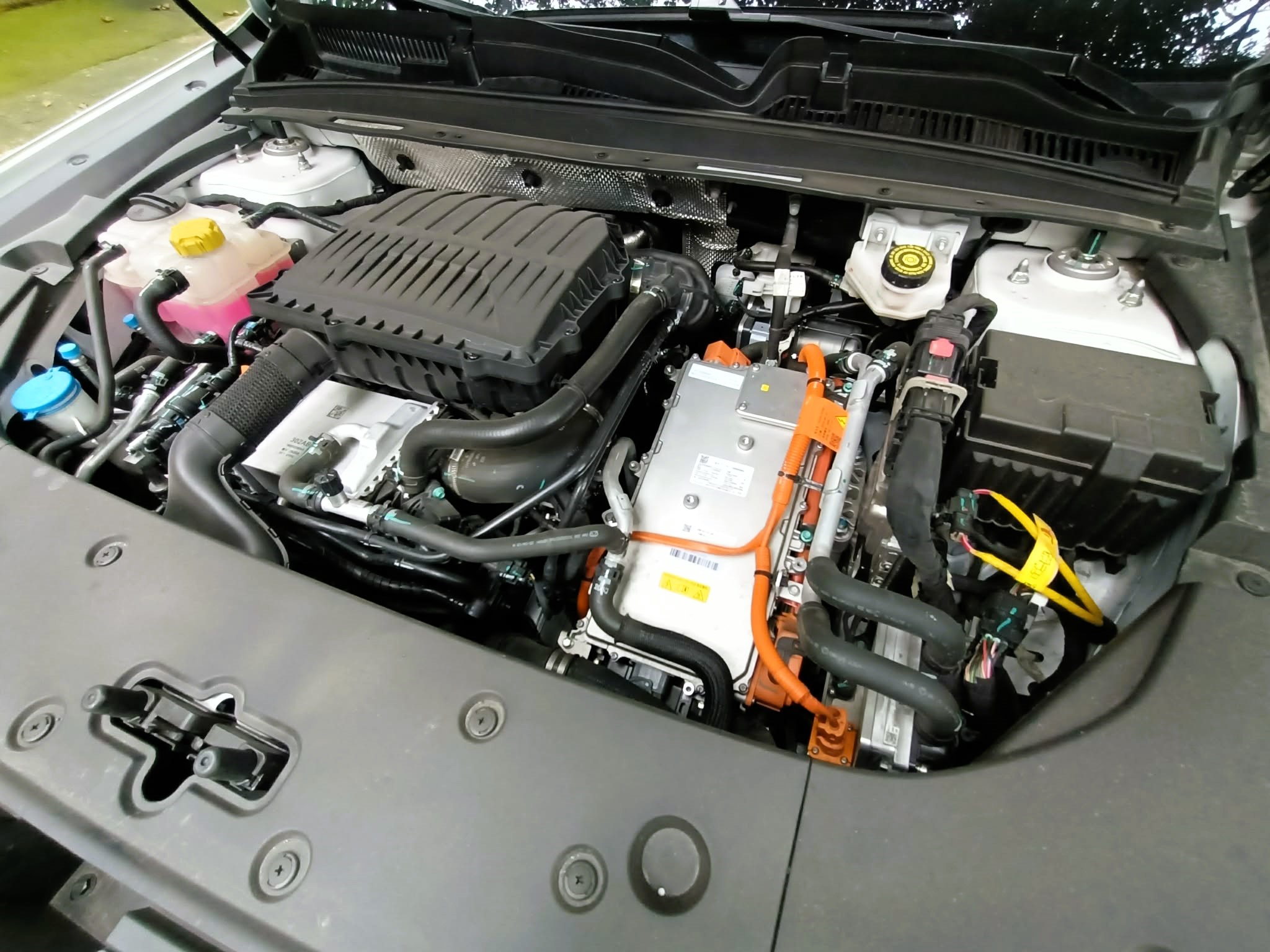
Under the hood sits the 1.5-liter turbo GDI engine, the DHT, the electric motor and controller system in a compact package. From this angle, we couldn’t tell if the hybrid system is a PHEV or REEV.
We then wondered why the quoted combined power and torque output of 275 hp and 365 Nm didn’t add up as a hybrid system. When we took a closer look at the specs sheet, we saw that Jaecoo labeled the gasoline engine outputs as “Ranger Extender Power (hp)” and “Ranger Extender Torque (nm)”, which led us to believe that the J7 SHS Premium is an REEV. But then, the website’s SHS video provided us with a more definitive explanation: Jaecoo’s unique “4 Drive Modes” seemingly makes it an all-in-one BEV, REEV, PHEV and Energy Recovery system. It works like this:
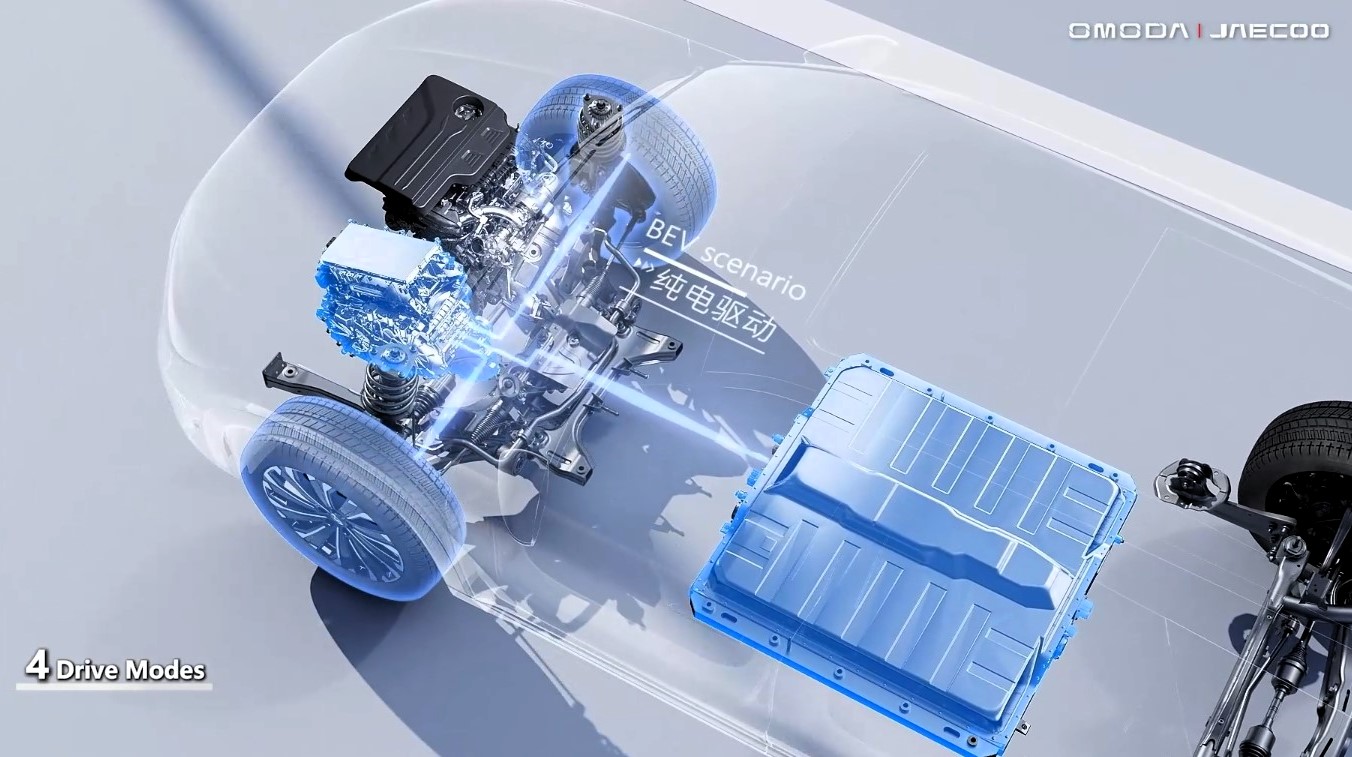
Under the BEV scenario of the J7 SHS Premium’s “4 Drive Modes”, the battery pack powers the electric motor, which in turn drives the front wheels to propel the vehicle.

Under the HEV/REEV scenario, the 1.5T GDI engine drives the electric motor/generator unit to charge the battery pack.
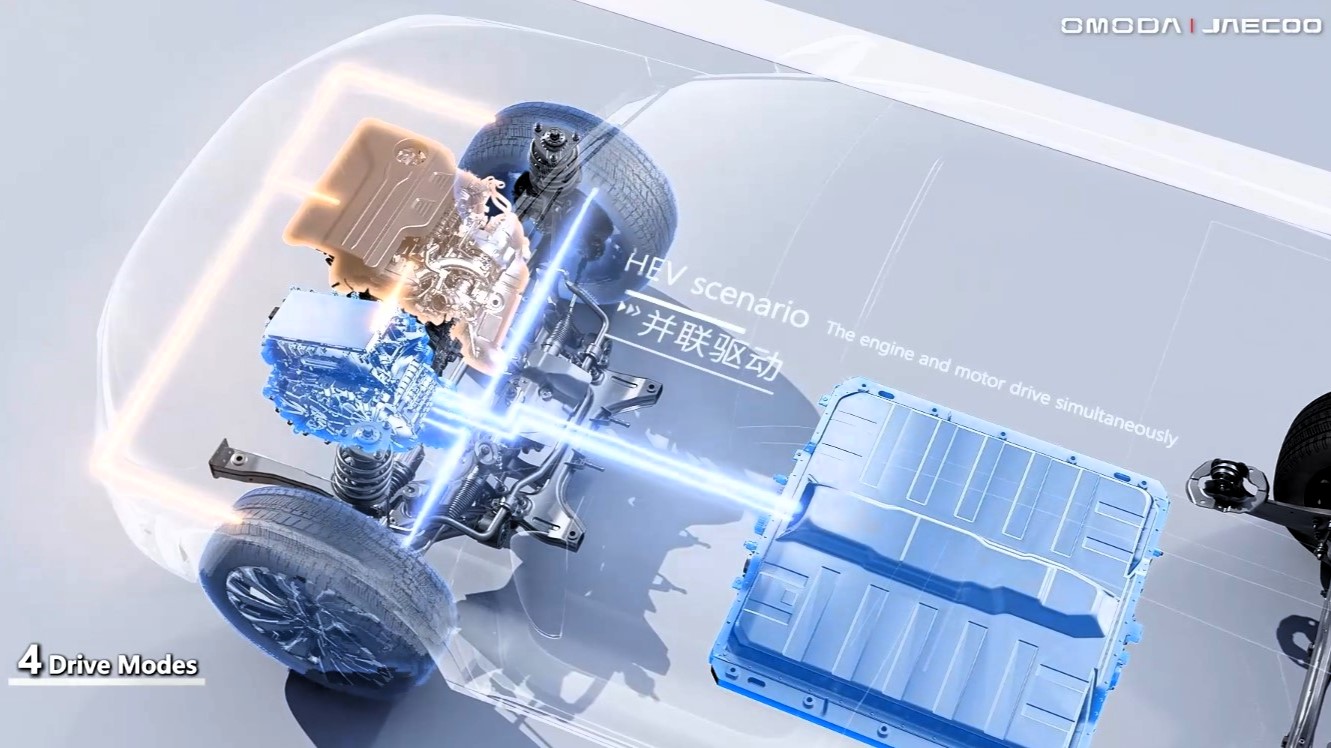
Under the HEV scenario, the 1.5T GDI engine and the electric motor work “simultaneously” to drive the front wheels and charge the battery at the same time, which implies that the engine also provides some drive to the wheels.

While freewheeling, coasting, slowing down, or braking, some energy is recovered and stored in the battery, adding to its charge and driving range.

The “PHEV” emblem at the lower right side of the tailgate settles the matter once-and-for-all.
Almost Seamless Drive
The first impression we had of the J7 SHS Premium once we got to drive it is that it’s very quiet. (Is it like what Elmer Fudd said, “Shh… Be vewy, vewy quiet…”? Heh-heh-heh – Ed.) In pure electric or BEV mode, the vehicle crawls silently from rest while its NVH (noise, vibration and harshness) insulation system minimizes road noise and tire hum while driving at speed. We can only hear the engine when it functions like an REEV to recharge the battery when the charge falls below 25%. And since we drove this Jaecoo mostly around the metropolis in heavy, slow-moving traffic during the Christmas rush, it ran mostly on electric power.
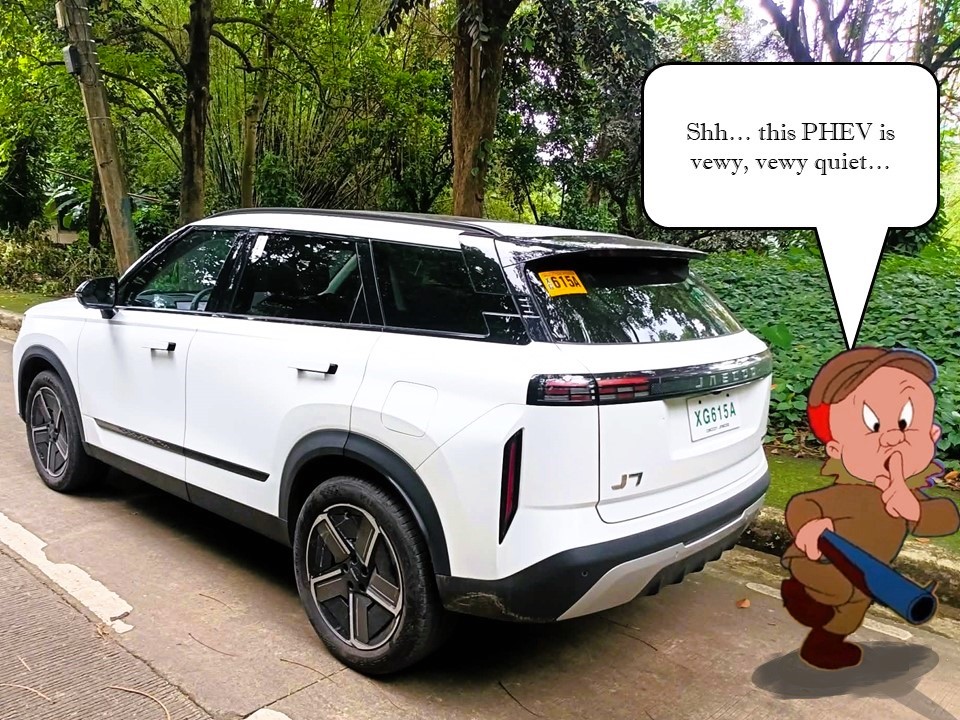
Our Jaecoo J7 SHS Premium test unit is so quiet just like what Elmer Fudd said…
When we drove it on the Skyway, we initially felt the 1.5-liter engine humming as an onboard generator to add power to the battery. But we also felt that the engine revs rising and assisting the electric motor – much like a PHEV – as we accelerated to overtake slower traffic. Looking at the Vehicle Energy pictograph displayed on the 14.8-inch high-definition touchscreen infotainment, we could see that coasting towards a stoplight or slowing traffic, and braking activates the Energy Recovery system and trickle-charges the battery. However, we found the brake pedal a bit too sensitive. Perhaps, we just need more time to learn how to modulate the brake pedal to minimize the less-than-smooth jerky braking attempts we experienced.
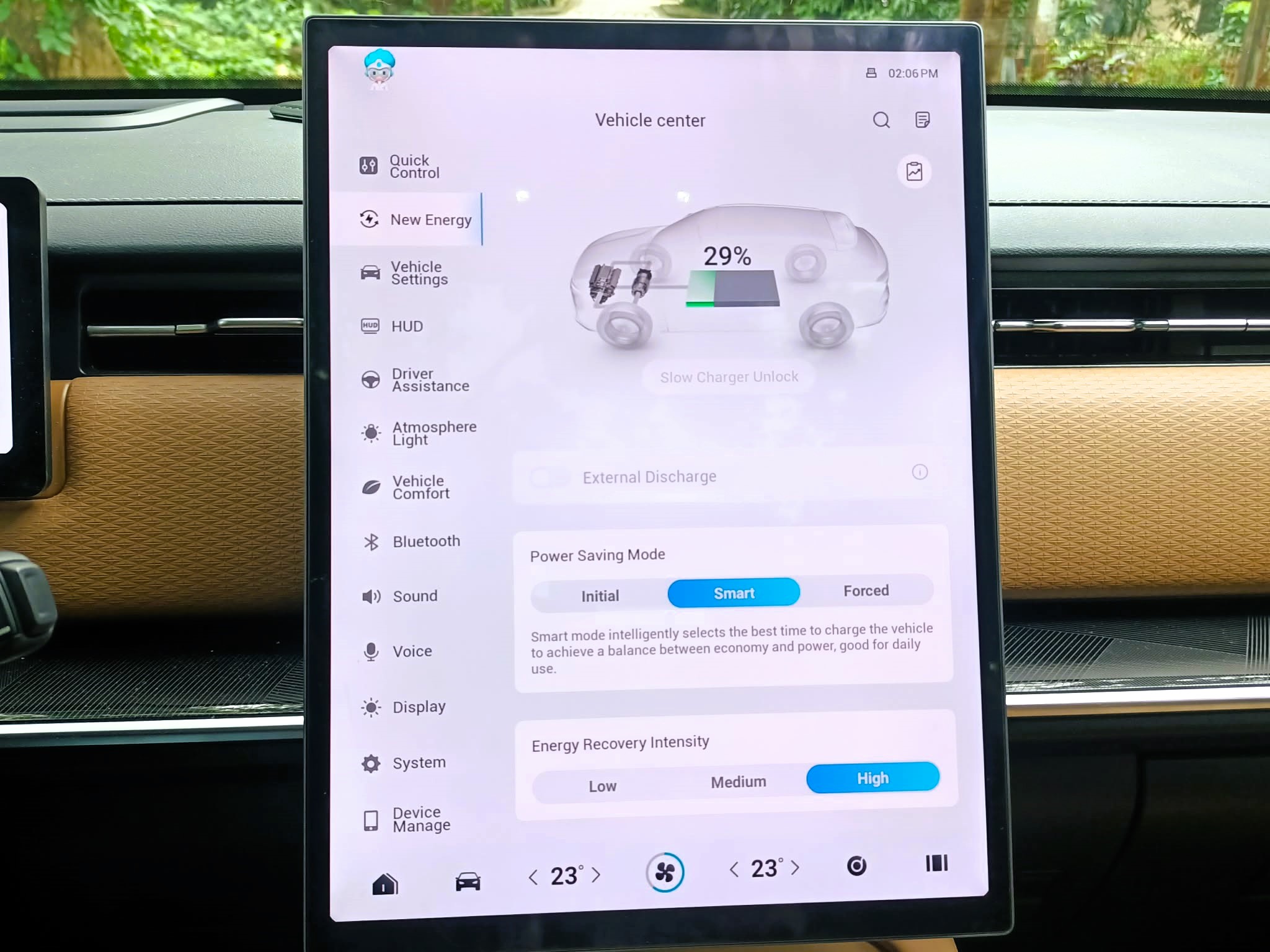
In “New Energy” mode, the 14.8-inch touchscreen infotainment system updated us on the battery charge, the power saving mode, and the intensity of energy recovery while we were on the go.
Cool, Clean & Classy Cabin
Most late-model modern vehicles we’ve tested have two-tone or even three-tone interiors, but we found the cabin of the J7 SHS Premium more to our liking. The tan-and-black minimalist interior looked cool, clean and classy with just the right amount of texture to make it interesting and not gimmicky. The power-adjustable driver’s seat automatically resets to the pre-programmed memory position when we sit on it, close the door, and buckle the seatbelt. Behind the multi-function flat-bottom 4-spoke steering wheel is a 10.25-inch digital instrument cluster that provides us with just the pertinent information we need.
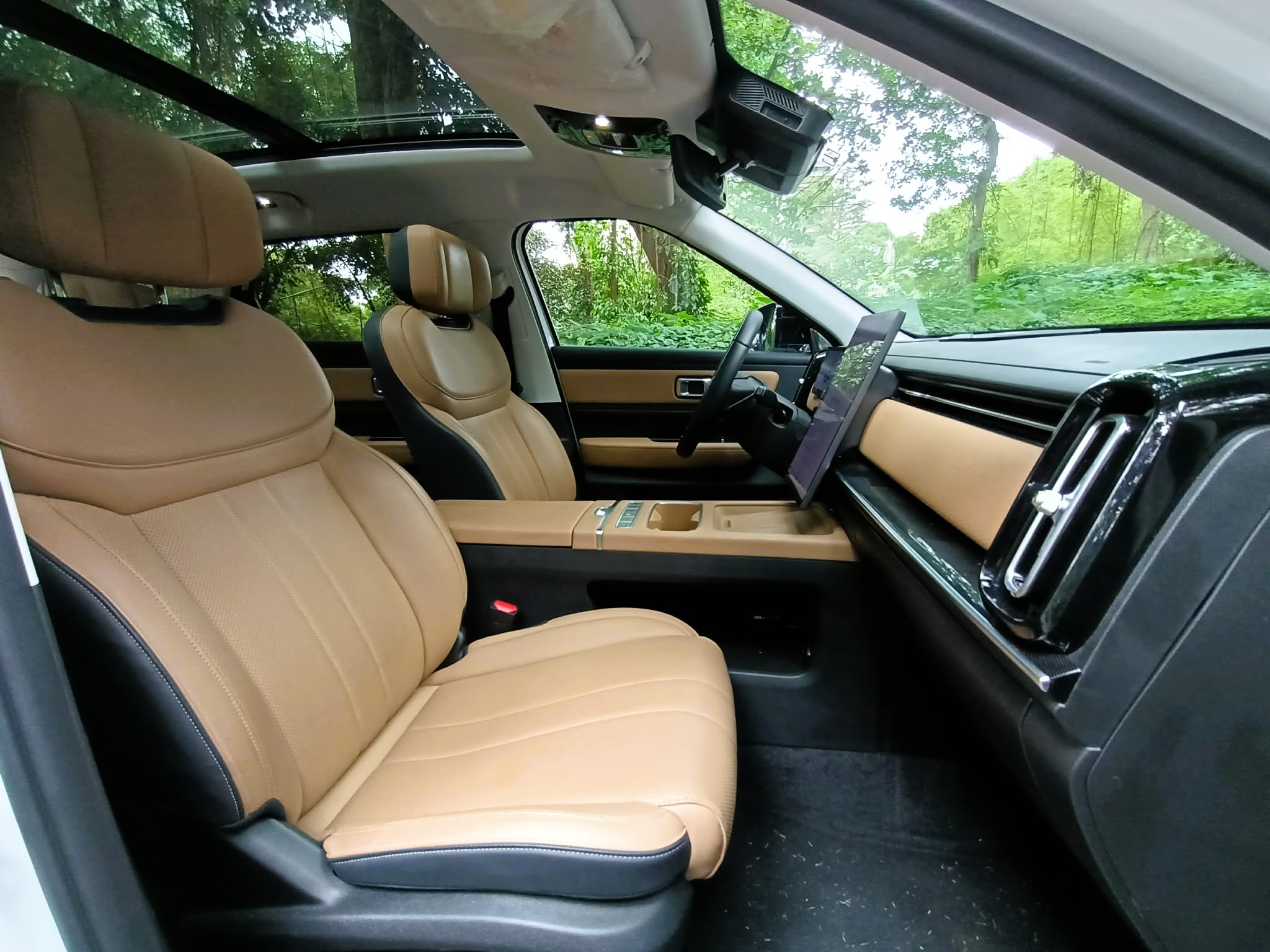
Minimalist tan-and-black interior looked cool, clean and classy…

… that it felt so natural to don elegant formal wear while driving to the ballroom of a luxury hotel.

The J7 SHS Premium’s minimalist cockpit is a model of functional simplicity…
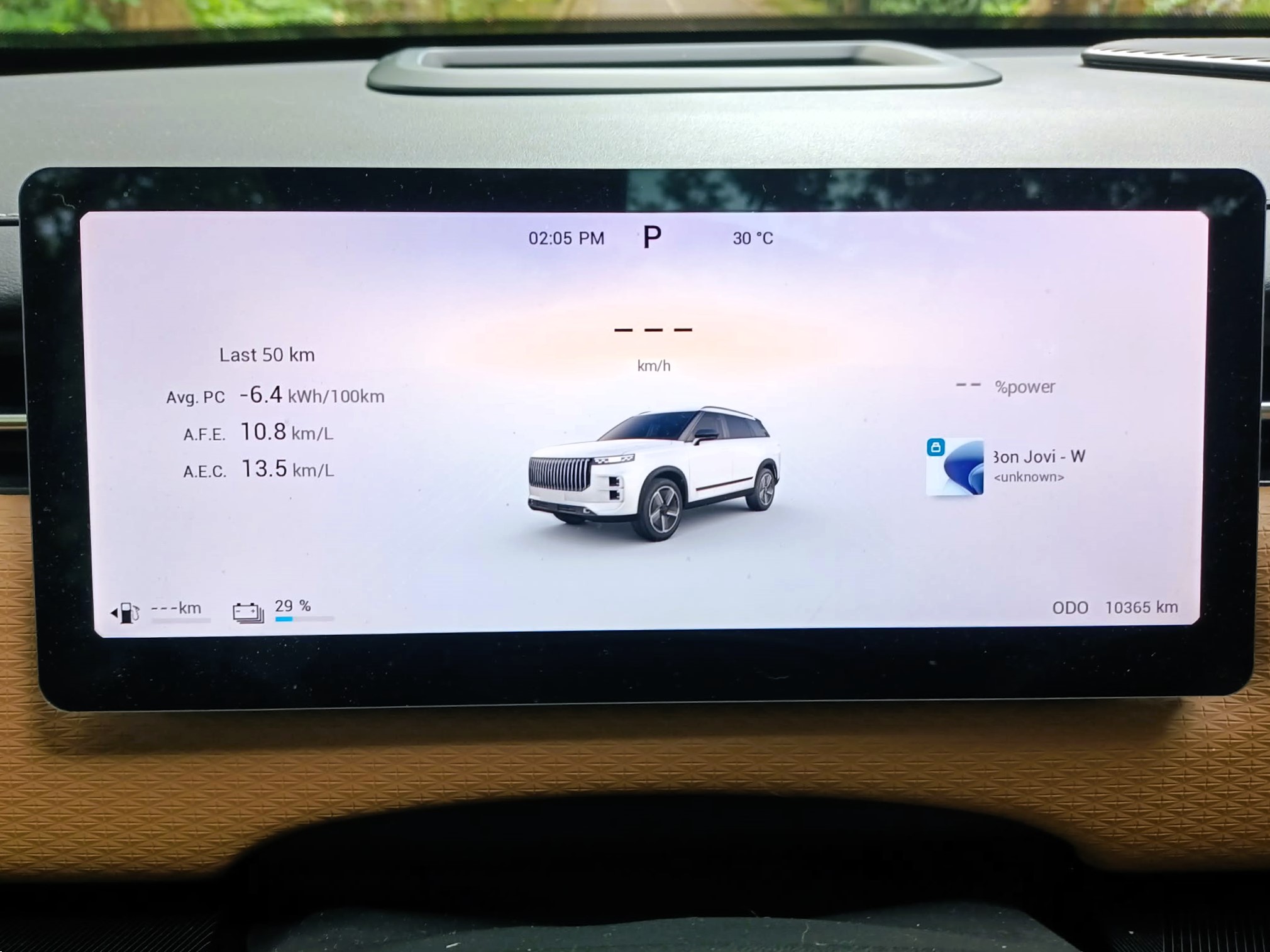
… with a 10.25″ digital instrument cluster behind the multi-function flat-bottom 4-spoke steering wheel. We averaged only 10.8 km per liter because of the heavy Christmas traffic.

Our favorite music emanating from a great-sounding 8-speaker Sony audio system made sitting in December traffic much more bearable.
Our J7 SHS Premium test drive unit is equipped with a Sony audio system that channels music through 8 speakers to produce a rich musical experience to while away the time we spent sitting in heavy traffic. The minimalist interior design, the large panoramic sunroof, and expansive glass area provides an airy, spacious feel while the tinted glass at the rear side windows and hatchback provides some privacy for the backseat occupants. The rear bench seat has a folding center armrest while the seatbacks fold flat to increase luggage space from 410 to 1,254 dry liters, or from 14 to 44 cubic feet.

Because of the minimalist design and expansive glass, the cabin feels airy and spacious…
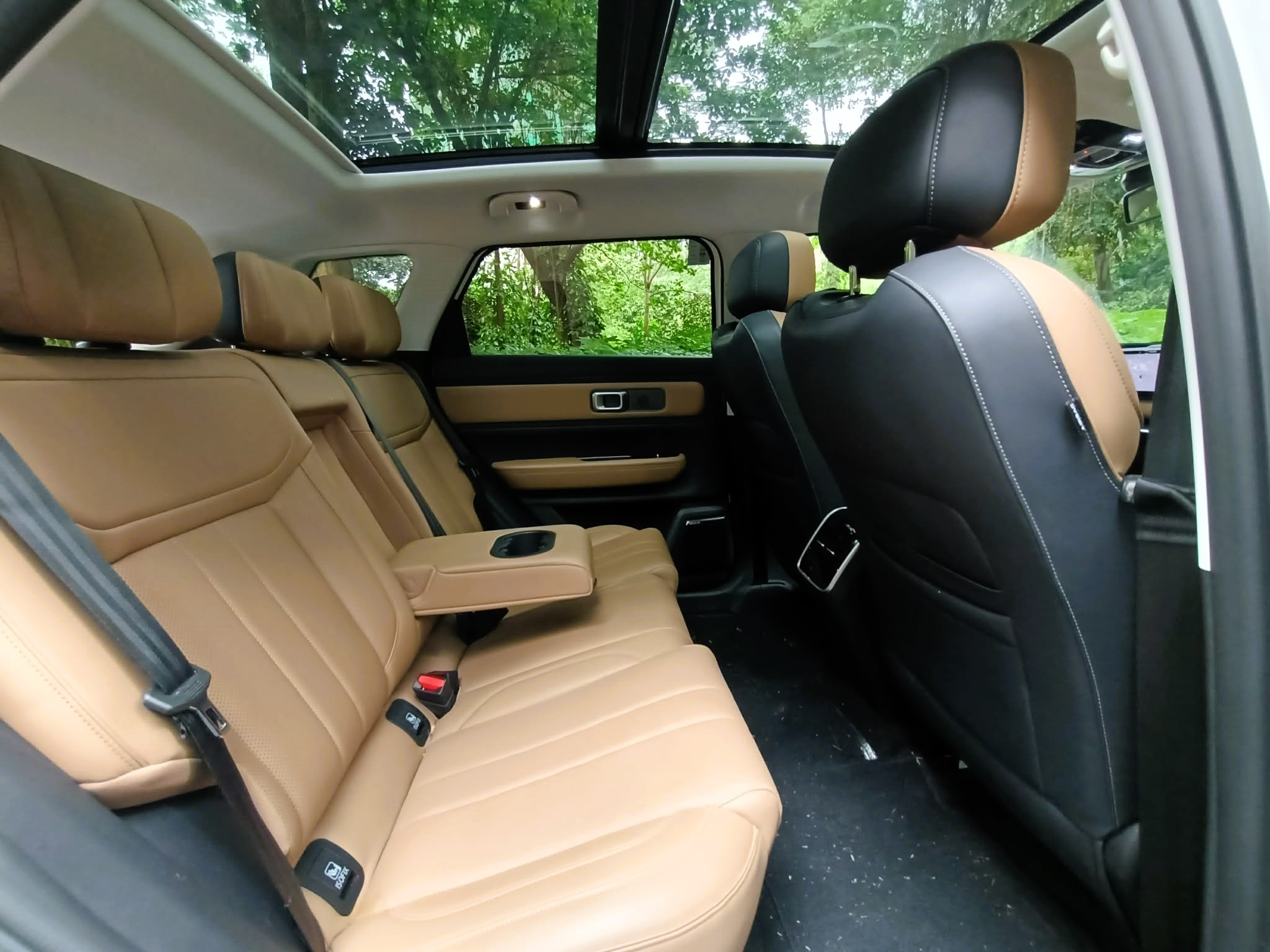
As a compact crossover SUV, the Jaecoo J7 can accommodate 3 backseat passengers, albeit a bit tightly. Our J7 SHS Premium has a folding center armrest with drink holders.
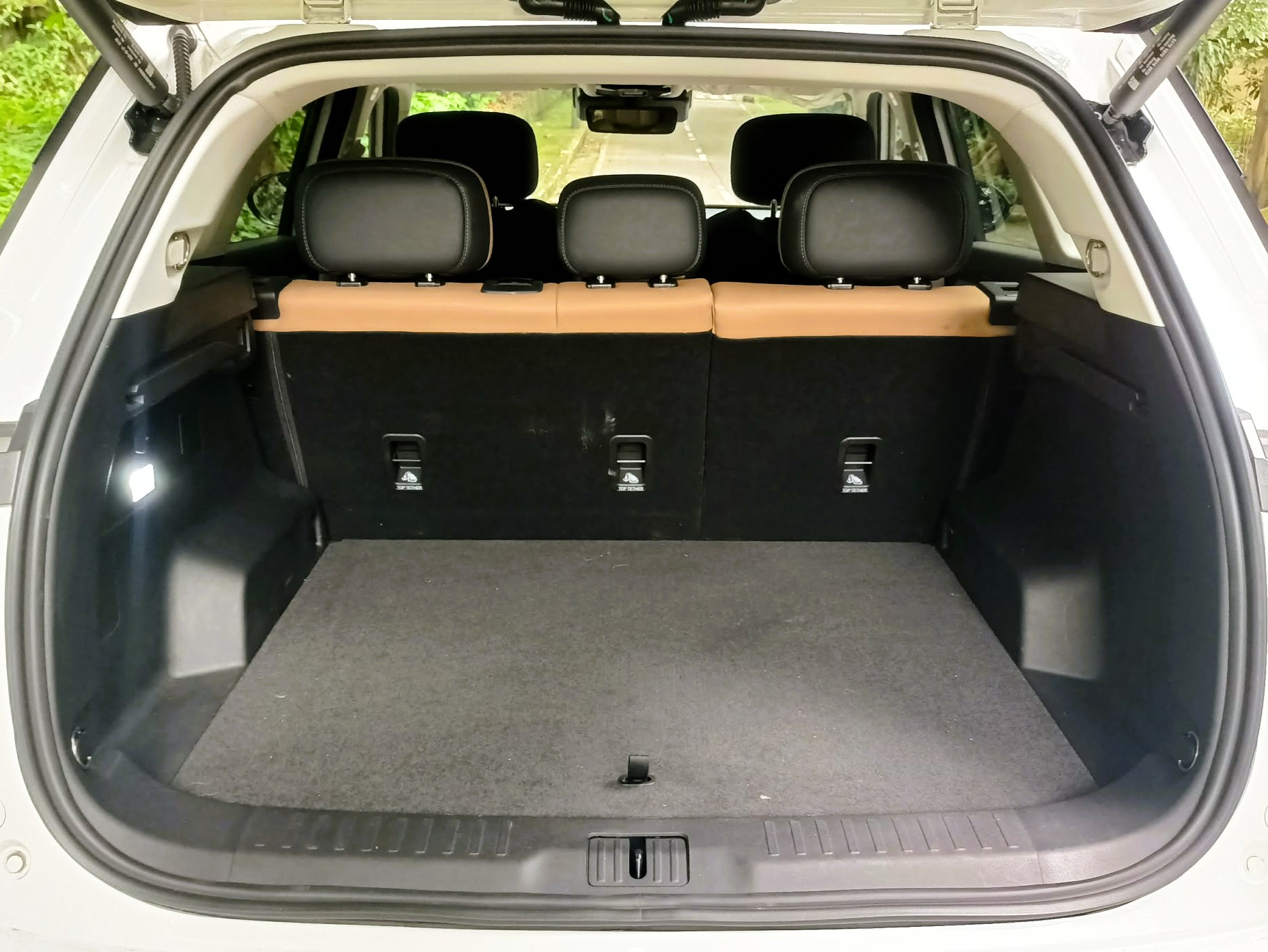
With the all the rear seatback up, the rear compartment can accommodate 410 dry liters or 14 cubic feet of luggage or precious cargo.
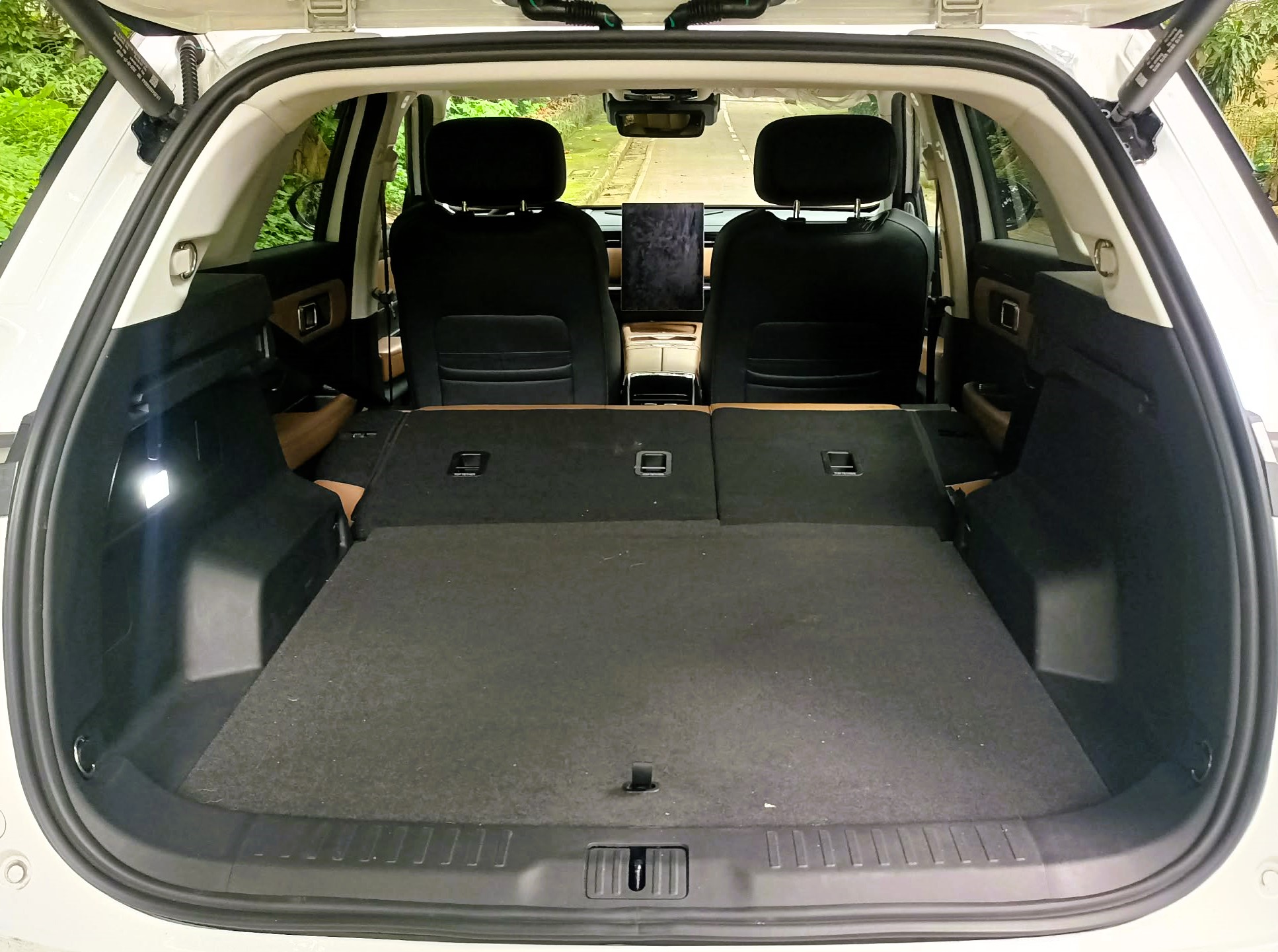
With all the rear seatbacks folded, the cargo space increases to 1,254 dry liter or 44 cubic feet.

The 60/40 rear seatback can be configured to suit the number of backseat passengers and luggage or cargo that go on a drive in the J7 SHS Premium.
Safety versus Redundancy
The column-mounted gear selector allows us to keep our right hand on the steering wheel while shifting. However, the brake pedal must be firmly pressed before the DHT (dedicated hybrid transmission) will shift to Drive or Reverse. The DHT would often stay in Neutral and make us look like amateur drivers stalling in the middle of a narrow street while making a 3-point turn. Similarly, this Jaecoo will not shift from Park to Drive or Reverse until we’ve fastened the driver’s seatbelt. Some may call it a safety feature while others might find it annoying. We just find it a bit redundant.

Column-mounted shifter frees space at the center console for a deep storage bin wth cover, center armrest, and “floating” console with separate console underneath…

… that can store a clutch bag and keep it away from prying eyes.
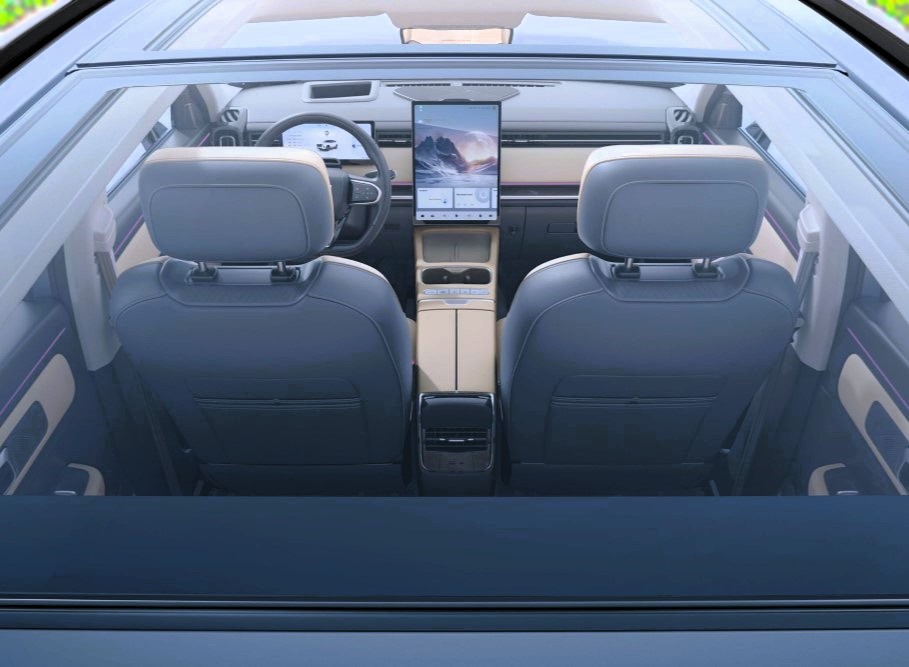
The shades of the panoramic sunroof of our J7 SHS Premium was programmed to close automatically when we leave the vehicle.
Speaking of safety, the J7 SHS Premium comes with a comprehensive ADAS (advanced driver assistance system), that includes ACC (adaptive cruise control), FCW (forward collision warning), AEB (autonomous emergency braking), IES (intelligent evasive steering), LDW (lane departure warning), LCA (lane change assist), ELK (emergency lane keeping), BSD (blind spot detection), RCTA (rear cross traffic alert), IHC (intelligent high-beam control), TJA (traffic jam assist) and a 360° camera. These alphabet soup of safety features helped us navigate the holiday traffic with a smoother, safer and more satisfying drive.

Aside from the 18 ADAS features, the J7 body structure is reinforced with 80% high-strength steel that allowed it to achieve a 5-Star Euro NCAP rating.

MacPherson struts in front and a multi-link at the back comprise the Jaecoo J7’s independent suspension system.
Rugged Elegance
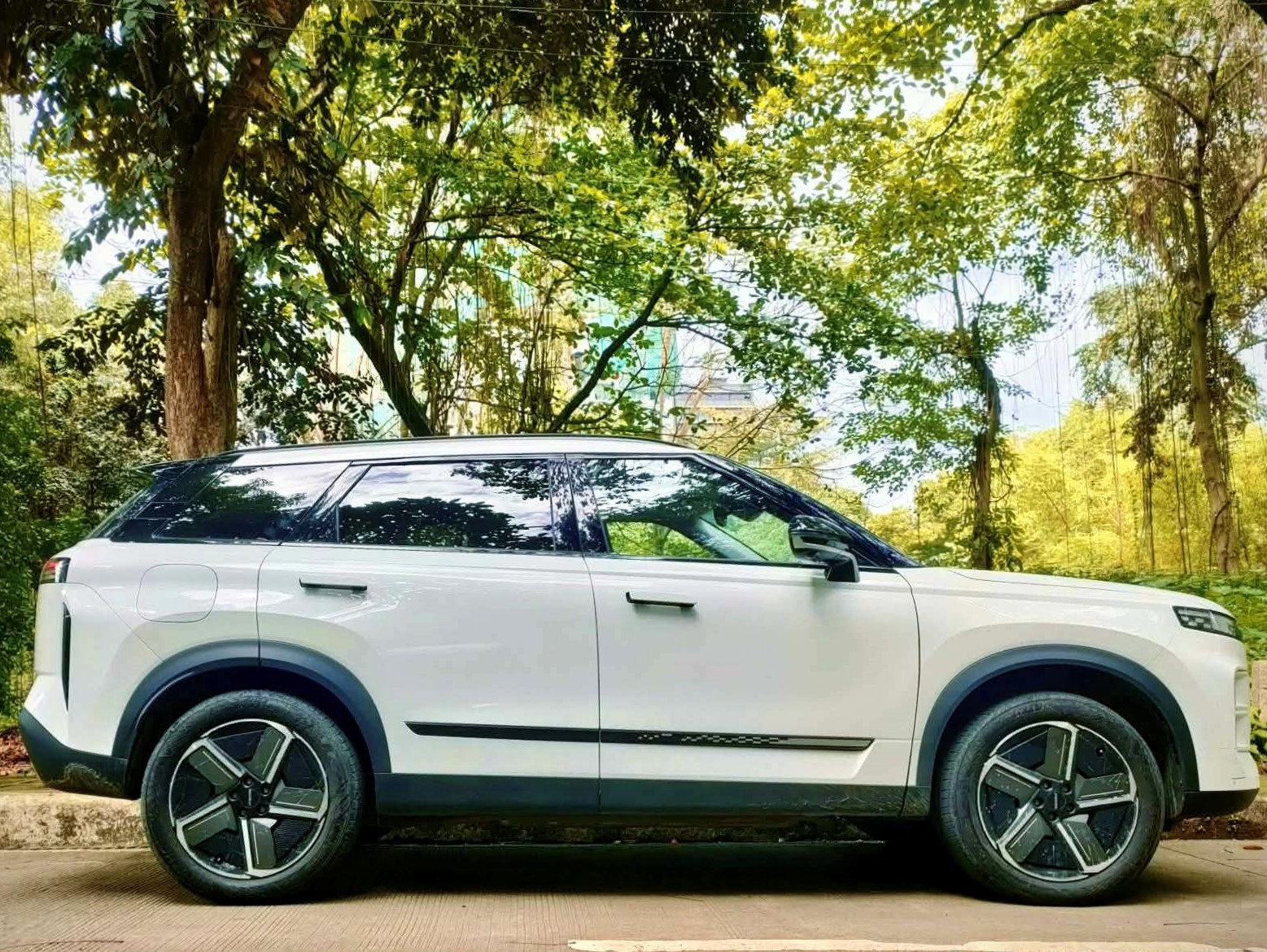
Truth be told, it’s getting much more difficult for new modern SUVs to stand out in a sea of 5-door 2-box SUVs. Jaecoo endeavors to differentiate the J7 SHS with its premium and rugged design, commanding grille, dynamic lines, and cutting-edge features, such as the sculpted 19-inch aerodynamic wheels, seamless receding door handles, distinctive LED DRLs (daytime running lights), headlights and rear lights. For design continuity, the DRL’s “dynamic checkered flag” design is carried onto the side moldings and the courtesy light projected as you step into or out of the vehicle.

Jaecoo designers endowed the J2 SHS Premium with “rugged elegance”…
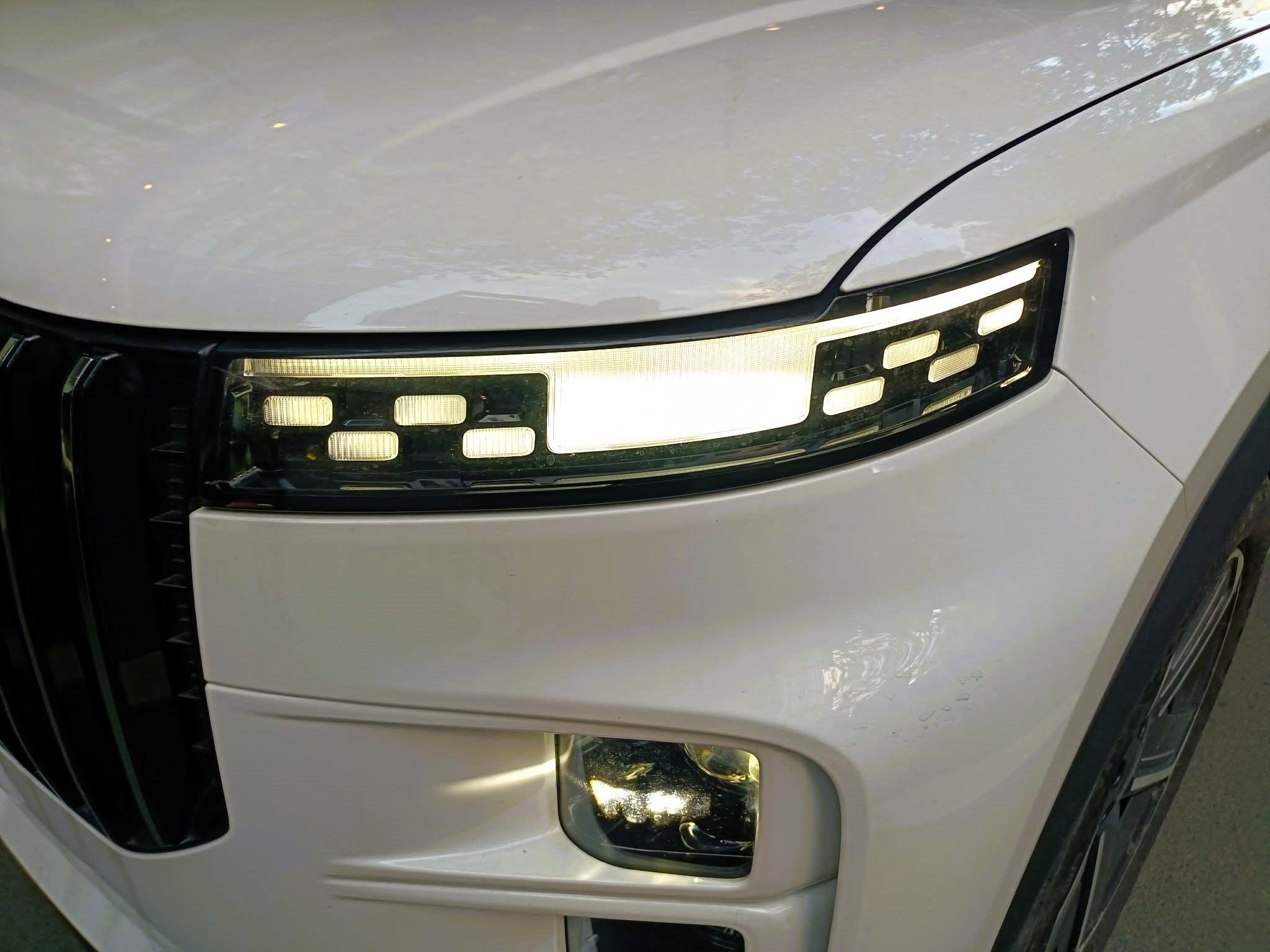
… while the “dynamic checkered flag” motiff of the DRLs makes this Jaecoo a winner in our book!
At P1,549,000, the J7 SHS Premium represents a value that is much greater than the sum total of its innovative features, purposeful craftsmanship, and cutting-edge safety technology. With a combined range of 1,488 kilometers, a claimed fuel mileage of 21.3 kilometers per liter, and a 4 Drive Mode Super Hybrid System that eliminates any trace of range anxiety, Jaecoo makes the J7 SHS Premium even more, ahem,… premium, more so with a bumper-to-bumper warranty of 7 years or 200,000 kilometers* and a battery, motor and e-control system warranty of 8 years or 180,000 kilometers*. (*Whichever comes first.)
For more information, log on to http://www.omodajaecoo.ph/ or visit the Omoda Jaecoo dealerships at Alabang, Marcos Highway, Santa Rosa and Cebu. And see for yourself how the Jaecoo J7 SHS Premium can blur the line between PHEV and REEV.

This compact crossover SUV PHEV is rugged enough for tough drives out in the country…

… and elegant enough to drive to any Christmas Ball.
Specifications