 Power Wheels Magazine A Notch Above

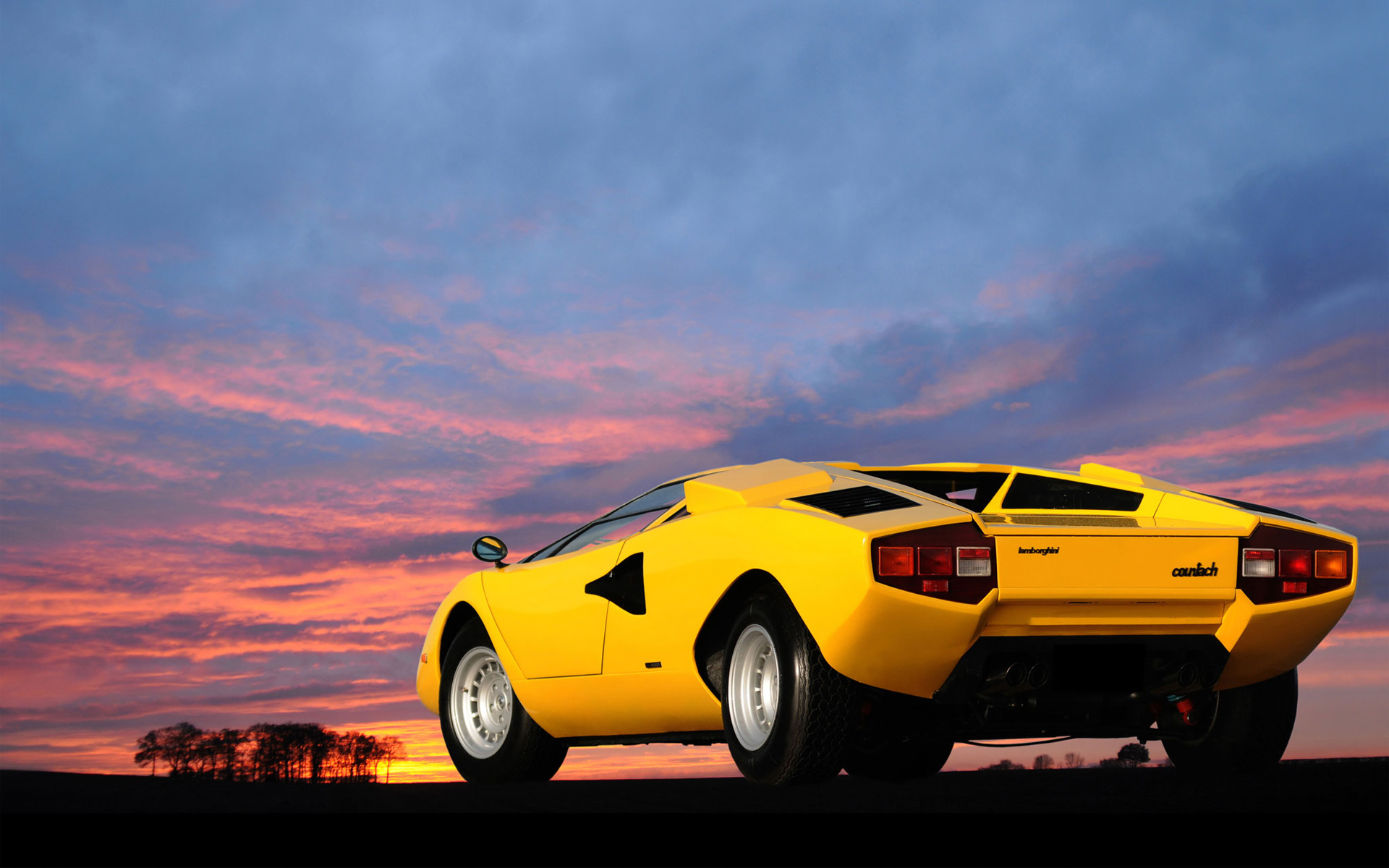
At ten o’clock on a Thursday morning, March 11, 1971, Automobili Ferruccio Lamborghini S.p.A. unveiled its latest, futuristic, and most radical concept car at the at the Geneva Motor Show in Switzerland. The Carrozzeria Bertone display stand debuted and showcased the prototype Lamborghini LP112. LP stands for “Longitudinale Posteriore” in Italian, which referred to the rear longitudinal position of the powerful V12 engine. The radical new sports car’s designation was later changed to “LP500” to connote its V12’s 5.0-liter displacement.
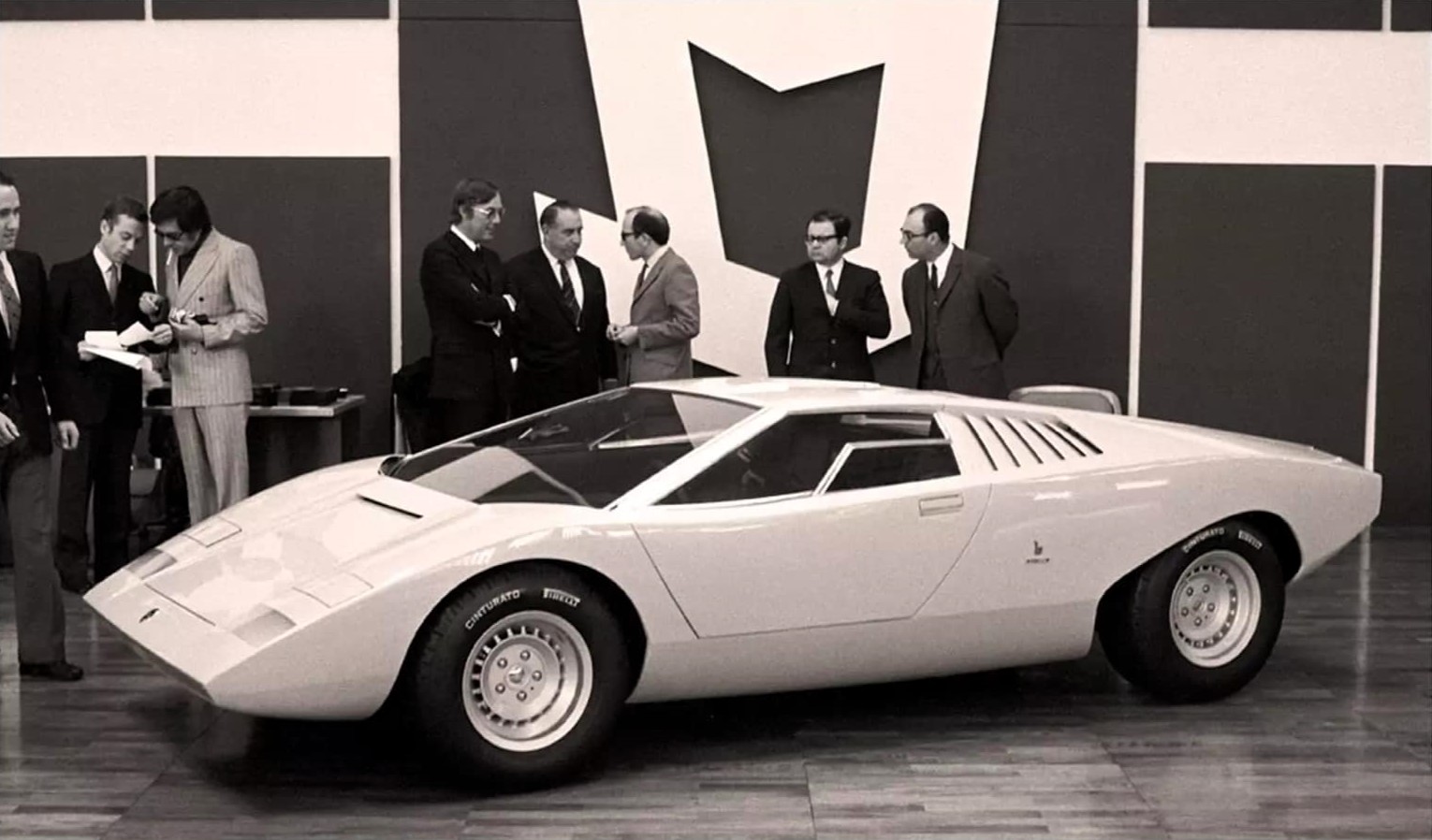
The Carrozzeria Bertone stand at the 1971 Geneva Motor Show debuted the Lamborghini LP500 prototype.
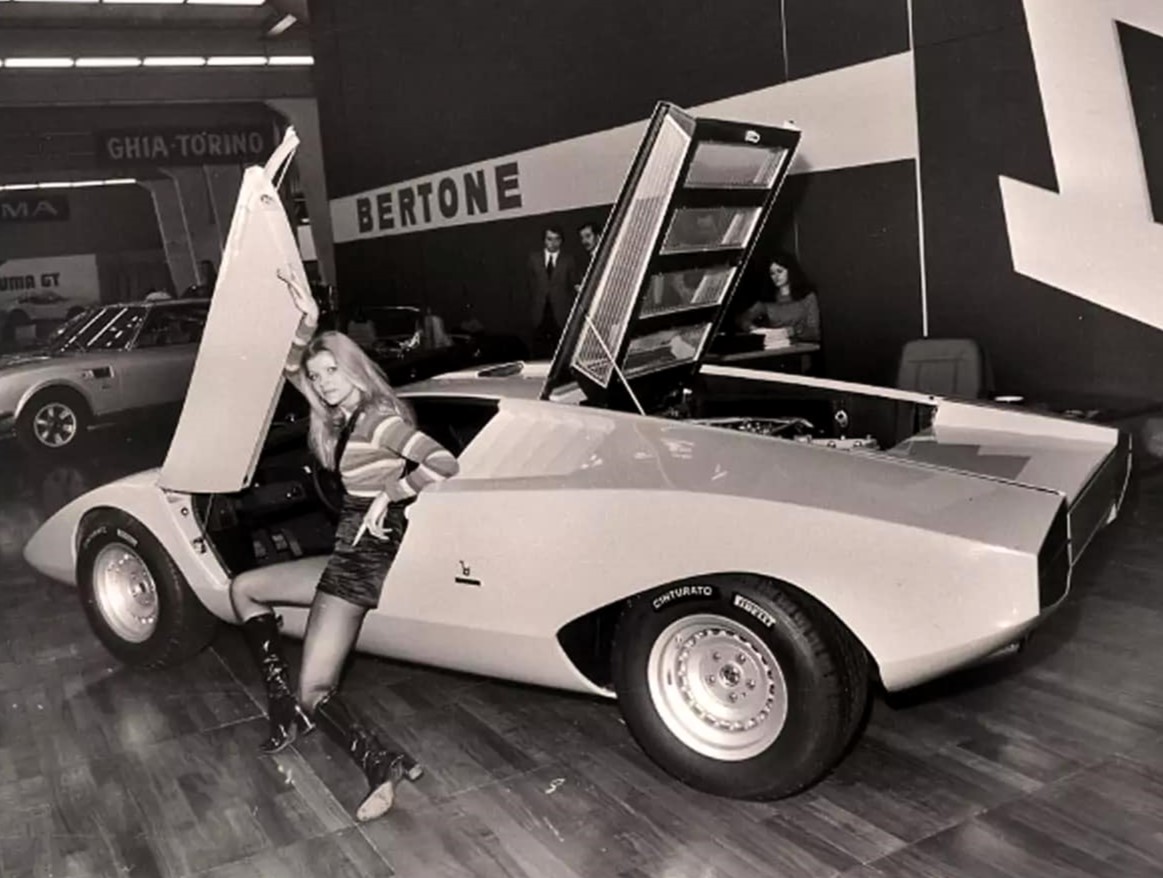
The LP500 prototype featured the iconic scissor doors that became a Lamborghini signature design.
Initially dubbed as “Project 112” during its development phase, the wedge-shaped LP500 stemmed from Ferruccio Lamborghini’s desire to maintain his car company’s image at the forefront of style and technology following the equally-groundbreaking mid-engine Miura, which the new concept car was designed to replace. The futuristic prototype featured a platform-and-tubular frame, a one-of-a-kind 4971cc 12-cylinder engine, shark gill-like engine air intake design, and a plush leather interior with sophisticated electronic instrumentation.
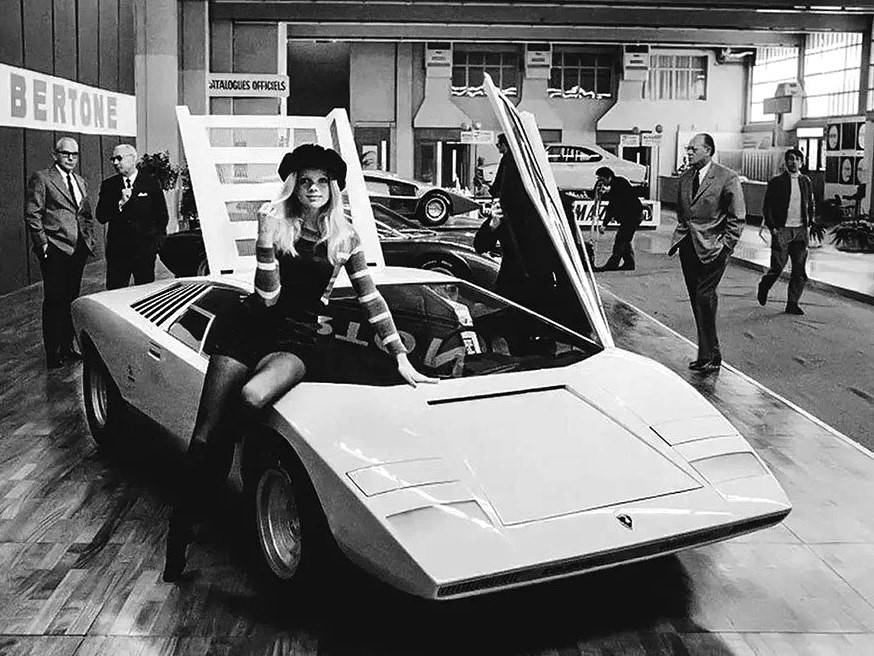
Created to replace the aging Lamborghini Miura, the LP500 was known internally as “Project 112” during its development phase.
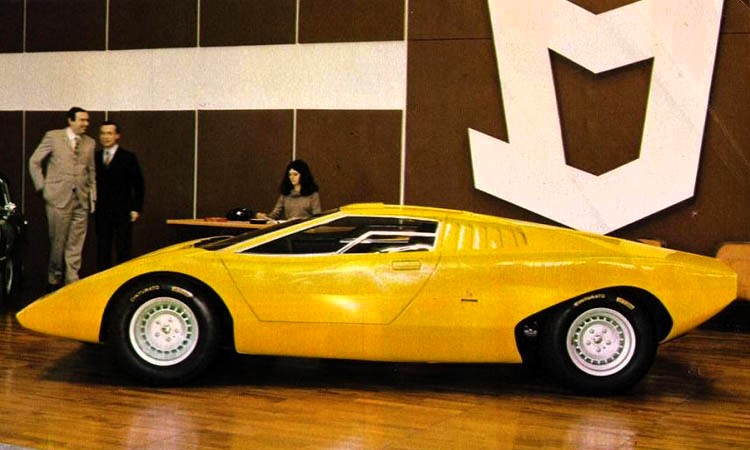
Finished in an eye-catching Giallo Fly Speciale, the LP500 caught the attention of numerous showgoers who flocked to the Bertone stand.
Bertone, Carabo and Countach!
The LP500 prototype was based on the 1968 Alfa Romeo Carabo concept car, which was named after the Carabidae beetle. The Carabo featured a dramatic, low-profile wedge shape, sharp angles, and a bright green and orange livery. The wedge shape was used to address high-speed instability issues found in previous, more rounded designs. The Carabo also introduced the innovative “scissor doors” or vertical-opening doors, which later became a signature feature of the Lamborghini production super car.
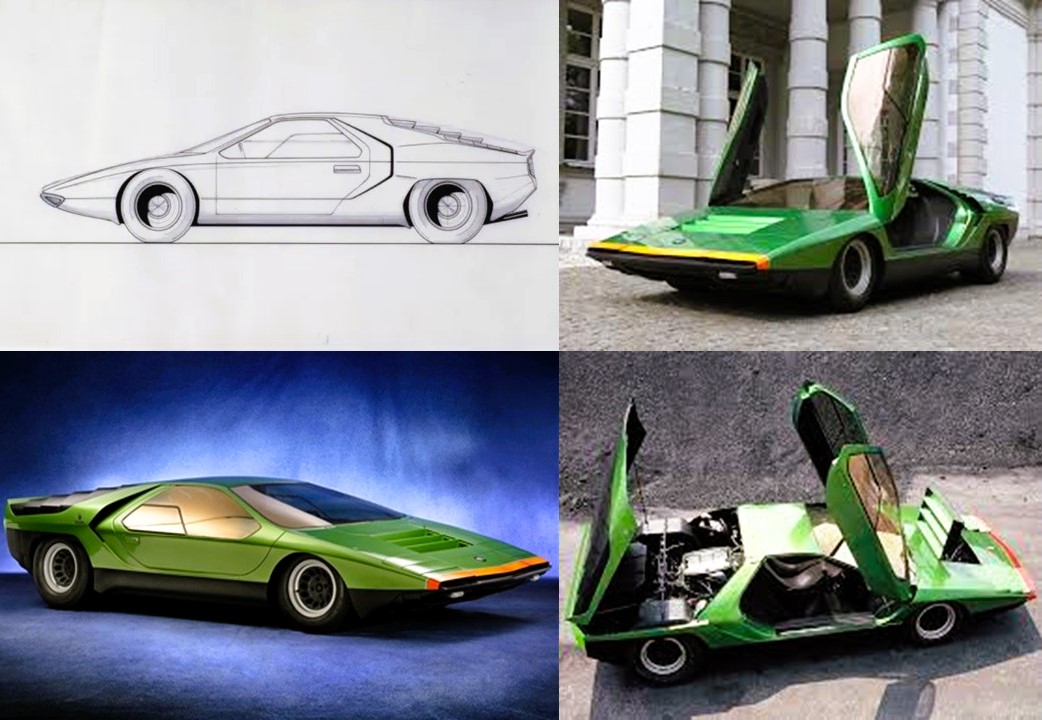
Marcello Gandini based the wedge design and scissor doors of the LP500 prototype from the 1968 Alfa Romeo Carabo concept car.
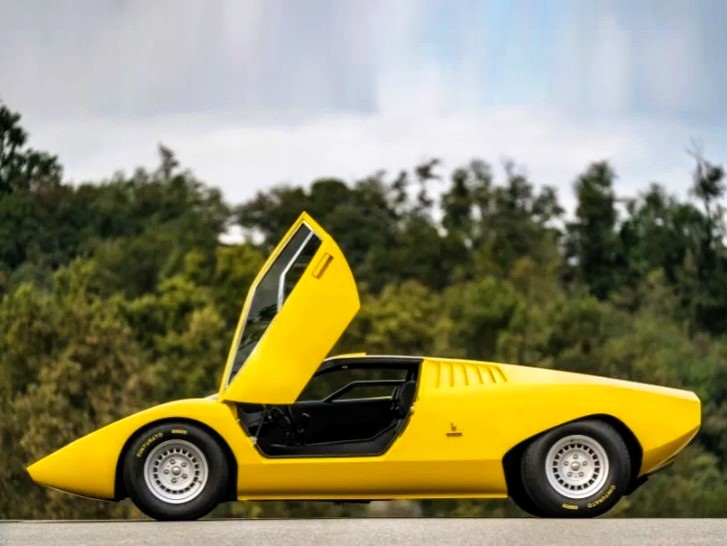
The wedge design was an early attempt to improve the aerodynamic efficiency of the new breed of supercars.
Marcello Gandini designed the Carabo, which was unveiled at the 1968 Paris Motor Show, for the Bertone design studio. Gandini was the Design Director of Carrozzeria Bertone when he styled the Lamborghini LP500 prototype. Meanwhile, Lamborghini’s General Manager and Technical Director Paolo Stanzani was responsible for the mechanical design of the LP500. It was rumored that the Countach nameplate was adopted when the Italian factory workers at Lamborghini saw the finished prototype and exclaimed, “Countach?!”, which would translate to “Jeez?!” or “WTF?!” in today’s vernacular.
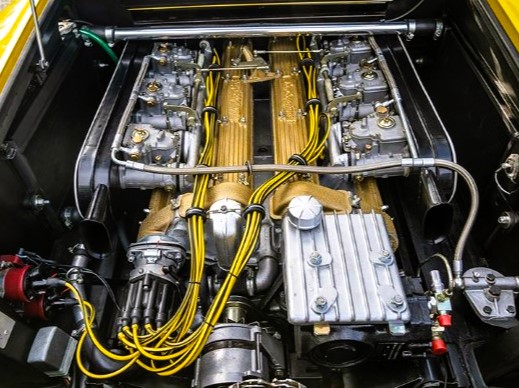
Paolo Stanzani designed the mixed platform-and-tubular frame that housed the longitudinally-mounted mid-engine V12.
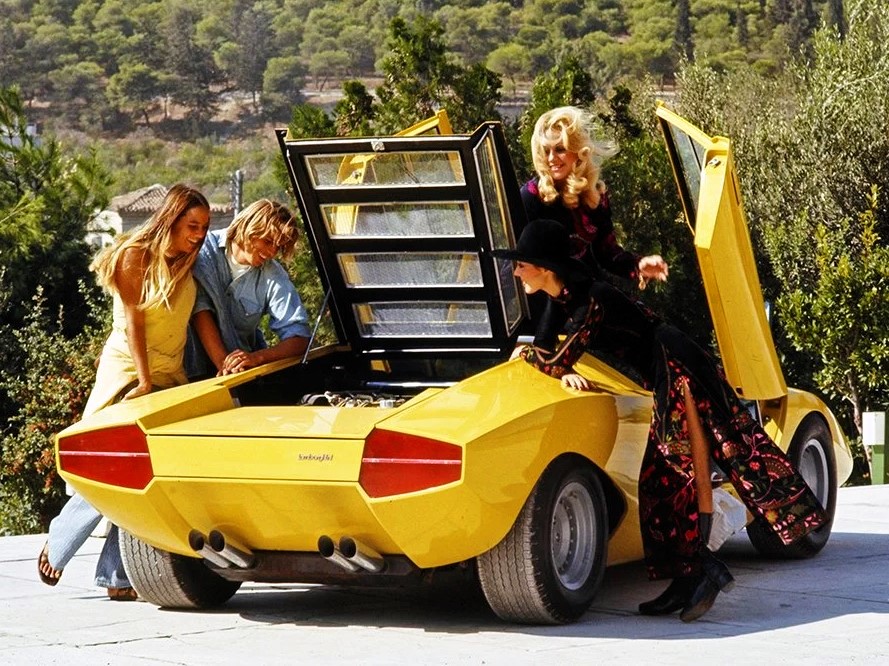
Any Italian with gasoline running through his veins will be compelled to shout, “Countach!” when he sees the low-slung, futuristic, wedge-shaped supercar.
Prototype vs Production
The LP500 prototype was finished in “Giallo Fly Speciale” yellow paint and was used extensively for promotional photos before the 1971 Geneva Motor Show. Following its success in Geneva, the car was fitted with a more reliable 4.0-liter V12 engine and was used by Lamborghini’s chief test driver Bob Wallace for various road tests. The LP500 prototype was subjected to all kinds of testing abuse, was ultimately destroyed for the crash tests required for the homologation of the production car, and was subsequently scrapped in early 1974. Ouch…
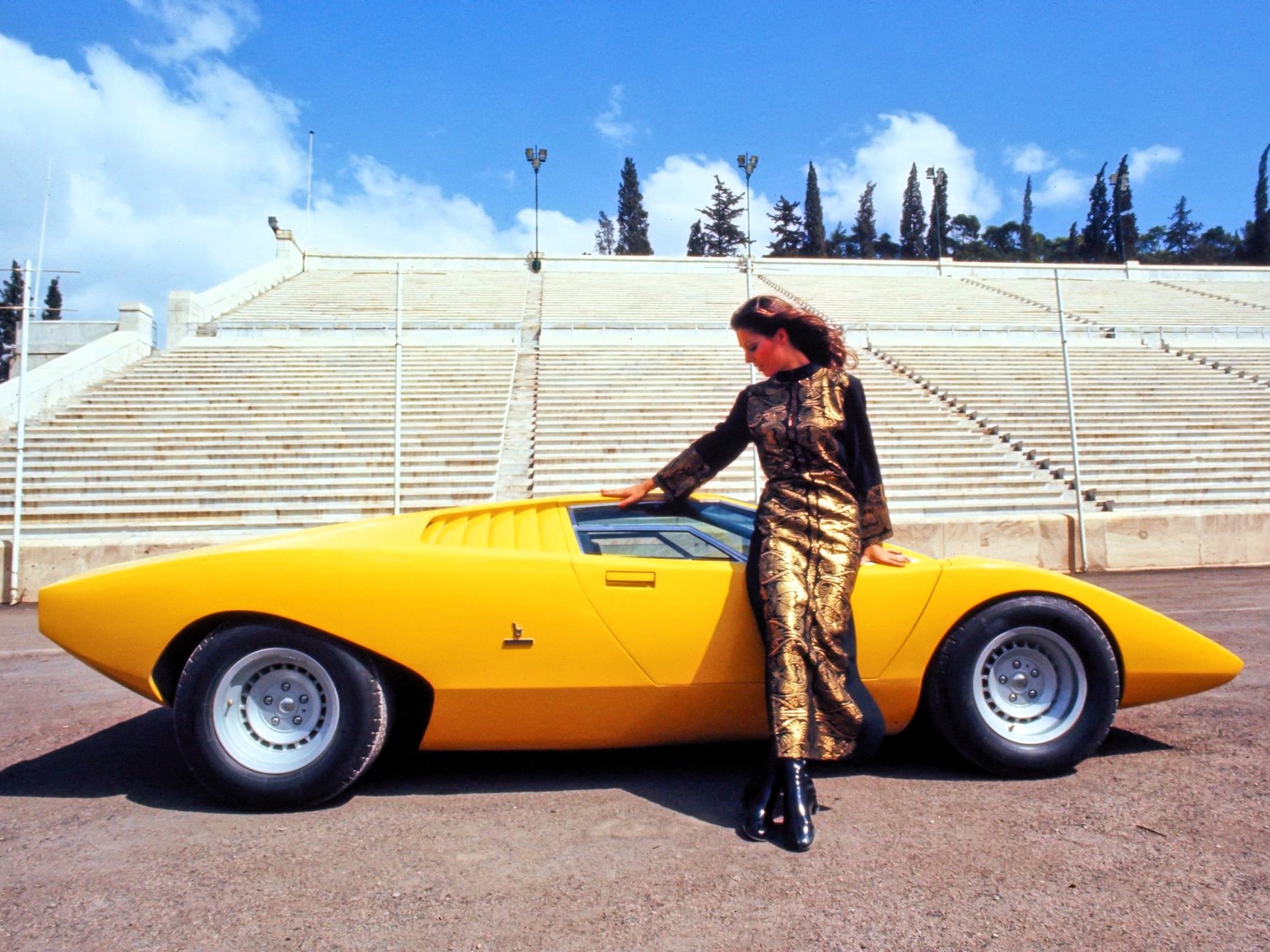
The LP500 prototype was photographed extensively for promotions and press releases in 1971.
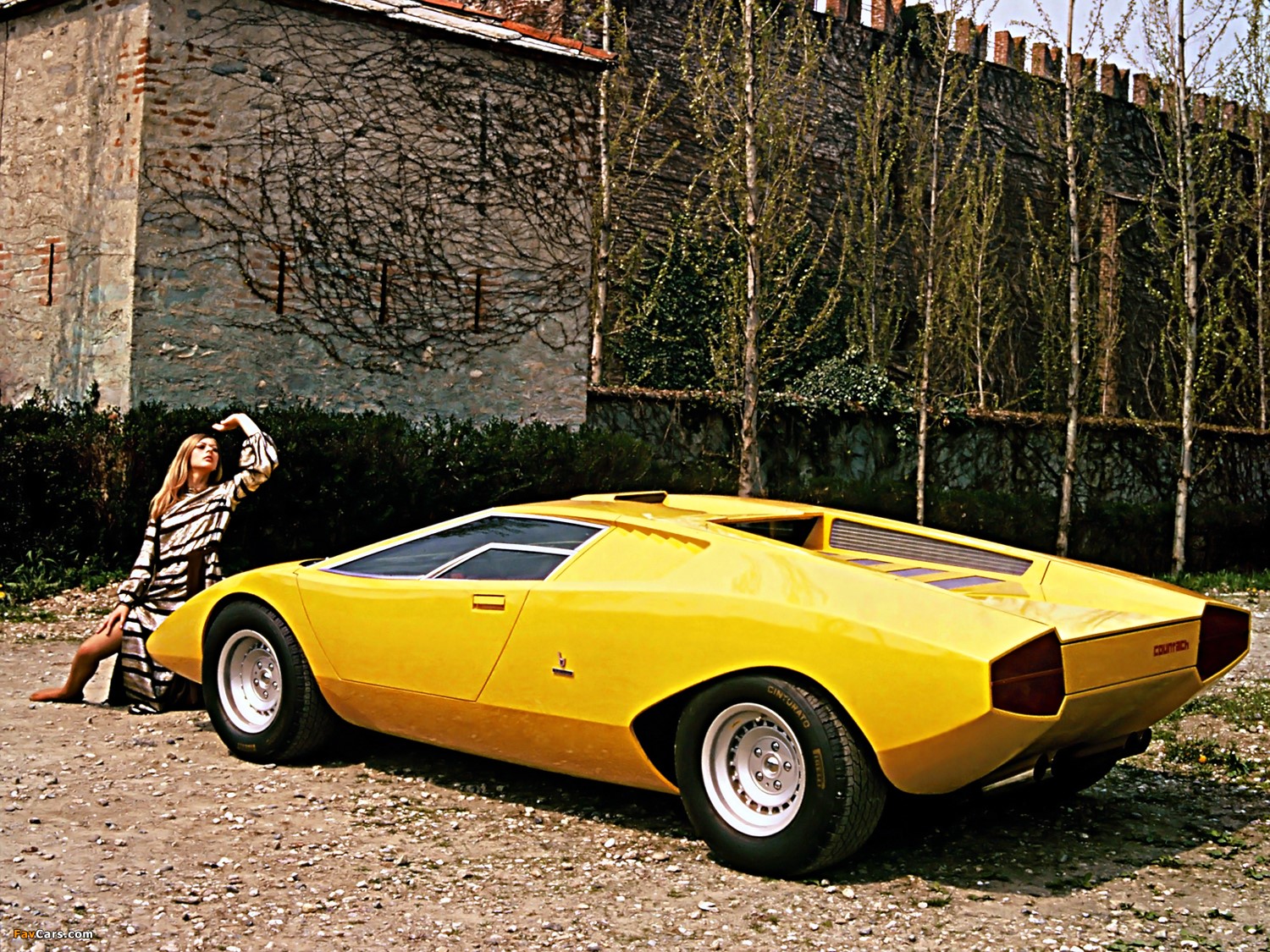
Unfortunately, this original yellow LP500 prototype and photgenic model car was later used for crash testing and then (gasp) scrapped!
The LP500 prototype was a substantially different car than the Lamborghini Countach LP400 that would go into production in 1974. While the production LP400 would retain the prototype’s 96.5-inch (2.45-meter) wheelbase, 163-inch (4.14 m) length and 74.4-inch (1.89 m) width, it had a tubular chassis, instead of a mixed platform frame. The more reliable production DOHC 60° V12 engine displaced 3,929cc that made 375hp at 8,000 rpm and 268lb-ft (363Nm) of torque at 5,000 rpm, compared to the temperamental prototype’s 4,971cc that pumped out an estimated 440hp at 7,400 rpm and 366lb-ft (496Nm) at 5,000 rpm.
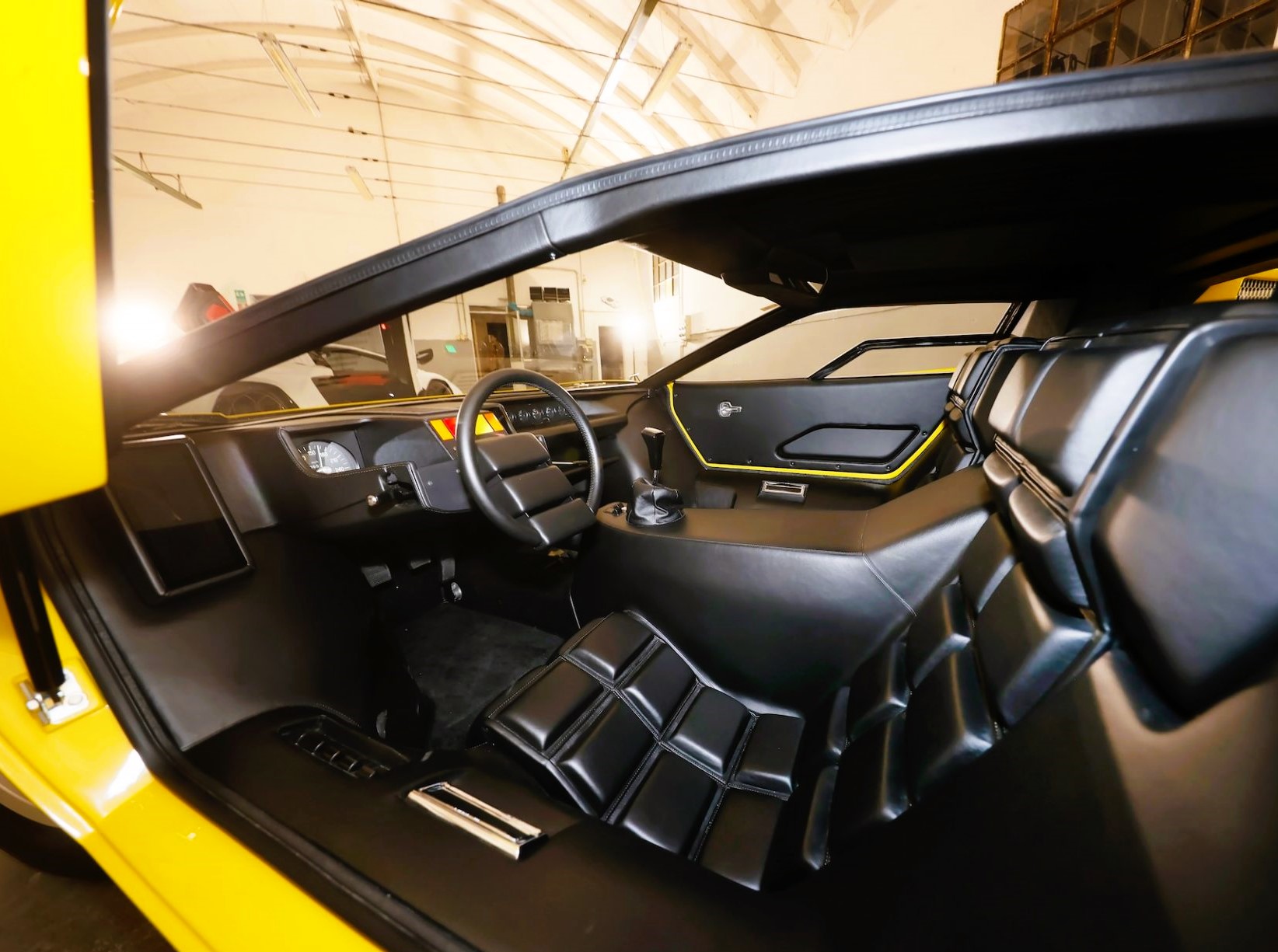
The 1971 LP500 prototype featured a plush and modern leather interior with futuristic electronic instrumentation.
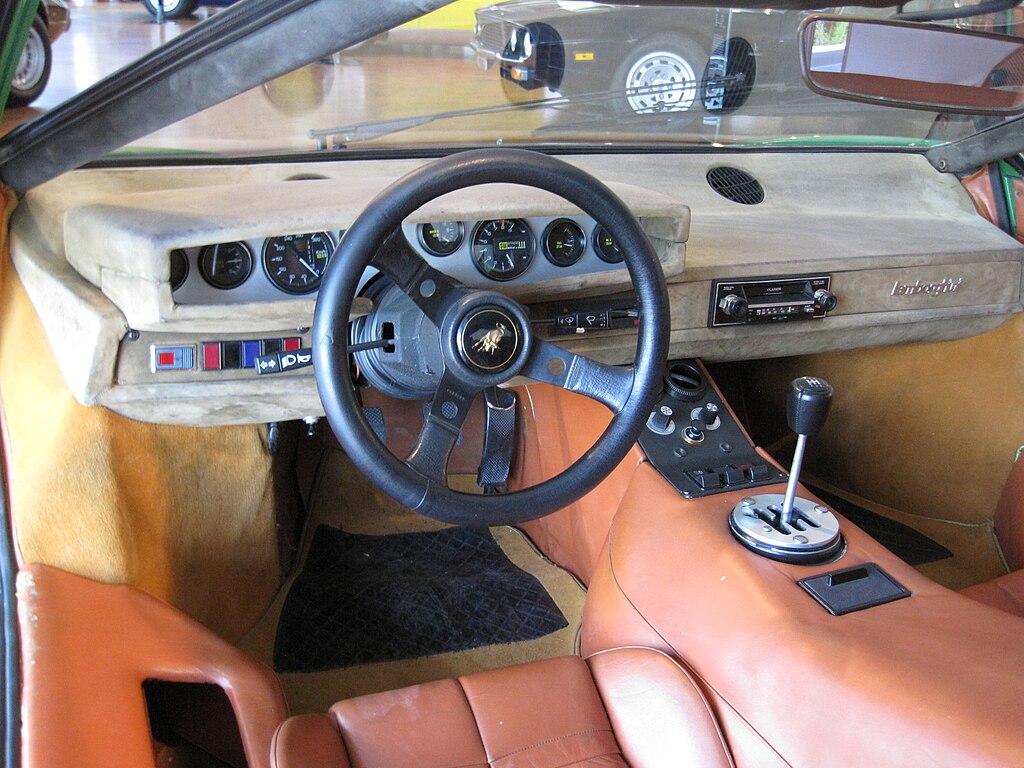
The production Countach LP400 featured a sporty driver-focused interior with an analog instrument panel and gated 5-speed stick shift.
The Quintessential Dream Car
Between 1974 and 1978, Lamborghini produced 150 examples of the LP400, which is more renowned among car collectors as the “Periscopio” for its unique rearview mirror system, and is considered as the purest iteration of the iconic wedge-shaped supercar. In 1978, the Countach LP400S debuted with its “wide-body” design, aggressive fender flares, massive 345/35VR15 Pirelli P7 rear tires, and optional rear wing that defined the supercar aesthetic of the 1980s. Around 385 LP400S units were produced between 1978 and 1982 but it experienced increased popularity in the first “Cannonball Run” movie with actresses Adrienne Barbeau and Tara Buckman driving in 1981.
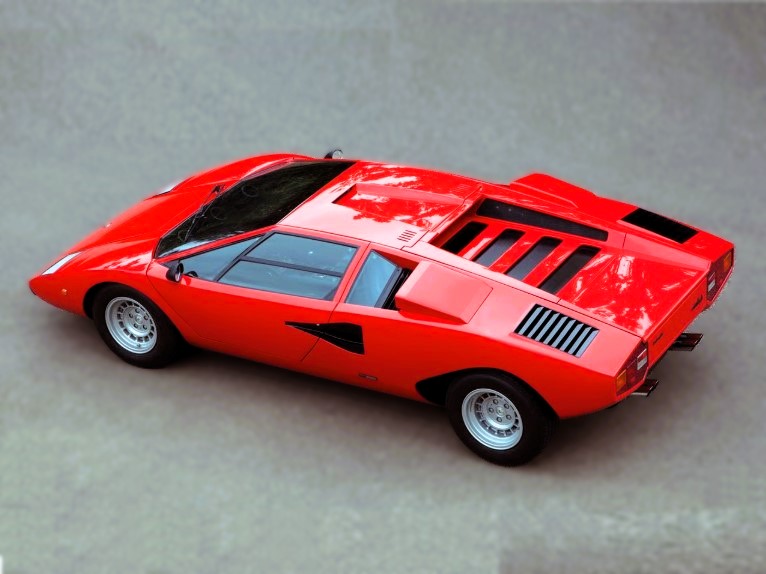
The 1974-1978 Lamborghini Countach LP400 “Periscopio” is considered by car collectors as the purest iteration of the iconic Gandini-designed wedge shape.
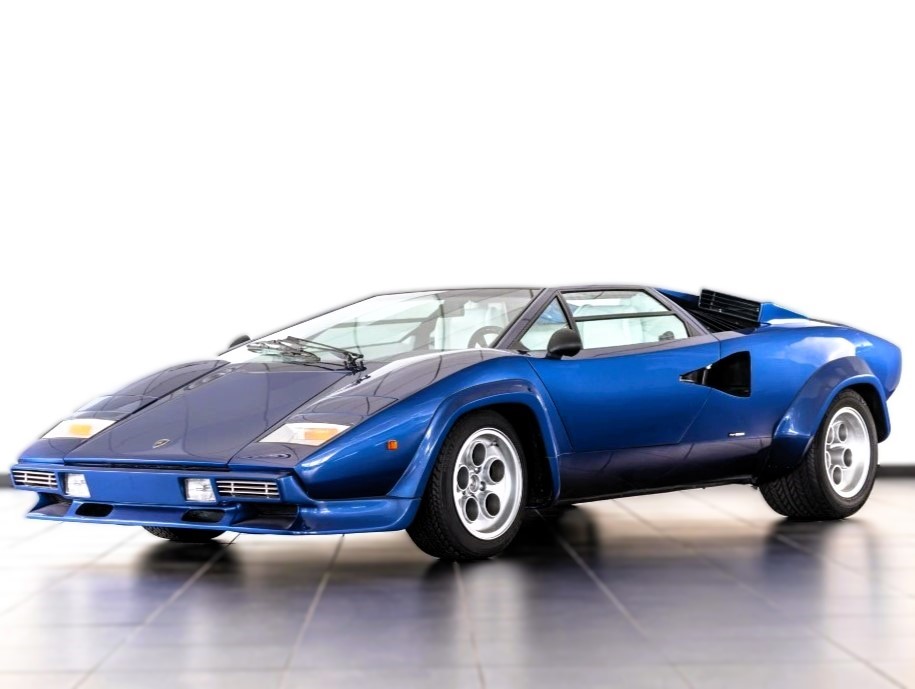
The 1978-1982 Countach LP400S featured a wide-body design with aggressive fender flares and massive 345/35VR15 Pirelli P7 rear tires.
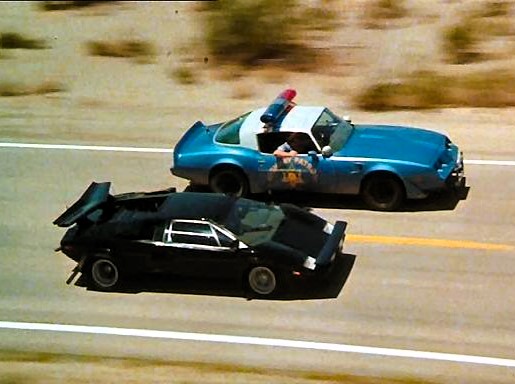
Actresses Adrienne Barbeau and Tara Buckman drove a black US-spec Countach LP400S with front airfoil and rear spoiler and tried to evade law enforcement in the 1981 movie “Cannonball Run”.
The Countach LP500S with its bigger 4.8-liter V12 replaced the LP400S in 1982. Around 325 units were made during it 3-year production run until 1985 but it seemed like a lot more were produced after it graced countless rooms as the poster cars of Alpine audio systems and its appearance in the second “Cannonball Run” movie with actresses Catherine Back and Susan Anton driving in 1984. The Countach 5000 Quattrovalvole, which was produced from 1985 to 1988, received an engine upgrade with 4 valves per cylinder and improved fuel delivery that made 455hp at 7,000 rpm and 369lb-ft (500Nm) at 5,200 rpm.
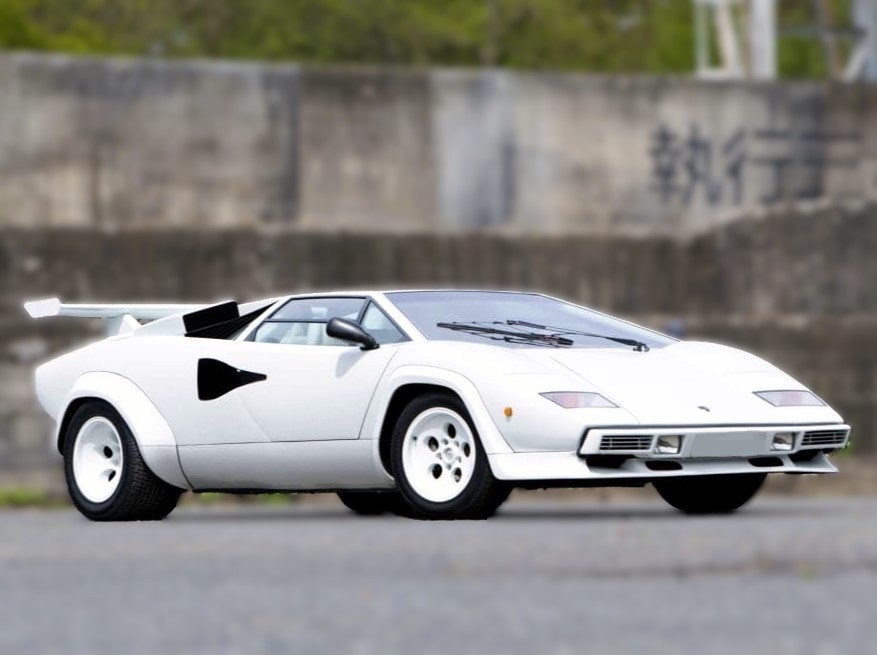
The 1982-1985 Countach LP500S was powered by a larger 4.8-liter V12 with 375hp and 410Nm of torque.
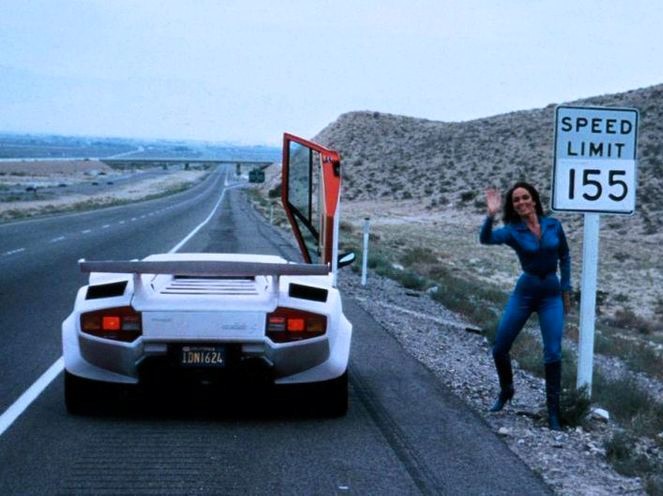
Actress Catherine Bach sticks a fake “155” on a speed limit sign before running into a white Countach LP500S driven by actress Susan Anton in a scene from the 1984 movie “Cannonball Run 2”.
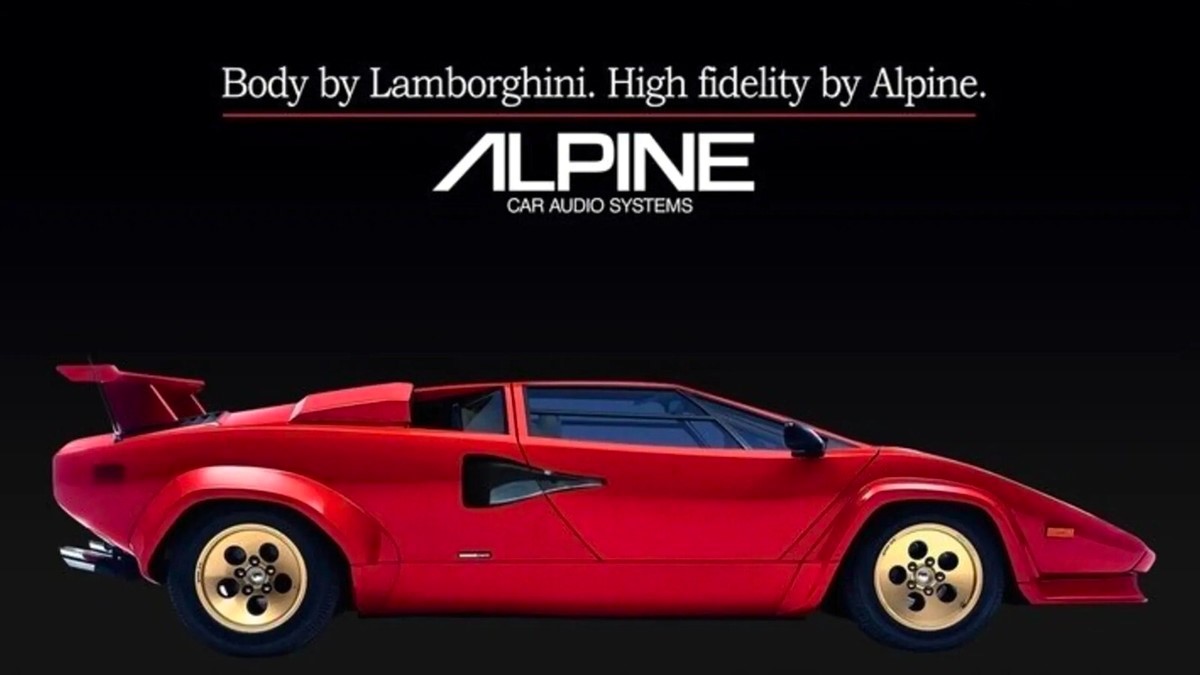
Numerous bedroom walls. man caves and garages had these now iconic Alpine car audio systems posters featuring that dreamy red Lamborghini Countach LP500S.
Limited Production, Worldwide Recognition
From 1974 to 1990, Lamborghini produced 1,999 Countachs in five different series. It excited its lucky drivers, enchanted onlookers and decorated the bedroom walls of an entire generation, especially with the later posters made by Pirelli tires. It was chased by Detective Sonny Crockett (played by Don Johnson) driving a faux Ferrari Daytona convertible in an episode of “Miami Vice”. In real life though, the Countach can easily leave the fake Daytona behind.
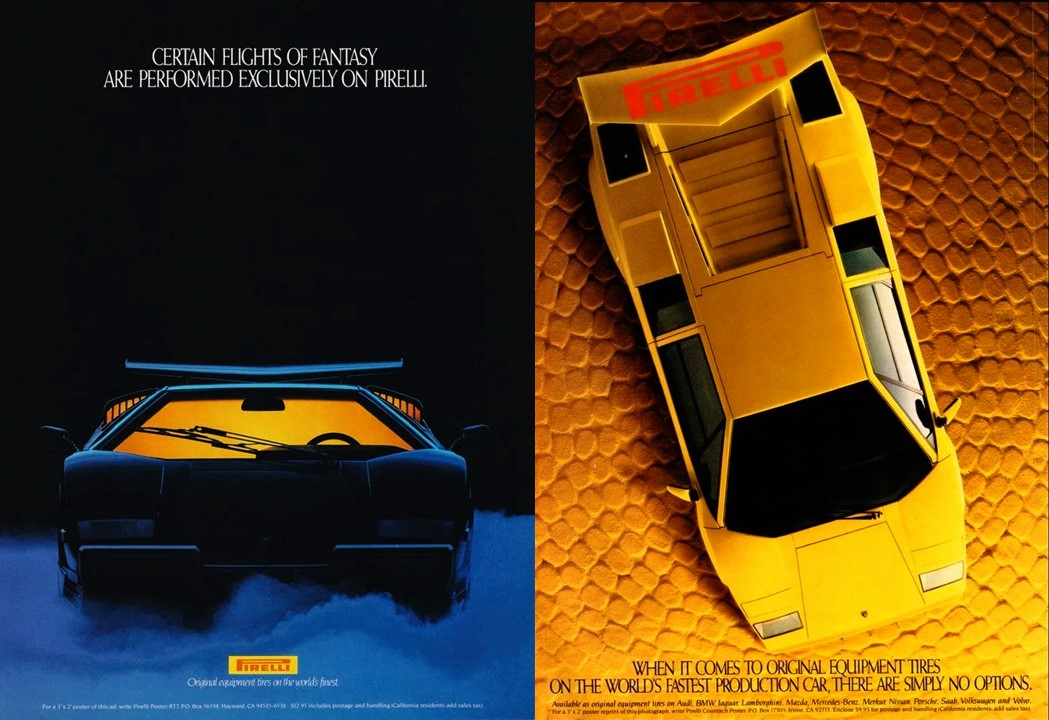
Pirelli tire posters that feature the Countach also graced the walls of numerous car enthusiasts’ rooms in the ’80s and early ’90s.
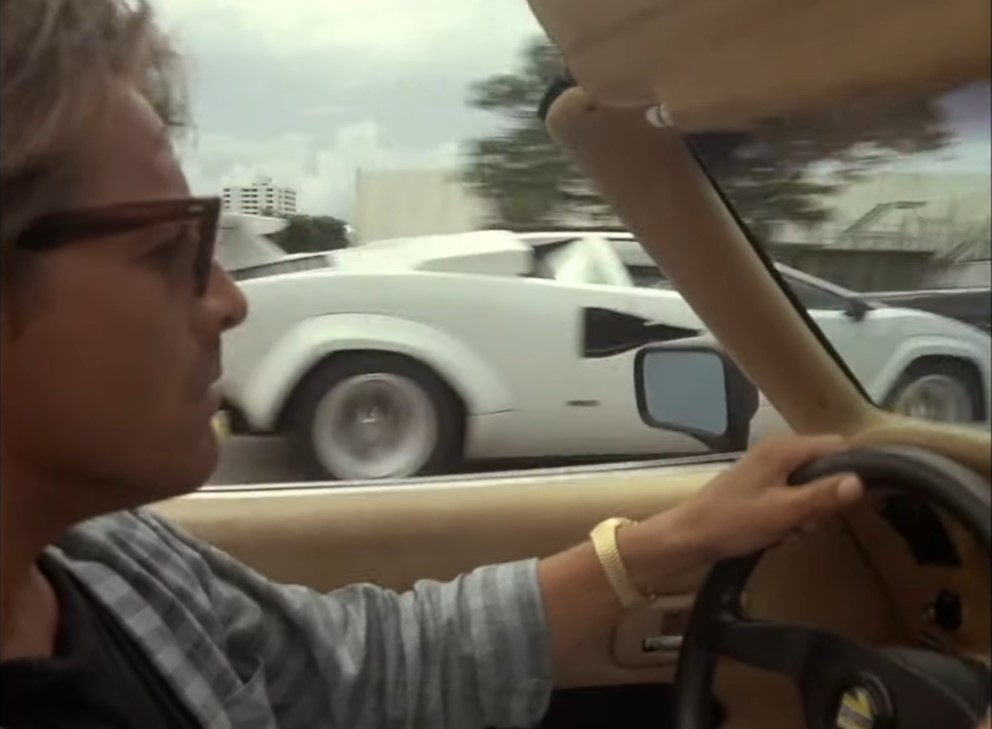
Detective Sonny Crockett, played by actor Don Johnson, chases a white Lamborghini Countach driven by villain Nico Arroyo, played by actor Joaquim de Almeida, in Season 2 Episode 10 of the ’80s hit TV show “Miami Vice”.
2026 marks the 55th Anniversary of the LP500 prototype’s Geneva debut. Its iconic scissor doors and wedge design defined later supercars. Between 2017 and 2021, Lamborghini Polo Storico took over 25,000 man-hours to build an exact and official recreation of the 1971 LP500 prototype for an avid collector using period-correct techniques. The recreation honors the efforts of Ferruccio Lamborghini, Paolo Stanzani, Marcelo Gandini, and Carrozzeria Bertone who all collaborated 55 years ago to create a supercar that was destined to become a global icon and permanently enter the halls of legend.
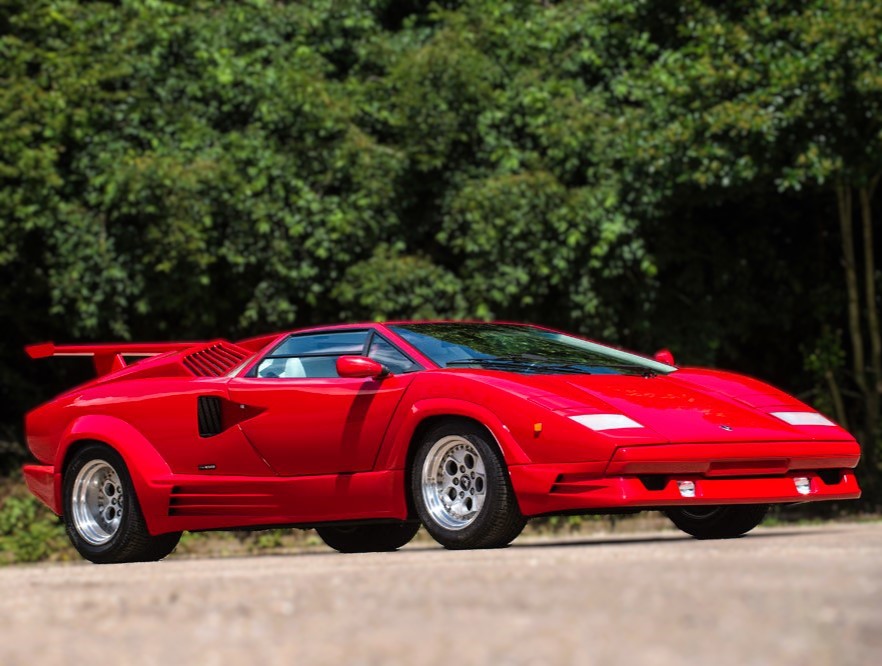
The 1990 Lamborghini Countach 5000 Quattrovalvole bookended the Italian supercar’s 26-year production run.
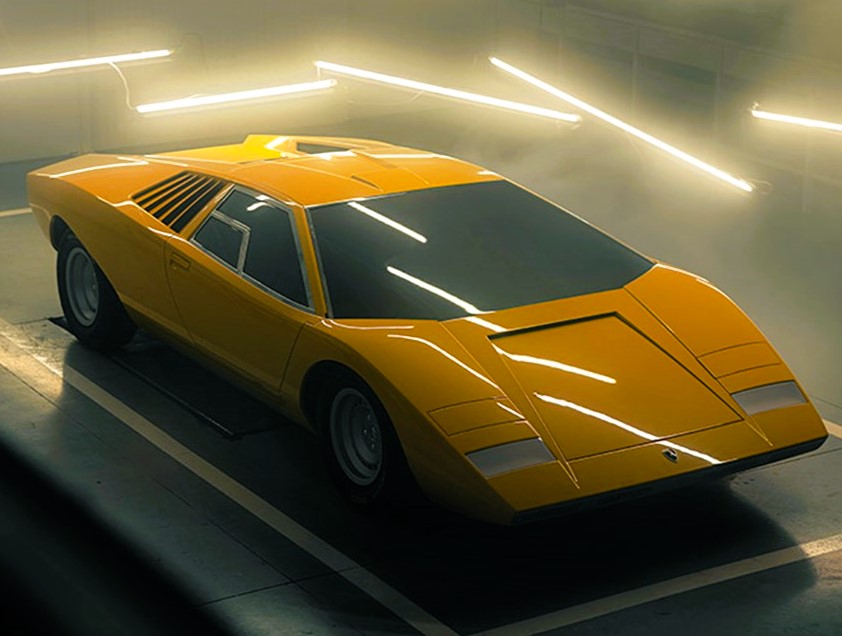
In 2021, Lamborghini Polo Storico finished building an official recreation of the 1971 LP500 prototype for an avid collector using period-correct techniques and 25,000 man-hours of painstaking craftsmanship and accurate workmanship.
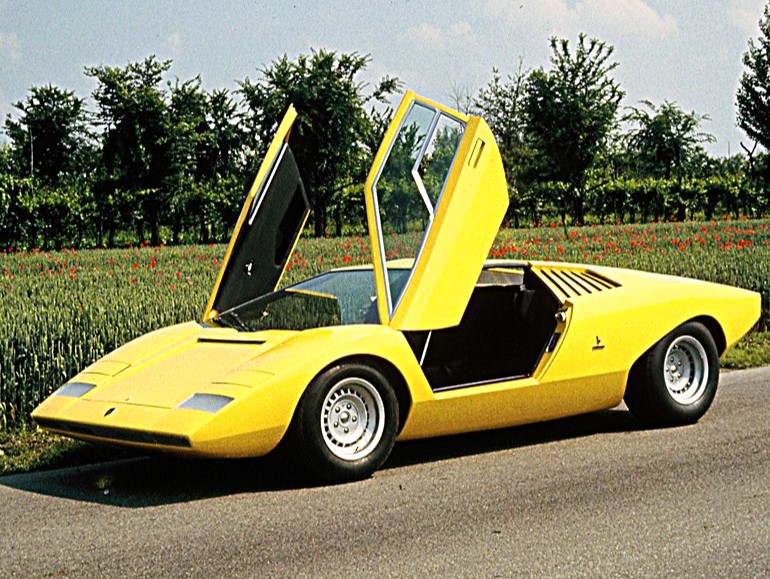
The 2021 recreation of the 1971 prototype took the Lamborghini Countach into a 50-year full circle.